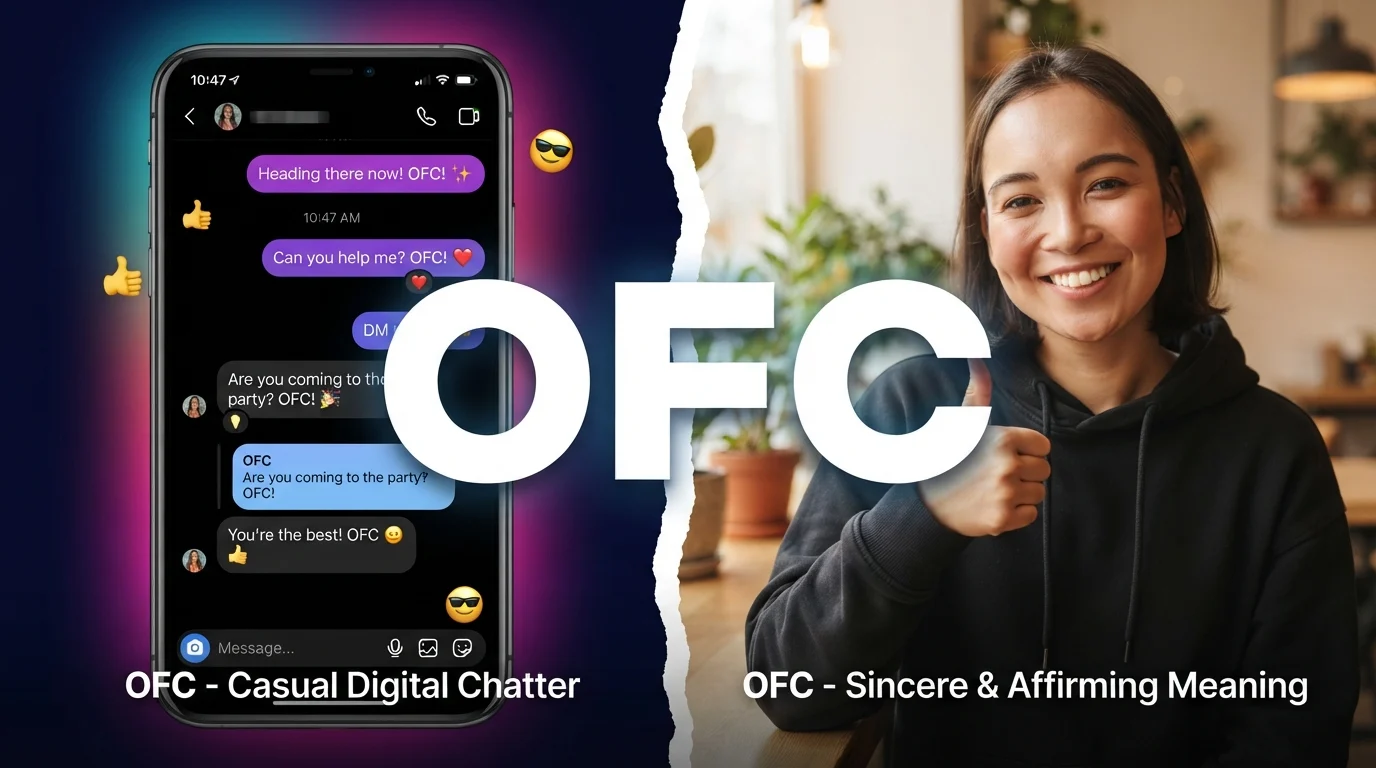
Quick Answer: OFC stands for “of course.” It’s a common internet and texting abbreviation used to express agreement, confirmation, or obviousness. You’ll see it in casual conversations, social media comments, and even professional chats. It can mean “definitely,” “obviously,” “you’re welcome,” or “yes, absolutely” depending on the context. Sometimes it’s sincere, other times it’s sarcastic. Like many internet abbreviations, OFC has evolved into a versatile shorthand that saves time and adds a casual tone to digital communication.
You’re texting a friend about weekend plans, and they reply with a simple “ofc.” You see it in Instagram comments, Discord servers, and even work chats. But what exactly does it mean? Is it sincere? Sarcastic? Somewhere in between?
Welcome to the world of OFC the unassuming three-letter abbreviation that’s quietly become one of the internet’s most versatile tools. It started as a simple shortcut for “of course,” but like most internet slang, it’s grown layers of meaning, context, and subtlety. Let’s decode what OFC really means and how to use it like a pro.
OFC Meaning: The Basics
What Does OFC Stand For?
OFC stands for “of course.” That’s it. No hidden acronym, no secret code. Just a shorter way to type a common phrase.
The abbreviation emerged naturally as people looked for faster ways to communicate in chat rooms, text messages, and social media. Typing “of course” takes a moment. Typing “ofc” takes a fraction of a second. When you’re having a fast-paced conversation, those fractions add up.
The Sincere Uses of OFC
Most of the time, OFC means exactly what it says: “of course.” It’s used to:
- Express agreement: “Are you coming to the party?” “OFC!”
- Confirm something obvious: “You know I love pizza, right?” “OFC.”
- Say “you’re welcome”: “Thanks for helping me move!” “OFC, anytime.”
- Indicate certainty: “Will you be there?” “OFC I will.”
In these contexts, OFC is straightforward and genuine. It’s a quick way to say “yes, absolutely, definitely.”
OFC vs. OF: What’s the Difference?
You might also see “of” used as an abbreviation, but it means something completely different. “OF” typically stands for “OnlyFans,” the subscription-based content platform. This distinction matters if someone asks if you’re on OF, they’re probably not asking if you’re on “of course.”
Similarly, “OC” usually means “original character” in fanfiction circles. Context is everything when navigating internet abbreviations.
The Sarcastic OFC: When It’s Not So Sincere
Passive-Aggressive Agreement
Here’s where OFC gets interesting. Like many internet phrases, OFC can carry a layer of sarcasm or passive-aggression. When someone uses OFC in this way, they’re usually saying “obviously” with an edge.
Example:
- “You ate my leftovers again?” “OFC I did. You left them there for three days.”
In this context, OFC means “of course I did, and you should have expected that.” It’s a verbal shrug that can come across as dismissive, unapologetic, or even challenging.
The Obviousness Factor
Sometimes OFC is used to point out how obvious something is, bordering on condescending:
- “You know you have to pay taxes, right?” “OFC I do. I’m not an idiot.”
Here, OFC carries an implied “you didn’t need to ask that.” It can be playful among friends but condescending in other settings.
Reading the Tone
The key to understanding OFC is reading the room. The same abbreviation can mean “yes, absolutely!” in one context and “obviously, you fool” in another. Pay attention to:
- The relationship: Friends use sarcastic OFC with each other all the time. Strangers? Probably not.
- The topic: Serious conversations usually get sincere OFC. Trivial ones get sarcastic OFC.
- The emojis: OFC followed by 😂 or 😜 is probably joking. OFC with no emojis is probably serious.
- The capitalization: Lowercase “ofc” often feels more casual. Uppercase “OFC” can feel more emphatic or more passive-aggressive.
OFC vs. Similar Abbreviations
OFC vs. OF COURSE
Typing “of course” is always clearer and more formal. Use it in professional emails, important documents, or when you want to avoid any ambiguity. OFC is strictly for informal digital communication.
OFC vs. OBV (Obviously)
“OBV” is a less common abbreviation for “obviously.” It serves a similar function but doesn’t carry the same versatility. OFC works for agreement, confirmation, thanks, and sarcasm. OBV mostly just means “obviously.”
OFC vs. TBH (To Be Honest)
TBH is used to preface a statement, while OFC is used to confirm or agree with one. They serve different grammatical functions and can actually appear together: “TBH, I think it’s a bad idea. OFC, you do what you want.”
OFC vs. FR (For Real)
FR expresses surprise or emphasis, often questioning something. OFC confirms or agrees. They sit on opposite sides of the conversational coin.
| Abbreviation | Meaning | Function |
|---|---|---|
| OFC | Of course | Agreement, confirmation, reassurance |
| OBV | Obviously | Emphasizing something clear |
| TBH | To be honest | Prefacing a personal opinion |
| FR | For real | Expressing surprise or emphasis |
| ICYMI | In case you missed it | Drawing attention to previous info |
Where and When to Use OFC
Texting and Messaging
OFC thrives in casual texting. Use it when:
- Confirming plans with friends
- Agreeing with someone’s opinion
- Responding to thank you messages
- Making quick, obvious points
Avoid OFC in:
- Professional emails to clients or bosses
- Formal invitations
- Important announcements
- Conversations with people who don’t use internet slang
Social Media Comments
OFC is everywhere in social media. You’ll see it in:
- Instagram comments: “This outfit is everything!!” “OFC it is 😍”
- TikTok replies: “Are you going to post more?” “OFC!”
- Twitter/X replies: “I can’t believe this happened” “OFC it did 🙄”
- Discord servers: “Babe, you coming to the game?” “OFC I’ll be there”
Professional Settings
OFC is generally too casual for most professional environments. However, it can work in:
- Internal team chats: If the culture is laid-back, OFC might be fine.
- Slack or Teams channels: Especially if everyone uses abbreviations regularly.
- Texts to coworkers: If you have a close relationship with them.
When in doubt, type “of course” or “absolutely.” It takes an extra second but avoids any risk of sounding unprofessional.
The Capitalization Debate: OFC vs. ofc
Does capitalization matter with OFC? Not really, but there are subtle differences in vibe:
- OFC (uppercase): More emphatic, almost like shouting “OF COURSE!” in a positive way. Can also feel more aggressive if used sarcastically.
- ofc (lowercase): More casual, relaxed, and laid-back. Less likely to be misinterpreted as aggressive.
Most people default to lowercase in everyday texting. Uppercase tends to appear in more emphatic moments or when typing on a keyboard where caps lock is already on.
OFC in Different Languages and Cultures
English-Speaking Countries
OFC is most common in the US, UK, Canada, Australia, and other English-speaking nations. It’s also widely used in non-English-speaking countries where English internet culture has influenced local slang.
Global Adoption
Thanks to social media and globalized communication, OFC appears in international messaging even when people aren’t speaking English. It’s become one of those abbreviations that transcends borders, like LOL or BRB.
The Evolution of Internet Abbreviations
From “Of Course” to OFC
Before texting and social media, people wrote “of course” without a second thought. The abbreviation emerged organically as typing became more common and speed became a priority.
The Impact of Character Limits
Early social media platforms like Twitter (now X) had 140-character limits. Every character counted. Abbreviations like OFC saved precious space, allowing users to say more with less. Even though character limits have increased, the habit stuck.
The Role of Auto-Correct and Predictive Text
Smartphones have changed how we text. Auto-correct often “fixes” OFC to “of course,” which can be annoying for habitual users. But predictive text now learns your abbreviations, making OFC easier to use than ever.
The Future of OFC
Will OFC stick around or fade like other slang? It’s hard to say. Some abbreviations have remarkable staying power LOL has been around since the 1980s and shows no signs of dying. Others fade quickly. OFC’s versatility suggests it has staying power, but only time will tell.
OFC in Pop Culture and Media
Music and Song Titles
Artists have used “of course” in song titles for decades, but the abbreviation itself hasn’t appeared prominently in lyrics or titles. It’s more of a communication tool than an artistic statement.
TV and Movies
You’ll rarely hear someone say “ofc” out loud in a scripted show it’s a written abbreviation. But shows featuring texting conversations might show OFC on screen as a character types.
Social Media Influencers
Influencers often use abbreviations like OFC to sound relatable and casual. It creates a sense of intimacy with followers, as if they’re texting a friend rather than broadcasting to an audience.
Frequently Asked Questions
What does OFC stand for? OFC stands for “of course.” It’s an abbreviation used in texting and online communication.
What does OFC mean in text? In texts, OFC means “of course.” It’s used to agree with something, confirm plans, or say “you’re welcome.”
What does OFC mean on Snapchat? On Snapchat, OFC means the same thing as in other contexts: “of course.” It’s used casually in snaps and chats.
Can OFC be sarcastic? Yes, OFC can be used sarcastically to mean “obviously” in a passive-aggressive or dismissive way.
Is OFC appropriate for professional communication? Usually not. It’s best reserved for casual conversations with friends or in informal team chats.
What’s the difference between OFC and OF? OFC means “of course.” OF usually means “OnlyFans” in modern internet slang.
Should I use OFC or “of course”? Use “of course” in formal or professional settings. Use OFC with friends in casual digital conversations.
Key Takeaways
| Aspect | Key Point |
|---|---|
| Meaning | Stands for “of course” |
| Sincere Uses | Agreement, confirmation, “you’re welcome,” certainty |
| Sarcastic Uses | Passive-aggressive, dismissive, or pointing out obviousness |
| Context Matters | Relationship, topic, emojis, and capitalization all affect tone |
| Best Used In | Texting, social media, casual team chats, Discord |
| Avoid In | Professional emails, formal writing, important announcements |
| Similar Slang | OBV (obviously), TBH (to be honest), FR (for real) |
| Capitalization | OFC (emphatic) vs. ofc (casual) |
Conclusion: OFC Is Here to Stay
It’s amazing what three little letters can do. OFC might look like a random jumble of characters, but it’s become an essential part of how we communicate online. It’s a shortcut for agreement, a tool for sarcasm, and a marker of casual conversation.
The beauty of OFC lies in its simplicity. It takes a phrase we use constantly “of course” and makes it faster to type without losing meaning. Most of the time, it works perfectly. Sometimes, it causes confusion or miscommunication. But that’s true of all language, whether it’s abbreviated or not.
As digital communication continues to evolve, abbreviations like OFC will come and go. Some will fade away as new ones emerge. But OFC has a solid place in the modern lexicon. It’s short, it’s simple, and it does exactly what it’s supposed to do. And isn’t that exactly what we want from language?
So the next time someone texts you “OFC,” you’ll know exactly what they mean. Whether it’s sincere or sarcastic, friendly or dismissive, you’ll be equipped to read the room and respond appropriately. That’s the power of understanding the slang it makes communication easier, not harder.