Quick Answer: In short, the sahm meaning is this: SAHM stands for “stay-at-home mom”: a mother who is the primary caregiver for her children and does not hold a paid job outside the home, usually by choice or by family circumstance. It is not the same as being on parental leave, unemployed, or not working. A SAHM’s work is full-time, unpaid caregiving and household management. Related terms include SAHD (stay-at-home dad) and SAHP (stay-at-home parent).
Scroll through any parenting forum and you will meet the abbreviation SAHM within minutes. It looks like a job title, and in many ways people treat it like one. That role comes with no salary, no days off, and no job description. This guide explains the sahm meaning exactly. It covers what SAHM means, what the role involves, and why families choose it. The guide also covers its challenges and rewards, and how it differs from similar terms.
What Is the SAHM Meaning?
Understanding the sahm meaning starts here: SAHM stands for “stay-at-home mom,” sometimes written “stay-at-home mum” in British English. It describes a mother who stays home as the primary caregiver for her children. She stays home instead of working in a paid job outside the home. The key word is “primary”. A SAHM is the person mainly responsible for the children’s daily care. A partner, grandparent, or occasional helper may also be involved.
The term is not limited to mothers of babies. A SAHM may care for toddlers, school-age children, teenagers, or a mix. She may stay in the role for a few months, a few years, or until the youngest child leaves home. Some SAHMs earn money through flexible side activities, such as tutoring, crafts, or freelance work done around caregiving. Paid outside employment is not the defining feature of the role.
It is important to separate SAHM from parental leave. A mother on maternity or parental leave still holds a job to return to. The leave is temporary by design. A SAHM, by contrast, has stepped away from paid employment as an ongoing arrangement. She may have planned that step for years, or decided it gradually.
What Does a SAHM Do All Day?
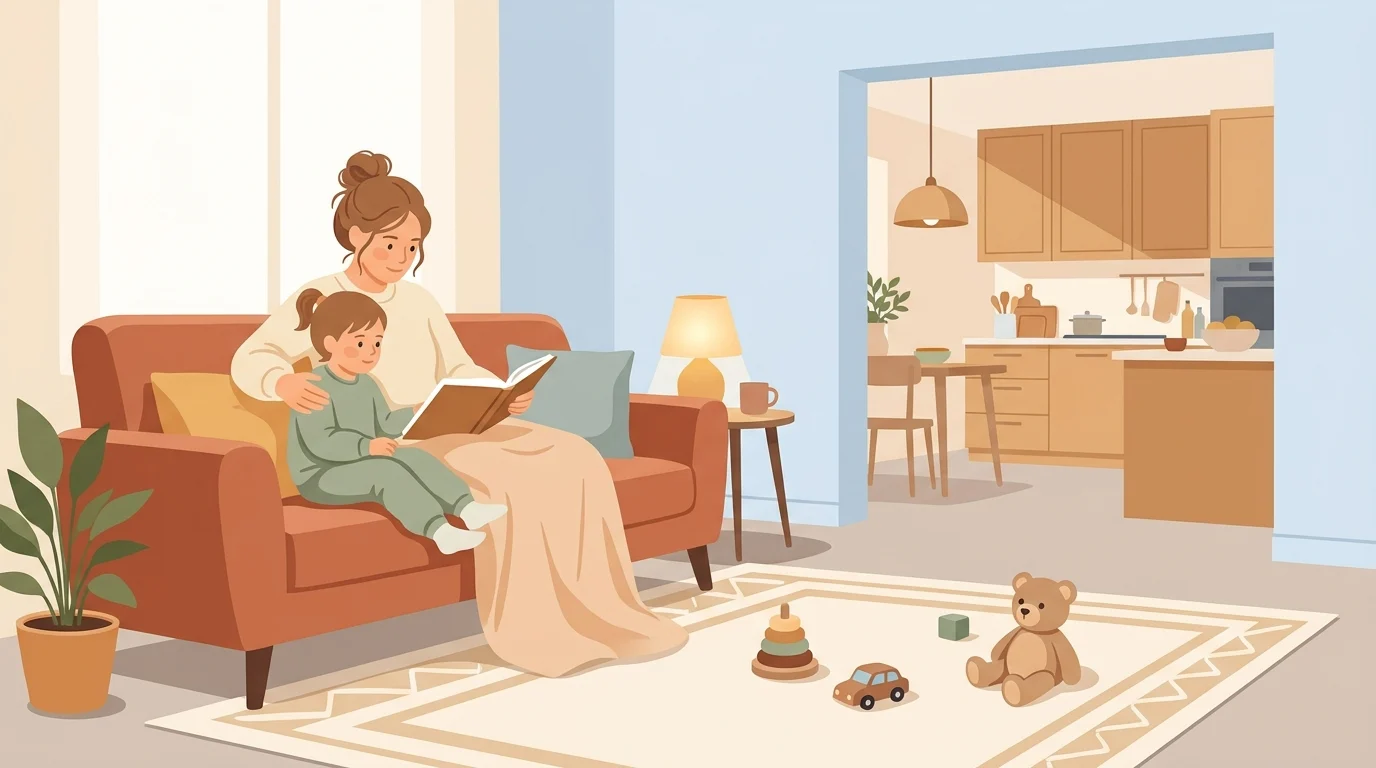
The daily work of a SAHM is broader than most job descriptions. It typically includes feeding, dressing, bathing, and supervising children. Managing meals, laundry, cleaning, and shopping also forms part of the day. School runs, appointments, playdates, and activities also need organising, along with homework, sick days, and emergencies. The household still needs to run, from bills to birthday presents.
That list understates the emotional side. A SAHM is also the first responder to tantrums, fears, injuries, and bad days. The steady presence she provides lets children feel safe. She often manages the family’s social and emotional calendar as well, remembering who needs what, when, and how. The work is constant, repetitive, and frequently interrupted. That is why many SAHMs describe it as the hardest job they have ever done, even when they love it.
None of this means a SAHM never rests or never has help. Routines vary enormously. Some families share evening and weekend duties equally, some rely on grandparents, and some SAHMs build strong routines with naps, outings, and quiet time. The common thread is responsibility: the buck for daily caregiving stops with her.
Why Do Families Choose the SAHM Path?
When families consider the sahm meaning in practice, they arrive at the SAHM arrangement for many reasons, and they are rarely simple. For some, it is a deeply held value: a belief that a parent’s presence in the early years matters most, or a wish to raise children with particular routines and traditions. Others face practical maths: when childcare costs approach or exceed one parent’s take-home pay, staying home can make financial sense, especially with more than one young child.
Circumstance also plays a large role. A child with support needs or a medical condition may require far more time and attention. Standard childcare often cannot provide that level of care. A family in a rural area may have no affordable, quality childcare nearby. A partner’s job may involve moves, long hours, or shift work that makes two outside jobs unworkable. In all these cases, the SAHM role is a solution to a real constraint, not a lifestyle accessory.
It is also true that not every mother who would like to be a SAHM can be one. Many families need two incomes, and many mothers prefer paid work and choose childcare instead. The SAHM path is one valid arrangement among several, not a standard every family should meet.
SAHM, SAHD, WAHM, and Other Related Terms
Parenting forums use a whole alphabet of abbreviations, and they are easy to mix up. SAHD means “stay-at-home dad,” the male equivalent of SAHM. SAHP means “stay-at-home parent,” the gender-neutral term. WAHM means “work-at-home mom”: a mother who earns an income while working from home, such as freelancing or running a business, alongside caregiving. The difference between SAHM and WAHM is paid work: a WAHM has a job based at home, while a SAHM’s role is unpaid caregiving, even if she picks up occasional income.
Other terms you will meet include LO (little one, a child), DH (dear husband), and DD or DS (dear daughter, dear son). These are forum shorthand, not formal titles, and they exist because parenting communities talk fast and often. Knowing SAHM, SAHD, SAHP, and WAHM covers the most important distinctions.
The Challenges of Being a SAHM
The challenges are real and widely reported. Isolation is one of the biggest: days spent mainly with small children, without adult conversation, can feel lonely, especially for someone used to a workplace. The work is also largely invisible. Because there is no pay cheque, no promotion, and no performance review, others can undervalue a SAHM’s contribution. Sometimes she can undervalue it herself.
Financial dependence is another serious consideration. Relying on one income means less financial independence and less retirement saving in her own name. It also means greater vulnerability if the relationship ends or the earning partner loses work. Returning to paid employment later can also be difficult: a gap on a CV, outdated skills, and changed industries all make re-entry harder than many people expect.
There is also the question of identity. Many SAHMs describe losing a sense of self outside motherhood, feeling that their days blur together, or struggling with guilt: guilt for wanting time alone, guilt for enjoying the role, guilt for not enjoying it enough. None of this means the role is wrong. It means it deserves the same honest discussion as any demanding job.
The Benefits and Rewards of Being a SAHM
Against those challenges, many SAHMs point to rewards they would not trade. The first is presence: being there for first steps, school plays, sick days, and ordinary afternoons that cannot be replayed. The second is influence: shaping routines, values, meals, and learning in daily, hands-on ways. The third is flexibility: the ability to structure the day around the family’s needs rather than an employer’s schedule.
Many SAHMs also build strong communities, through playgroups, school networks, and online forums where the abbreviation itself creates belonging. Sharing tips, frustrations, and humour with people in the same role turns an isolating job into a shared one. For families where the maths and values align, the arrangement can reduce stress and simplify logistics. It can also let both parents play to their strengths.
Common Misconceptions About SAHMs
A common misunderstanding about the sahm meaning is that a SAHM “doesn’t work.” Caregiving and household management are work, even when unpaid, and the hours are longer than most paid jobs. Another misconception is that SAHMs all chose the role freely and happily. Many did, but costs, circumstances, or a partner’s job pushed others into the role. Their feelings about it are mixed, which is entirely normal.
It is also wrong to assume SAHMs are all the same. They differ in age, education, income, family size, faith, politics, and plans for the future. Some intend to return to work, some do not, and some build businesses from home over time. The abbreviation describes a role, not a personality.
Finally, do not confuse SAHM with “housewife” as an old-fashioned label. Housewife historically emphasised the home itself; SAHM emphasises the children and the caregiving role. The newer term reflects a shift in how people understand the work.
Is Being a SAHM Right for You?
There is no universal answer, but a few honest questions help. Can the family manage on one income without constant strain? Does the idea of full-time caregiving energise you, or does it drain you to imagine it? What is the plan for your own financial security, such as savings, retirement, and skills? How will you get adult contact, rest, and time for yourself? What happens if circumstances change?
Talking these through with a partner helps. SAHMs who have lived the role can give a clearer picture than any article can. Trial periods, part-time work, and shared caregiving arrangements are also options. The choice does not have to be all or nothing, and it can change as children grow.
Tips for New SAHMs
- Build a loose routine, not a rigid schedule. Children need predictability, but flexibility keeps you sane.
- Find adult contact every day, even briefly: a walk with another parent, a call, a group chat.
- Protect small pockets of personal time, and treat them as non-negotiable, not selfish.
- Keep skills and connections alive if you may return to work: a course, a volunteer role, a professional network.
- Agree finances openly with your partner, including personal spending money and long-term savings in your name.
- Lower the bar on housework on hard days. A lived-in home beats a perfect home with an exhausted parent.
Frequently Asked Questions About SAHM
What does SAHM stand for? Stay-at-home mom: a mother who is the primary caregiver for her children and does not work in a paid job outside the home.
What is the difference between SAHM and WAHM? A SAHM’s role is unpaid caregiving. A WAHM (work-at-home mom) earns an income working from home alongside caregiving.
What does SAHD mean? Stay-at-home dad, the male equivalent of SAHM.
Is a SAHM unemployed? Not in the usual sense. She is not seeking paid work, but she is working full-time as a caregiver and household manager.
Can a SAHM earn money? Yes, many do through flexible side work, but paid employment is not what defines the role.
What does SAHM mean on TikTok? On TikTok, the sahm meaning is the same as elsewhere: stay-at-home mom, often used in day-in-the-life videos, routines, and parenting humour.
Conclusion
In the end, the sahm meaning is a short abbreviation for a long, demanding, and often deeply rewarding role. It means a mother who has made caregiving her full-time work. She may have done so by choice, by circumstance, or by a mix of both. Understanding what sits behind those four letters is the first step to respecting it properly. That means understanding the work, the trade-offs, and the love that drives it.