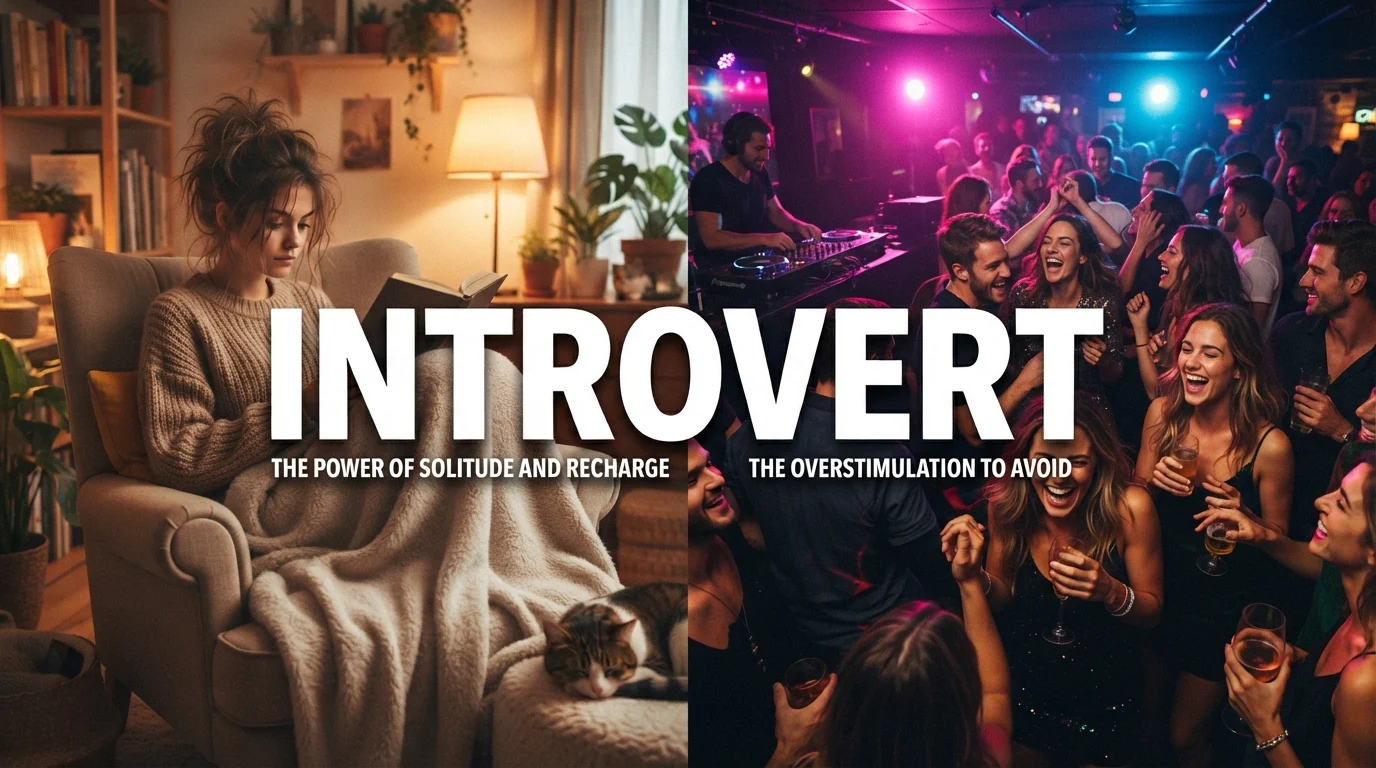
Quick Answer: An introvert is someone who gains energy from internal sources and feels drained by prolonged social interaction or high-stimulation environments. Rather than being energized by crowds and conversation, introverts recharge through solitude, quiet reflection, and low-key activities. This isn’t about being shy or antisocial it’s simply about where you get your energy and how you process the world around you.
You’ve probably heard someone describe themselves as an “introvert” and assumed it just means they’re quiet or shy. Maybe you’ve even called yourself one after a long party left you exhausted. But here’s the thing: the introvert meaning goes much deeper than social awkwardness or a preference for staying home on Friday nights.
The term, popularized by psychologist Carl Jung in the early 1900s, actually describes a fundamental difference in how people manage their energy. And once you understand what introversion truly means, you might see yourself and everyone around you in a completely new light.
Introvert Meaning: The Real Definition
The Energy-Based Explanation
At its core, being an introvert is about energy management. Introverts gain energy from internal, rather than external, sources. They feel most fulfilled and restored after spending time alone or in quiet, low-stimulation environments.
Psychologist Darrielle Allen, PhD, puts it simply: “Being an introvert means you gain more energy and a sense of fulfillment from solitude or quiet, low-stimulation environments”. Introverts tend to value introspection and reflection and typically approach life thoughtfully and deliberately.
The opposite is true for extroverts, who are energized by being in social situations and crave external stimulation from the people, places, and things around them.
It’s Not About Being Shy
One of the biggest misconceptions about introverts is that they’re shy. But shyness and introversion aren’t the same thing at all.
Shyness is characterized by timidity and social anxiety a fear of being judged negatively by others. Introversion, on the other hand, is simply a preference for less stimulation and more time for inward reflection.
Many introverts are confident and comfortable in social settings, but they choose to limit their social engagement because it drains their energy. They’re not afraid of people; they just need more downtime to recharge afterward.
The Latin Roots
The word “introvert” comes from the Latin prefix intro-, meaning “inwardly” or “within,” and the root vertere, meaning “to turn”. So an introvert is literally someone who turns inward mentally, focusing on their own thoughts and feelings rather than seeking external stimulation.
First recorded in English in the 1600s as a verb meaning “to turn one’s thoughts inward,” it wasn’t until the 1900s that Jung popularized it as a personality type.
The Spectrum of Personality
Introversion vs. Extroversion vs. Ambiversion
Human personality exists on a spectrum. One endpoint is introversion. The other is extroversion. Square in the middle sits ambiversion.
Most people don’t fall neatly into one category. They have some elements of both, though one tends to be stronger than the other. This explains why you might enjoy a lively party but still need a quiet day afterward.
The Four Types of Introverts
Not all introverts are the same. Psychologists have identified four common types of introverts:
| Type | Characteristics |
|---|---|
| Social Introverts | Prefer small, intimate gatherings over large crowds. They enjoy social time but need it in smaller doses and thrive on meaningful connections with a few close people |
| Thinking Introverts | Deeply immersed in their inner world daydreamers, reflective, highly imaginative. They can find beauty and meaning in things others overlook |
| Anxious Introverts | Feel uneasy in social situations. May replay interactions afterward, worrying about awkwardness or how they came across |
| Inhibited Introverts | Tend to be reserved and deliberate. They think carefully before speaking or acting and often take time to adjust to new people and environments |
Your particular flavor of introversion might blend any of these elements, and no two introverts are exactly alike.
How to Spot an Introvert: Key Traits
You Need Solitude to Recharge
After spending time at a big party or following a long day of meetings, introverts feel tapped out not necessarily physically tired, but mentally and emotionally drained. Rather than going for happy hour or hitting the after-party, they prefer to take some “me-time” to rest and refuel.
Small Inner Circle, Deep Connections
Introverts typically build a small, intimate social network rather than a large, superficial one. They keep their loved ones close and nurture relationships with a select few. One-on-one conversations with people they know well are far more appealing than casual group settings.
Listening and Observing
Introverts tend to listen and reflect rather than blurt out whatever comes to mind. They often practice their response before saying it out loud. In a group brainstorming meeting, introverts are less likely to “get the ball rolling” and more likely to speak only after crafting a fully considered response.
You Think Before You Speak
Introverts process information internally. They take time to consider every angle before expressing an opinion or making a decision. This deliberate approach means they rarely speak impulsively and often offer thoughtful, well-considered insights.
Socializing Drains Your Battery
It’s not that introverts hate social interaction. They just need more time to recharge between events than extroverted people. Hanging out with friends on Friday might max out your energy, leaving you craving solitude on Saturday to rest and refuel.
You Avoid Conflict
Many introverts have a greater sensitivity to negative evaluation and criticism. They might find it tough to share their thoughts when they believe others might disagree or disapprove, and may avoid conflict whenever possible.
The Spotlight Doesn’t Tempt You
Introverts often prefer behind-the-scenes roles rather than being the center of attention. They might prefer to do the research and write the report rather than present it, or volunteer for tasks that keep them away from the crowd.
You Get Lost in Your Thoughts
Introverts often have an active inner thought process. They may spend time daydreaming, running through scenarios in their mind before settling on a plan of action, or doing extensive research before making decisions.
The Science Behind Introversion
Brain Processing Differences
Research shows that introverts and extroverts process information differently, using different parts of the brain and different neurotransmitters. Extroverts tend to use short-term memory for developing thoughts quickly. Introverts, however, recall thoughts from long-term memory to create more complex associations which requires more time.
This explains why in a lively classroom, extroverts appear excited by the discussion and eager to participate, while introverts may seem unenthusiastic or unsociable when they’re simply processing internally.
It’s Genetic and Biological
Introversion and extroversion are thought to have biological and genetic components. Studies suggest that introverts have a higher baseline level of arousal in their brains, meaning they’re more sensitive to stimulation. This is why they prefer quieter environments and get overwhelmed by too much external input.
How Common Are Introverts?
Estimates suggest that one-third to one-half of all people are introverts. That means one out of every two or three people you meet could be an introvert even if they don’t wear it on their sleeve.
Introvert and Extrovert: The Key Differences
| Aspect | Introvert | Extrovert |
|---|---|---|
| Energy Source | Internal (solitude, quiet reflection) | External (social interaction, people) |
| Social Preference | Small groups, deep conversations | Large groups, variety of people |
| Processing Style | Think before speaking | Think out loud |
| Work Style | Focus on one task at a time | Multitask, make quick decisions |
| Conflict | Tend to avoid | More comfortable with confrontation |
| Communication | Better in writing | Better in conversation |
| Recharge | Time alone | Time with others |
| Stimulation | Prefer low stimulation | Crave high stimulation |
Thriving as an Introvert in an Extroverted World
The Extrovert Ideal
Modern American culture tends to favor extroversion. Extroverts are often seen as possessing the desirable personality traits for success in today’s fast-paced world. Group projects, collaborative learning, open-plan offices many of our systems are designed with extroverts in mind.
Introvert Strengths
But introverts bring a whole host of valuable traits to the table. They tend to be:
- Thoughtful and introspective
- Excellent listeners
- Highly empathetic
- Skilled problem-solvers and creative thinkers
- Good at building deep, meaningful relationships
The key is not to change who you are but to understand and leverage your strengths.
Adaptability Is a Two-Way Street
Introverts can learn to adopt extroverted behavior when needed. This doesn’t mean changing their core identity it means developing extraverted traits for specific situations. With practice, introverts can confidently step into different roles while still remaining true to who they are.
At the same time, organizations and educators can benefit from recognizing introvert strengths and creating environments that work for everyone. Neither set of traits is better or more valuable than the other they’re different, often complementary, and both needed to make the world work.
Signs You Might Be Socially Anxious, Not Just Introverted
There’s a big difference between enjoying time alone and being prevented from connecting with others by anxiety. If social situations make you anxious, overwhelmed, or frustrated, and this is keeping you from the relationships you want, that’s different from preferring to be alone.
Feeling bad or guilty about not hanging out with people you want to see, but can’t, is a good sign that social anxiety may be getting in the way of your relationships. In that case, seeking support might be helpful.
Frequently Asked Questions
What is an introvert? An introvert is someone who gains energy from internal sources and feels drained by prolonged social interaction. They tend to prefer solitude, quiet reflection, and meaningful one-on-one connections.
Is being an introvert the same as being shy? No. Shyness involves fear or anxiety around social judgment, while introversion is simply a preference for less stimulation and more time for inward reflection.
Can introverts be social? Absolutely. Introverts can enjoy socializing and be confident in social settings. They just need more downtime afterward to recharge their energy.
What are the four types of introverts? The four commonly described types are social introverts, thinking introverts, anxious introverts, and inhibited introverts. Each type has different characteristics and preferences.
Is it okay to be an introvert? Yes, it’s completely normal and healthy. Around one-third to one-half of all people are introverts, and introverts bring many valuable strengths to the world.
Can you become more extroverted? You can develop extroverted traits with practice, but your core temperament whether you’re energized by solitude or socializing tends to remain stable. Many introverts successfully learn to adopt extroverted behavior when needed.
What is an ambivert? An ambivert falls in the middle of the introvert-extrovert spectrum, showing traits of both personality types. Most people are actually somewhere in between the two extremes.
Key Takeaways
| Aspect | Key Point |
|---|---|
| Core Definition | Someone who gains energy from internal sources and feels drained by high-stimulation environments |
| Origin | Term popularized by Carl Jung in the early 1900s; from Latin intro- (inward) + vertere (to turn) |
| Not the Same As | Shyness, social anxiety, antisocial behavior, or loneliness |
| Four Types | Social, thinking, anxious, and inhibited introverts |
| Common Traits | Need solitude, small inner circle, think before speaking, avoid conflict, prefer listening to speaking |
| Prevalence | One-third to one-half of all people are introverts |
| Strengths | Thoughtful, empathetic, creative, excellent listeners, skilled problem-solvers |
| Spectrum | Exists on a continuum with extroversion; most people are somewhere in between |
Conclusion: Understanding the Introvert Meaning
The introvert meaning is far richer and more nuanced than simply “someone who’s quiet.” It’s about energy where you get it and what drains you. It’s about connection whether you prefer depth or breadth in your relationships.
Understanding introversion matters because it helps us understand ourselves and each other. Introverts aren’t broken extroverts who need to be fixed. They’re people with a fundamentally different way of engaging with the world one that brings immense value to relationships, workplaces, and communities.
In a world that often celebrates the loudest voices, introverts remind us of the power of listening. They show us that not everything needs to be said immediately, that reflection has value, and that meaningful connection often happens one-on-one, not in a crowd.
So whether you’re an introvert, an extrovert, or somewhere in between, take time to understand your energy and honor it. Know that your preferences aren’t weaknesses they’re simply the way you’re wired. And that’s not something to change. It’s something to celebrate.