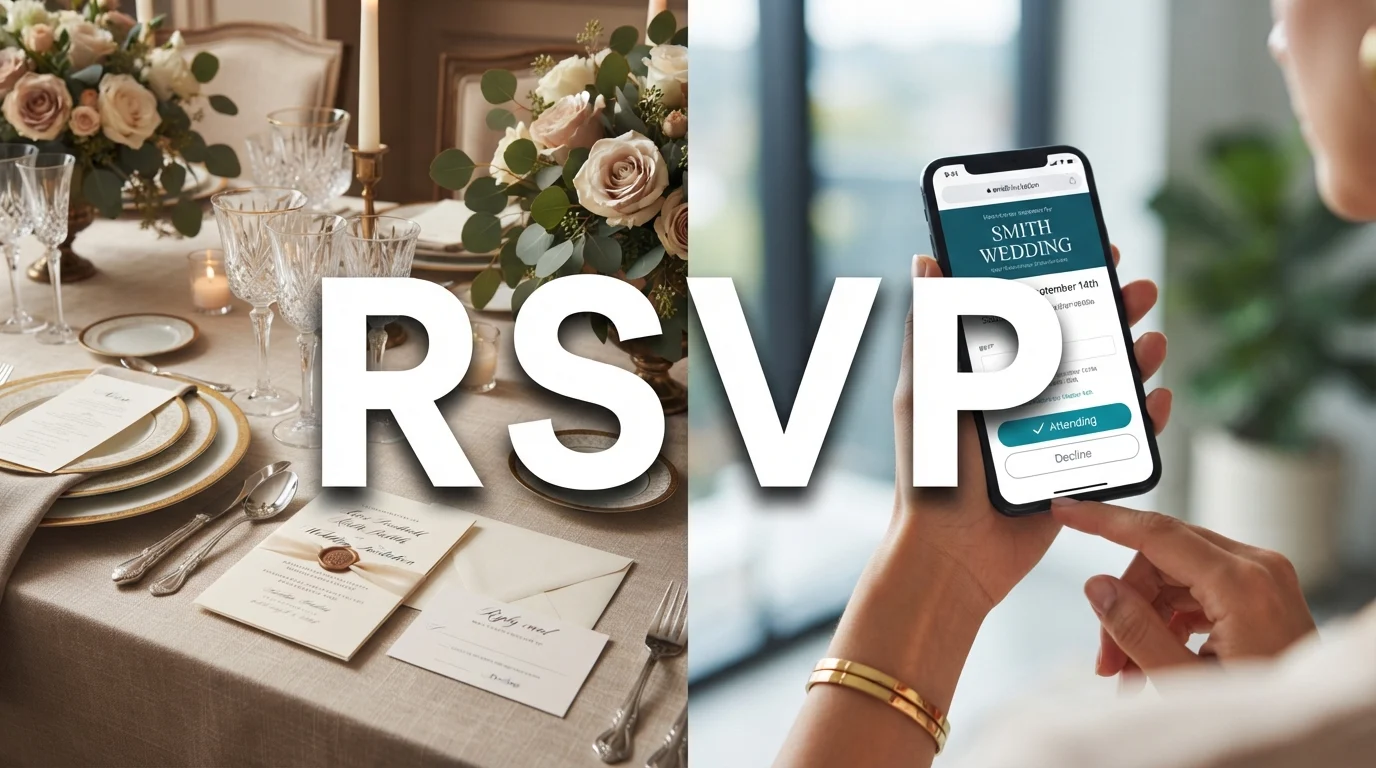
Quick Answer: RSVP stands for the French phrase “répondez s’il vous plaît,” which translates to “please respond” or “respond if you please” . When you see RSVP on an invitation, the host is asking you to confirm whether or not you plan to attend. This helps them plan for food, seating, and other logistics. Today, “RSVP” is used as both a noun (“send an RSVP”) and a verb (“RSVP to the party”) . The term has been in use since the late 1800s and remains essential for event planning, from casual get-togethers to formal weddings .
You open your mailbox and find a beautiful wedding invitation. At the bottom, in elegant script, it says “RSVP by October 15th.” Or maybe it’s a text from a friend: “Hey, can you RSVP for the BBQ this weekend?” The letters are everywhere, but what do they actually mean?
RSVP is one of those terms we all use without thinking. We know we’re supposed to reply, but many of us don’t know where the word comes from or why it matters so much. The truth is, RSVP is more than just a polite request it’s a social contract that shows respect for the person who invited you .
And here’s a fun twist: while RSVP comes from French, modern French speakers barely use it. They prefer the simpler “SVP” (s’il vous plaît) instead. The term’s endurance in English is a classic example of how language travels, adapts, and sometimes outlives its original context .
RSVP Meaning: What Does It Actually Mean?
The Basic Definition
RSVP is an abbreviation of the French phrase “répondez s’il vous plaît” . Broken down: répondez means “respond,” s’il means “if,” vous means “you,” and plaît means “please.” Put it all together, and you get “respond, if you please” or simply “please reply” .
When an invitation includes RSVP, the host is politely asking you to let them know whether you’ll be attending . This isn’t just a formality it’s essential information that helps them plan everything from food quantities to seating arrangements .
Noun or Verb? Both!
Here’s something interesting about the RSVP meaning in modern usage: the term has become incredibly flexible . You can use it as a noun:
- “I need to send my RSVP by Friday.”
Or as a verb:
- “Have you RSVPed to the wedding yet?”
- “Don’t forget to RSVP for the dinner party.”
This linguistic flexibility is a sign that RSVP has become fully naturalized in English. It’s no longer just a borrowed phrase it’s part of our everyday vocabulary .
The Censored and Playful Versions
Like many commonly used abbreviations, RSVP has spawned some humorous reinterpretations. You might hear people jokingly say it stands for “Really Save Your Plate” or “Respond So Very Promptly” . These playful backronyms show how comfortable we’ve become with the term, even if we don’t always follow its instructions!
The Origins of RSVP: A French Phrase with English Staying Power
When Did RSVP First Appear?
The exact origins of RSVP are a bit fuzzy, but historians have traced it back to at least the 1800s . Some sources suggest the term was first used in 1845, while others point to the 1825 book Domestic Duties; or, Instructions to Young Married Ladies, on the Management of Their Households and the Regulation of Their Conduct in the Various Relations and Duties of Married Life by Mrs. William Parkes .
That’s quite a title, isn’t it? The book was essentially a guide for young housewives, covering everything from household management to the proper way to write invitations including RSVPs .
Why Isn’t It Used Much in France?
Here’s a fascinating irony: RSVP comes from French, but the French don’t really use it anymore. The term is considered quite formal in France, and modern French speakers prefer “SVP” (s’il vous plaît) for everyday use .
This pattern isn’t unusual in language history. Sometimes, words that start as foreign borrowings get preserved in one language long after they’ve fallen out of fashion in their original tongue. English has kept RSVP alive and thriving, even as it faded in French usage .
A Brief History of the RSVP
According to linguists, the original RSVP meaning encouraged invitees to respond promptly with their intention to attend an event. Around the 1900s, some people thought it was common knowledge that one should “please respond” to a formal invitation, making the RSVP notation seem redundant .
But times changed. Today, RSVP is used for almost any event requiring a headcount from formal weddings to casual Facebook invitations for Christmas parties . The term has adapted to modern needs while keeping its core meaning intact.
Types of RSVPs: From Traditional Cards to Digital Clicks
Traditional RSVP Cards
For formal events like weddings, traditional RSVP cards are still common . These often include:
- A pre-addressed, stamped envelope for guests to mail back their response
- A line for the guest’s name(s)
- A space to indicate whether they’ll attend
- Sometimes a line for meal preferences (“Chicken or Fish?”)
These cards are elegant and traditional, but they do require guests to make an extra trip to the mailbox.
Informal RSVPs
For casual events, the rules are more relaxed. A phone call, a text message, or even a quick social media direct message can serve as an RSVP . If the invitation says “Regrets Only,” you only need to respond if you can’t attend .
| Type | Best For | Example |
|---|---|---|
| Traditional Card | Weddings, formal events | Mailed RSVP card with stamped envelope |
| Phone Call | Dinner parties, small gatherings | “Hi, I’d love to come!” |
| Text Message | Casual events, BBQs | “Count me in!” |
| Digital | Modern events, virtual gatherings | Clicking “Attending” on Evite |
Digital RSVPs
As the world becomes more digital, electronic RSVPs are increasingly popular . These can take several forms:
- Email replies to an invitation
- Clicking a button on a digital invitation platform like Paperless Post or Evite
- RSVP forms on wedding websites
- Social media event pages
Digital RSVPs have some clear advantages. They’re faster, more convenient, and often provide automatic tracking for hosts . But they also make it easier for guests to forget to respond!
The “M” on RSVP Cards: What Does It Mean?
If you’ve ever received a formal wedding invitation, you might have noticed a puzzling “M” with a blank line after it on the RSVP card. What’s that about?
The “M” is asking for your formal reply with your full name and title and the title starts with an “M” . Common titles include:
- Mr.
- Miss
- Ms.
- Mrs.
- Mx. (a gender-neutral option)
The idea is that you fill in the line with “Mr. John Smith” or “Ms. Jane Doe” to indicate exactly who is attending . It’s a holdover from an era of more formal correspondence, but many couples still use it today.
Why RSVP Is So Important
It Helps Hosts Plan
Imagine you’re hosting a dinner party for ten people. You spend hours preparing food, setting the table, and arranging the seating. Then, on the night of the party, twenty people show up because half of them didn’t RSVP . Or worse only five people come, and you have mountains of leftover food.
RSVPs are crucial because they give hosts an accurate headcount . This information helps with:
- Food planning: Knowing exactly how many meals to prepare
- Seating arrangements: Ensuring enough chairs and table space
- Budgeting: Knowing how much to spend on catering, rentals, etc.
- Venue capacity: Making sure the venue isn’t over capacity
- Logistics: Planning for parking, bathrooms, and other needs
Without RSVPs, hosts are left guessing, which leads to stress, wasted resources, and sometimes embarrassing situations .
It’s a Matter of Respect
Responding to an RSVP isn’t just about logistics it’s a sign of respect . When someone invites you to an event, they’re investing time, effort, and money to include you. Your response acknowledges that investment .
Failing to RSVP can be seen as inconsiderate and rude . It leaves the host wondering whether to count you in, and it can disrupt their planning . As one etiquette expert put it, “RSVPs are a matter of respect; treat them that way” .
It’s Also About Your Social Standing
Let’s be honest: people notice who RSVPs and who doesn’t. If you consistently fail to respond to invitations, you may find yourself invited to fewer events. Hosts tend to prioritize people who are reliable and considerate.
On the other hand, responding promptly and graciously builds social capital. Hosts appreciate guests who make their planning easier, and they’re more likely to include you in future events.
RSVP Etiquette: The Rules You Should Know
Respond Promptly
The golden rule of RSVP etiquette: respond as soon as possible . Ideally, you should reply within a week of receiving the invitation . If the invitation includes a deadline, definitely respond by that date.
Why the rush? Event planning often happens in stages. Caterers need final numbers weeks in advance. Venues need seating charts. Your host needs time to adjust plans based on the headcount .
Use the Same Method as the Invitation
A good rule of thumb: respond using the same method as the invitation . If you received a traditional paper invitation with a reply card, mail it back. If you got a digital invite, reply digitally.
This may seem picky, but it prevents confusion . If you call a phone number that was only meant for emergencies, your response might not get recorded properly.
Don’t Wait Until the Last Minute
Procrastination is a major reason people miss RSVP deadlines . Don’t put it off! The day you receive an invitation, take a moment to check your calendar and reply. If you’re unsure about your availability, it’s better to communicate that to the host than to ignore the RSVP entirely .
Don’t Bring Uninvited Guests
If the invitation doesn’t mention a plus-one or other guests, don’t include them in your RSVP . Hosts plan for a specific number of guests, and unexpected extra people can throw off everything from food portions to seating arrangements.
If You Say Yes, Show Up
Here’s one of the biggest breaches of RSVP etiquette: saying “yes” and then failing to show up . Only a serious illness or family emergency should keep you away after you’ve RSVPed “yes.”
If something does come up, contact the host as soon as possible to let them know. Don’t just disappear. It’s disrespectful to the host and takes up a spot that could have gone to someone else.
If You Can’t Attend, Still Respond
Some people think RSVP only means “respond if you’re coming.” That’s not correct. If you can’t attend, you should still respond with a “no” .
When you RSVP “no,” it’s nice to include a brief note explaining why you can’t attend and offering your best wishes for the event . This shows you’re thinking of the host even though you won’t be there.
How to RSVP: Practical Examples
How to RSVP via Email
Email is a common and convenient way to RSVP . Here’s a simple template:
Subject: RSVP for [Event Name]
Dear [Host Name],
Thank you for the kind invitation to [event name] on [date]. I will gladly attend and will be bringing [number] guest(s): [name(s)].
Please let me know if you need any further information.
Best regards,
[Your Name]
How to RSVP via Text
Text RSVPs are increasingly common for casual events . A simple response works well:
“Hi! Count me in for Saturday’s BBQ. Looking forward to it!”
Or, if you can’t make it:
“Hey, I won’t be able to make it to the party, but thank you so much for the invite! Hope it’s a blast.”
How to RSVP for Formal Events
For formal events, especially those with traditional RSVP cards, follow the instructions on the card . If there’s no card, write a formal note of acceptance:
“Mr. John Smith accepts with pleasure the kind invitation of [Host Name] to the reception on [date].”
A Quick Checklist for RSVPing
- □ Check the invitation for the RSVP method and deadline
- □ Mark your calendar for the event
- □ Reply promptly (within a week is ideal)
- □ Include the correct number of guests
- □ Mention any dietary restrictions if asked
- □ If you can’t attend, still respond with “no”
- □ If you respond “yes,” follow through and attend
Frequently Asked Questions
What does RSVP stand for? RSVP stands for the French phrase “répondez s’il vous plaît,” which means “please respond” or “respond if you please” .
Is RSVP just for formal events? Not anymore! While RSVP originated with formal events, it’s now used for everything from weddings to casual backyard barbecues .
Do I have to RSVP if I can’t attend? Yes! Even if you can’t attend, you should still respond with a “no” so the host can get an accurate headcount .
What if I miss the RSVP deadline? Contact the host as soon as possible. Sometimes they can still accommodate you, but don’t assume that’s the case .
What does the “M” on an RSVP card mean? The “M” is asking for your formal title (Mr., Miss, Ms., Mrs., or Mx.) followed by your full name .
Do French people use RSVP? Not really. Modern French speakers consider RSVP too formal and prefer “SVP” (s’il vous plaît) for everyday use .
What is the penalty for not RSVPing? Social consequences, mostly. You risk being seen as rude or inconsiderate, and you might receive fewer invitations in the future .
Key Takeaways
| Aspect | Key Point |
|---|---|
| Meaning | “répondez s’il vous plaît” (Please respond) |
| Origins | French phrase dating back to at least the 1800s |
| Usage | Both as noun (“send an RSVP”) and verb (“to RSVP”) |
| Purpose | Helps hosts plan food, seating, and logistics |
| Types | Traditional cards, phone calls, text messages, digital |
| Etiquette | Respond promptly, use the same method, follow through |
| “M” on Cards | Asks for your formal title (Mr., Miss, Ms., Mrs., Mx.) |
Conclusion: The Simple Courtesy That Means So Much
RSVP might be just four letters, but it carries a lot of weight. It’s a request, a social obligation, and a sign of respect all rolled into one.
At its heart, RSVPing is about acknowledging someone else’s effort. When a host invites you to an event, they’re investing in you your presence, your company, your happiness. A simple “yes” or “no” in return is the least you can do .
The practice of RSVPing dates back centuries, but its importance hasn’t diminished. If anything, it’s more crucial than ever in our busy, distracted world . Your response helps hosts make better plans, reduces stress, and ensures that events run smoothly.
So the next time you see “RSVP” on an invitation, don’t ignore it. Don’t procrastinate. And definitely don’t say “yes” and then no-show. Take two minutes to respond promptly and graciously. Your host will thank you even if they don’t say it out loud.
Remember, every RSVP is an act of kindness. It says, “I see your effort, I appreciate your invitation, and I respect you enough to give you a straight answer.” In a world full of ambiguity, that clarity is priceless.