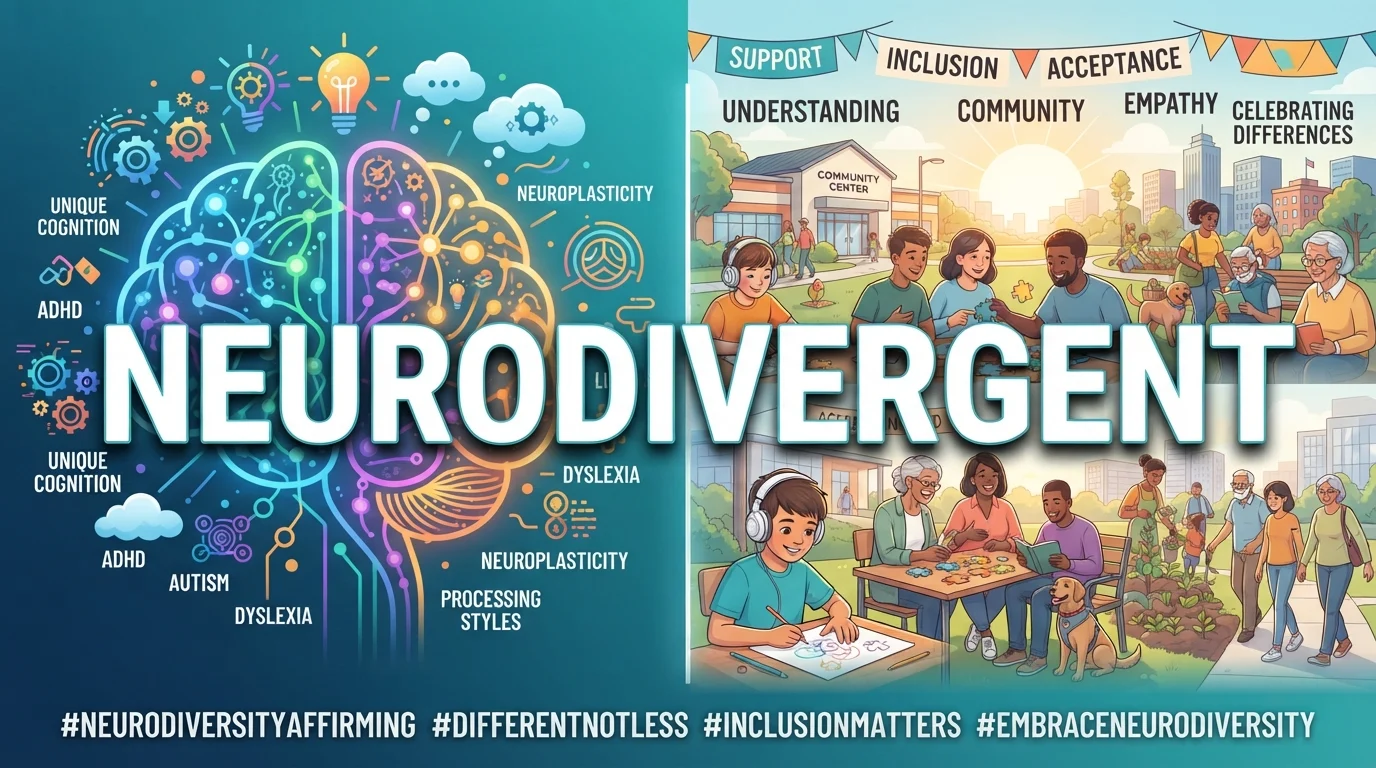
Quick Answer: Neurodivergent describes people whose brains work differently from what society considers typical. It’s an umbrella term for conditions like autism, ADHD, dyslexia, and other neurological differences. The term challenges the idea that there’s a single “normal” way for a brain to function and emphasizes that neurological diversity is natural and should be respected. Rather than viewing these differences as deficits or disorders, the concept promotes the idea that different brain types bring unique strengths and perspectives. The term isn’t a medical diagnosis it’s a way of describing and embracing the natural variations in human neurology.
You’ve probably seen “neurodivergent” popping up all over social media, in workplace discussions, and even in parenting circles. The word seems to be everywhere. But what does it actually mean? And why are so many people embracing it?
Think of it this way: just as there’s no single “right” eye color or height, there’s no single “right” way for a brain to work. Neurodivergent is a term that celebrates this truth. It describes people whose brains process information, learn, and experience the world differently from the statistical norm.
The term came from the neurodiversity movement, which argues that conditions like autism and ADHD aren’t flaws to be fixed but natural variations in human wiring. It’s a powerful shift from the old “disorder” language to something more affirming and inclusive.
Neurodivergent Meaning: What Does It Actually Mean?
The Basic Definition
Neurodivergent describes individuals whose neurological development and functioning differ from what’s considered typical or “neurotypical”. It’s not a medical diagnosis. It’s an umbrella term that covers a wide range of conditions and brain differences.
The word emerged from the broader concept of “neurodiversity,” a term coined by Australian sociologist Judy Singer in 1998. Neurodiversity recognizes that all human brains work differently and that this diversity is natural and valuable. Neurodivergent describes those whose brains work in ways that fall outside the typical range.
Neurodivergent vs. Neurotypical
Everyone is either neurodivergent or neurotypical. Here’s how they compare:
Not a Diagnosis A Framework
Here’s something crucial to understand: neurodivergent isn’t a medical label. You won’t find it in the DSM-5. It’s a social and cultural term that has gained traction among self-advocates and within the broader neurodiversity movement.
Some people choose to identify as neurodivergent without a formal diagnosis. Others prefer the specificity of a medical diagnosis like autism or ADHD, which can help access support services. Both approaches are valid.
What Conditions Fall Under Neurodivergent
The neurodivergent umbrella covers a broad range of conditions:
Neurodevelopmental and Learning Conditions:
- Autism Spectrum Disorder (ASD)
- Attention-Deficit/Hyperactivity Disorder (ADHD)
- Dyslexia (reading difficulty)
- Dyscalculia (math difficulty)
- Dysgraphia (writing difficulty)
- Dyspraxia (coordination difficulty)
Other Neurological Differences:
Mental Health Conditions:
It’s important to note that not everyone with these conditions identifies as neurodivergent. The term is descriptive, not prescriptive.
Signs and Common Experiences
There’s no single checklist for neurodivergence. Experiences vary widely from person to person. However, some patterns are commonly reported:
- Attention differences: Difficulty focusing or becoming intensely hyperfocused on specific tasks
- Sensory sensitivity: Being overwhelmed by loud noises, bright lights, or certain textures
- Executive function challenges: Difficulty with planning, organization, and transitioning between tasks
- Social communication differences: Trouble reading social cues, preferring literal interpretations, or feeling exhausted by social interactions
- Learning differences: Uneven skills with strong abilities in some areas and struggles in others
- Masking exhaustion: Spending energy to appear “typical” in overwhelming situations
One concept that often comes up is the “spiky profile.” Neurodivergent people frequently have uneven skill sets excellent at some things while struggling with others. This is different from the “flat profile” typically seen in neurotypical individuals, where skills are more balanced across areas.
The Neurodiversity Movement: Changing the Conversation
Origins of the Movement
The neurodiversity movement began in the late 1990s, largely driven by autistic self-advocates who wanted to challenge the view of autism as a disease to be cured. Sociologist Judy Singer’s 1998 essay on “neurological diversity” laid the groundwork, but it was autistic advocates who built it into a movement.
Core Principles
The movement argues that neurodivergent people face discrimination similar to other minority groups. Rather than changing the individual, society should accommodate and value different ways of thinking and being.
Key principles include:
- Autism and other conditions are part of a person’s identity, not a separate “disease”
- Social barriers, not neurological differences, create disability
- Society should adapt to diverse brains, not force everyone to be “typical”
- Pride in neurodivergent identity is valid and important
The Social Model vs. The Medical Model
This is where things get interesting. The neurodiversity movement prefers the “social model” of disability. This model says people are disabled not by their bodies or brains but by societal barriers lack of accommodations, discrimination, inaccessible environments.
The “medical model,” in contrast, treats differences as problems to be fixed or cured. The neurodiversity movement pushes back against this framing, saying it’s society that needs to change, not individuals.
But there’s a twist. While the movement adopts the social model, it also emphasizes neurological differences as central to a person’s identity an idea that actually comes from the medical model. This creates an interesting paradox, but the core goal remains the same: acceptance and support.
Challenges Neurodivergent People Face
Daily Life Struggles
Even simple tasks can feel overwhelming for neurodivergent people. Getting ready in the morning might involve struggling with executive function (figuring out the steps), sensory overload (the feel of certain clothes), or choice paralysis (deciding what to wear). Group conversations might be exhausting because of the need to process social cues in real time.
Mental Health Risks
Neurodivergent teens and adults face higher rates of anxiety, depression, and social isolation. Sensory overload, bullying, and the strain of masking (pretending to be neurotypical) all take a toll. Without proper support, these challenges can lead to low self-esteem or self-harm.
The Masking Problem
Many neurodivergent people learn to “mask” hiding their natural behaviors to fit in with neurotypical expectations. This can involve suppressing stimming (repetitive movements), forcing eye contact, or mimicking social scripts. Masking is exhausting and can lead to burnout, anxiety, and depression. Research suggests that autistic people who mask may actually experience more victimization than those who appear more obviously autistic.
Strengths and Success Stories
Why Neurodivergent People Thrive
Being neurodivergent isn’t just about challenges. Many neurodivergent people have remarkable strengths:
- Deep focus and attention to detail
- Exceptional pattern recognition and analytical skills
- Creative and outside-the-box thinking
- Strong memory and specialized knowledge
- Authenticity and direct communication
Famous Neurodivergent People
Many accomplished and successful people are open about their neurodivergence:
Contemporary Figures:
- Temple Grandin (animal scientist and author)
- Sir Anthony Hopkins (Oscar-winning actor)
- Florence Welch (musician)
- Simone Biles (Olympic gold medalist)
- Greta Thunberg (climate activist)
Historical Figures (believed to be neurodivergent based on evidence):
- Albert Einstein (physicist)
- Marie Curie (physicist and chemist)
- Vincent Van Gogh (artist)
- Nikola Tesla (inventor)
- F. Scott Fitzgerald (author)
The Workplace Advantage
Businesses are increasingly recognizing the value of neurodivergent talent. A 2017 Harvard Business Review article titled “Neurodiversity as a competitive advantage” detailed how major companies in tech, automotive, and banking are actively hiring neurodivergent people. Their unique perspectives and skills are assets, not liabilities.
Support and Treatment Options
What Help Looks Like
There’s no “cure” for neurodivergence because it’s not an illness to be cured. Instead, support focuses on reducing distress, building skills, and improving daily functioning.
Options may include:
- Behavioral strategies and coaching
- Educational accommodations (extra time, quiet rooms)
- Occupational therapy (for sensory or motor challenges)
- Speech therapy (for communication differences)
- Medication (when conditions like ADHD or anxiety are present)
- Workplace adjustments (flexible hours, noise-canceling headphones)
Finding Out If You’re Neurodivergent
The first step is talking to a healthcare provider. They can refer you to specialists who can assess whether you have a condition that might explain your differences.
For children, this might involve pediatricians, neurologists, psychiatrists, psychologists, or educational specialists. For adults, reviewing childhood history can be especially important, since many traits were only noticed after years of coping strategies.
Frequently Asked Questions
What does neurodivergent mean? Neurodivergent describes people whose brains work differently from what society considers typical. It’s an umbrella term covering conditions like autism, ADHD, dyslexia, and more.
Is neurodivergent a medical diagnosis? No, it’s not a medical term or diagnosis. It’s a social and cultural term used to describe neurological differences.
What’s the difference between neurodivergent and neurotypical? Neurotypical describes people whose brain function aligns with what’s considered typical or expected. Neurodivergent describes those whose brain function differs from that norm.
What conditions are considered neurodivergent? Common conditions include autism, ADHD, dyslexia, dyscalculia, dyspraxia, Tourette syndrome, sensory processing disorders, and some mental health conditions.
Can you be both neurodivergent and neurotypical? No, these terms are mutually exclusive. Everyone is either neurodivergent or neurotypical based on whether their brain functions differ from typical expectations.
Is being neurodivergent bad? Not at all. Being neurodivergent means having a different way of thinking and processing the world. Many neurodivergent people are highly successful and bring unique strengths to their communities and workplaces.
How do I know if I’m neurodivergent? If you recognize patterns like sensory sensitivity, focus differences, or social communication challenges, consider talking to a healthcare provider. They can help you understand your experiences and identify any underlying conditions.
Key Takeaways
Conclusion: Embracing Neurological Diversity
The neurodivergent meaning represents a fundamental shift in how we think about human minds. For too long, differences in brain function were viewed only through the lens of disorder and deficit. The neurodiversity movement challenges that, insisting that conditions like autism and ADHD are natural variations not flaws to be fixed.
This doesn’t mean neurodivergence is always easy. Sensory overload, executive dysfunction, and the exhaustion of masking are real struggles. But these challenges don’t define a person. Neurodivergent individuals bring unique strengths to their communities: deep focus, creative problem-solving, authentic communication, and perspectives that enrich our collective understanding.
The growing recognition of neurodivergence has practical benefits too. Companies are realizing that neurodivergent talent is a competitive advantage. Schools are developing more inclusive approaches. And individuals are finding community and pride in their identities.
Ultimately, understanding neurodivergence is about recognizing that human minds are wonderfully diverse. There’s no single “right” way to think, learn, or experience the world. When we embrace that diversity, we create a society where everyone has the opportunity to thrive not despite their differences, but because of them.