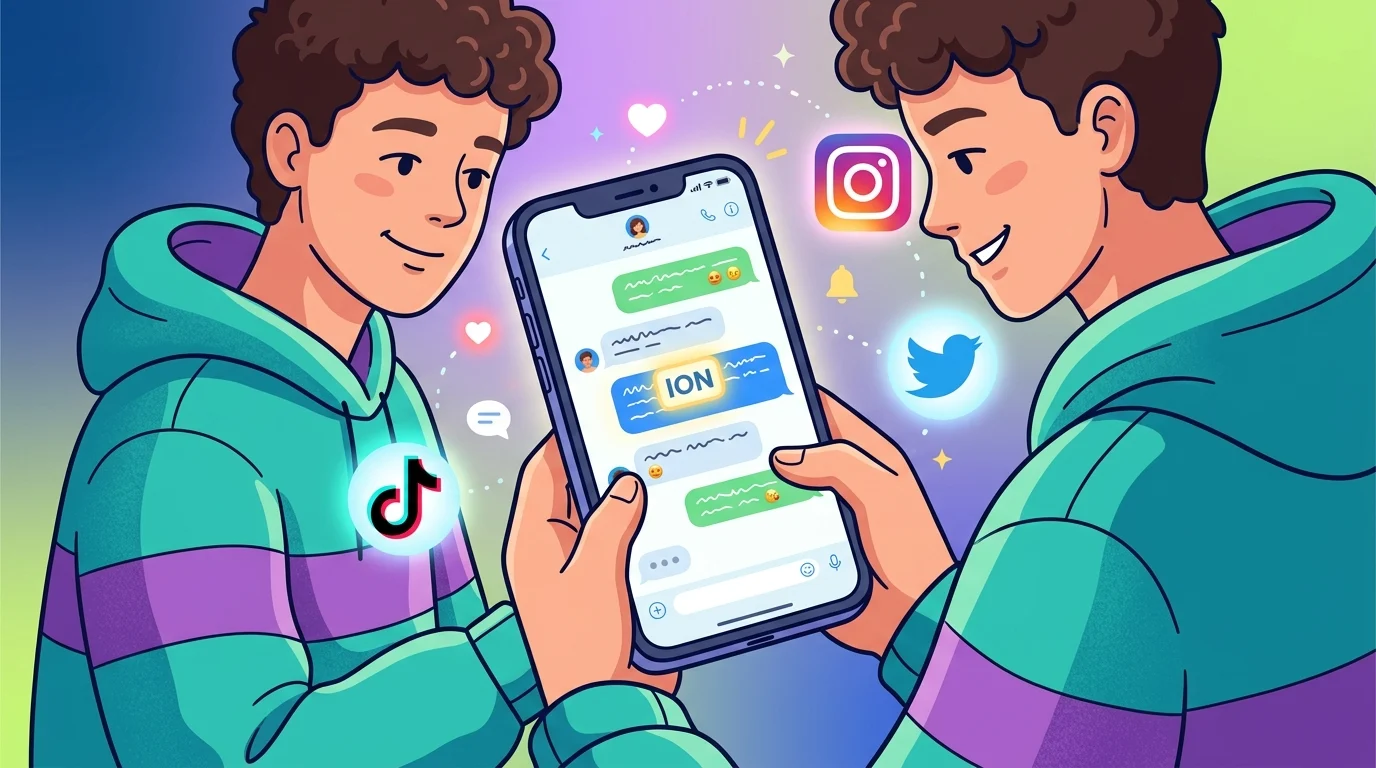
Quick Ans: The ion meaning in text is one of the most searched slang questions online. In casual messages and on social media, “ion” is a shortened way of saying “I don’t.” This small word saves time and fits the fast pace of digital conversation. It appears in texts, tweets, comments, and captions across every major platform.
Understanding slang shortcuts makes online communication easier. New abbreviations appear constantly, and some become so common that they feel like standard English. Ion is a perfect example. It started in casual speech and spread through texting and social media. Knowing how to use it correctly helps you read messages faster and sound more natural in your replies.
What Does Ion Mean in Text?
Ion is a slang contraction of “I don’t.” It combines the subject “I” with the negative verb “don’t” into one short word. People use it to express refusal, disagreement, or lack of interest without typing the full phrase.
The term belongs to casual communication. It fits perfectly in texts, tweets, comments, and direct messages. It does not belong in formal writing, business emails, or academic papers. The tone is relaxed and conversational, which is exactly why it spread so quickly.
Sometimes people write it in lowercase as ion. Other times they capitalize it as Ion. Both versions mean the same thing. The choice usually depends on the person’s typing style or the platform’s conventions.
There is an important distinction to remember. Ion as slang is different from ion in science. In chemistry and physics, an ion is an atom or molecule with an electric charge. The context determines which meaning applies.
How to Use Ion in Conversations
Ion works in many different situations. Its flexibility is one reason it became so popular.
The most common usage is expressing refusal or lack of desire. A message like “ion want to go” means “I don’t want to go.” The tone is casual and direct.
Another common usage is expressing disagreement. A text like “ion think that’s true” means “I don’t think that’s true.” The abbreviation softens the statement slightly while keeping it clear.
Ion also appears in expressions of dismissal or disinterest. Phrases like “ion care” or “ion know” use the term to show that the speaker has no strong feelings or information. These usages often appear in comment sections and group chats.
The word can also signal boundaries. A message like “ion play about my family” means “I don’t play about my family.” This usage carries a more serious tone and warns others not to cross a line.
Ion on TikTok and Social Media
Ion is everywhere on social media. It appears in TikTok comments, Instagram captions, Twitter posts, and Snapchat messages. The abbreviation fits the fast pace of these platforms because it is short and instantly recognizable.
On TikTok, ion often appears in comment sections under relatable videos. A comment like “ion even know why I’m here” signals casual confusion or amusement. Another comment like “ion care what nobody says” expresses strong independence. The word keeps comments brief, which matters when thousands of people are responding to the same video.
On Instagram, ion shows up in captions and story text. Influencers and regular users alike use it to express opinions in a relaxed way. A caption like “ion post much but when I do” creates a friendly, conversational tone.
On Twitter, ion is standard vocabulary. The platform’s character limit made abbreviations essential, and ion became a natural fit. Even with expanded limits, the habit remains strong.
Ion vs I Don’t and Similar Terms
Several other phrases overlap with ion in digital spaces. Understanding the differences helps avoid confusion.
I don’t is the full phrase. It sounds more formal and clear. Ion is the casual, shortened version used in quick messages.
Ion should not be confused with I on. If someone writes “I on the way,” they mean “I am on the way.” The spacing and context change the meaning completely.
Iun is another slang variation that means “I don’t.” It appears less often than ion but carries the same meaning. Some people use it to avoid confusion with the scientific term.
Idk means “I don’t know.” It is more specific than ion. Ion can mean “I don’t” followed by any verb, while idk only refers to not knowing.
When Not to Use Ion
Ion does not belong in every conversation. Its casual nature makes it unsuitable for professional or formal settings.
Avoid using ion in work emails, school assignments, business reports, or any communication with people you do not know well. Slang contractions can come across as unprofessional or confusing in these contexts. A client or manager may not understand the term.
There is also a risk of misinterpretation in scientific contexts. In chemistry, physics, and biology, an ion is a charged particle. Using the slang version in these settings could cause serious confusion. Always check the context before assuming the slang meaning.
Alternative Meanings of Ion
While “I don’t” is the dominant slang meaning, ion carries other definitions in specific contexts. Knowing these alternatives helps avoid misunderstandings.
In chemistry, ion refers to an atom or molecule with a net electric charge. This happens when the number of electrons does not equal the number of protons. Ions are fundamental to chemical reactions and electrical conductivity.
In physics, ion describes charged particles that play a role in plasma, radiation, and electromagnetic fields. The study of ions is central to many scientific fields.
In Greek mythology, Ion is a character associated with the god Apollo. He was the ancestor of the Ionians, one of the major Greek families. His story appears in plays by Euripides.
In business, ION can stand for various company names and organizations. For example, ION Group is a financial technology company. The context determines which meaning applies.
Why Ion Became Popular
Ion grew alongside the rise of text messaging and social media. As communication moved to small screens and quick exchanges, people needed ways to express common phrases in fewer characters. “I don’t” was a natural candidate for contraction because it appears constantly in casual conversation.
The word also reflects patterns in spoken language. In many dialects and informal speech, “I don’t” sounds like “ion” when spoken quickly. Writing it the way it sounds made the abbreviation feel natural and authentic.
The term spread through online forums, chat rooms, and eventually social media platforms. Each new generation of internet users adopted it and made it their own. Today it feels less like an abbreviation and more like a standard part of digital vocabulary.
FAQs
What does ion mean in text?
Ion is a slang contraction of “I don’t.” It is used in casual texting and social media to express refusal, disagreement, or lack of interest quickly and informally.
Is ion rude or offensive?
No. Ion is a neutral and casual term. It carries no offensive meaning when used in friendly conversation. Tone matters, so avoid using it in serious or formal discussions.
Can I use ion in professional emails?
No. Ion is too casual for professional settings. Use the full phrase “I don’t” in work emails, business reports, and formal writing.
What does ion mean on TikTok?
On TikTok, ion stands for “I don’t.” It appears in comments and captions to express opinions, refusals, or disinterest in a casual, relatable way.
What is the difference between ion and I don’t?
Both mean the same thing. Ion is the shortened, casual version. I don’t is the full, formal version. Use ion in texts and I don’t in professional writing.
Does ion have other meanings?
Yes. In science, ion refers to a charged atom or molecule. In Greek mythology, Ion is a character linked to Apollo. Context determines the correct meaning.
Is ion used in other countries?
Yes. Ion is used in English speaking countries around the world, including the United States, United Kingdom, Canada, and Australia. It is most common in American digital slang.
How do I type ion quickly?
Most smartphones auto suggest ion after you type it a few times. You can also add it to your keyboard shortcuts for faster typing.
Can ion be used as a question?
Yes. Writing “ion?” with a question mark can signal confusion or ask for confirmation. The tone and context determine the meaning.
Why do people use ion instead of I don’t?
Ion is faster to type and fits the casual tone of texting and social media. It saves keystrokes without changing the meaning.
Conclusion
The ion meaning in text is simple and clear. It stands for “I don’t” and serves as a quick way to express refusal, disagreement, or disinterest in casual conversation. You can use it in texts, social media captions, comments, and direct messages. It is a friendly, relaxed term that fits the fast pace of online communication. When you see ion in a message or post, you now know exactly what it means. Use it naturally, and your digital conversations will feel more fluent and connected.