Quick Ans: The titmouse meaning often surprises people. Most assume the name refers to a small mouse because of its second half. In reality, the titmouse is a bird, not a rodent. It is a small, active songbird found across North America, Europe, and Asia. The name itself carries centuries of linguistic history. This guide explores the origin, definition, and cultural significance of the word titmouse.
Understanding bird names helps connect us to nature and language history. Many common names carry meanings that have been passed down through generations. Titmouse is a perfect example. It moved from Old English and Anglo-Saxon roots into modern usage without losing its descriptive power. Knowing the full story behind the name makes every sighting of this bird more meaningful.
What Does Titmouse Mean?
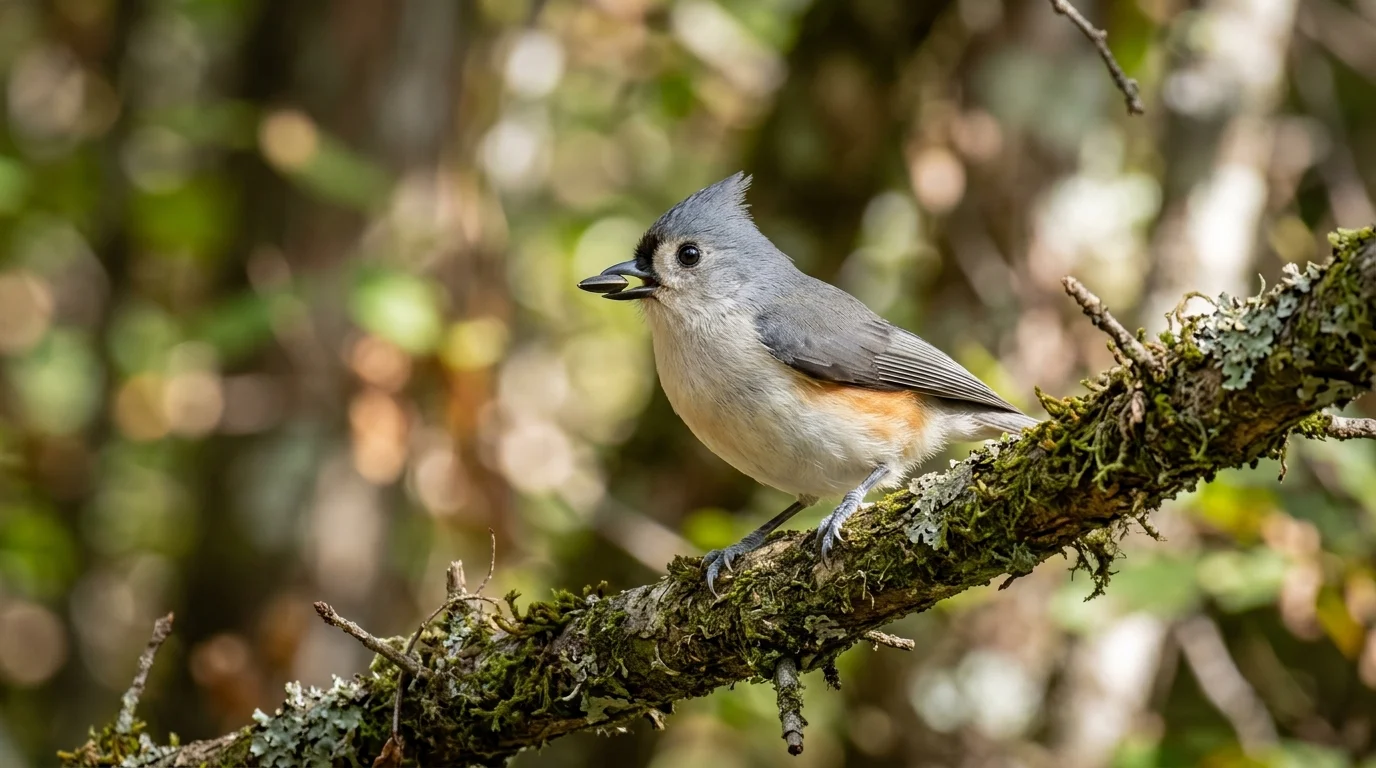
Titmouse is a noun that refers to any of several small insectivorous songbirds in the family Paridae . The term describes birds known for their active behavior, small size, and stout bills. The most familiar species in North America is the Tufted Titmouse (Baeolophus bicolor), a gray songbird with a distinctive crest on its head .
The plural form is titmice, not titmouses . This irregular plural follows the same pattern as mouse and mice. The pronunciation varies slightly between British and American English. British speakers say TIT-mowss, while American speakers often say TIT-mouse .
The word belongs to both everyday language and scientific vocabulary. Birdwatchers use it constantly. Ornithologists use it to describe an entire family of birds. The term carries no negative connotations. It is simply a descriptive name for a beloved group of songbirds.
Titmouse Name Origin and Etymology
The titmouse name origin traces back to Old English and Anglo-Saxon roots. The name is formed by compounding two older words. This makes it a linguistic fossil that preserves ancient vocabulary .
The first part, “tit,” comes from a word meaning something small . It appears in other English words like “titbit” or “titling.” In this context, it describes the bird’s tiny size. The second part, “mouse,” has nothing to do with rodents. In Old English, “mase” was a word applied to any small bird . Over time, “mase” evolved into “mouse” through a process linguists call folk etymology. People simply assumed the bird name contained the familiar word “mouse” .
The original Middle English form was titmose, with the “o” sound in the second syllable. The spelling changed to titmouse around the 14th century . The pronunciation shifted along with the spelling. What began as a simple descriptive compound became a name that confuses people to this day.
Titmouse in Biology and Ornithology
The titmouse belongs to the family Paridae, a group of small passerine birds found worldwide except in South America and Australia . The family includes chickadees, which are closely related and often confused with titmice. In fact, chickadees and titmice belong to the same family and share many behaviors .
The Tufted Titmouse is the most common species in the eastern United States. It measures about 5.5 to 6.5 inches in length with a wingspan of roughly 9.75 inches . Its plumage is soft gray on the back and wings, with a white belly and rusty flanks. The most distinctive feature is the short crest on its head, which gives the bird its “tufted” name .
Other titmouse species include the Oak Titmouse of western North America and the Blue Tit of Europe, a colorful bird with bright blue wings and a yellow breast . Each species shares the family’s characteristic traits: small size, active foraging, and cavity nesting.
How to Identify a Titmouse
Identifying a titmouse is straightforward once you know what to look for. The bird’s behavior and appearance make it stand out at feeders and in woodlands.
The most recognizable feature is the crest. The Tufted Titmouse has a prominent gray crest on its head, unlike chickadees which have smooth, rounded heads . The face is pale gray with a dark eye and a black patch on the forehead. Males and females look similar, which is common among songbirds .
Behavior offers additional clues. Titmice are acrobatic foragers. They hang upside down from branches, dangle from wildflower stalks, and move constantly while searching for food . They often travel in mixed flocks with chickadees, nuthatches, and woodpeckers, especially during winter .
The song is another reliable identifier. The Tufted Titmouse sings a clear, whistled “peter-peter-peter” that repeats up to 11 times in succession . This ringing call is one of the most familiar sounds in eastern forests.
Titmouse Behavior and Habitat
The titmouse behavior is defined by curiosity, energy, and social intelligence. These birds are permanent residents, meaning they do not migrate. They stay in the same area year-round, defending territories during breeding season and joining flocks during winter .
Titmice are cavity nesters. They build their nests in tree holes, old woodpecker cavities, or nest boxes. The nest is lined with soft materials like moss, hair, fur, and sometimes snakeskin . The female incubates four to eight eggs for about 13 to 14 days. Both parents feed the young until they fledge .
Their diet consists mainly of insects, seeds, and berries. At feeders, they prefer black-oil sunflower seeds and suet . Away from feeders, they forage on tree branches and shrubs, often taking seeds one at a time to a nearby perch to crack open .
Habitat includes deciduous forests, oak woodlands, swamps, orchards, parks, and suburban areas . They are common in residential neighborhoods where mature trees provide nesting sites and food.
Titmouse vs Chickadee and Similar Birds
Many people confuse titmice with chickadees. Both belong to the family Paridae and share similar habits. The key difference is the crest. Titmice have a prominent crest on their heads. Chickadees have smooth, rounded crowns .
Size and shape also differ slightly. Titmice are generally larger and stouter than chickadees. Their bills are thicker and more robust. Chickadees have smaller, more delicate bills and rounder bodies.
Color patterns provide another distinction. The Tufted Titmouse is primarily gray with a white belly and rusty flanks. Chickadees have distinctive black caps and bibs with white cheeks. Once you learn these differences, telling them apart becomes automatic.
Other birds sometimes confused with titmice include the Cedar Waxwing and female Northern Cardinal, both of which have crests . Waxwings have a black mask across the face and a yellow band on the tail. Female cardinals are larger, reddish, and have thick orange bills.
When Not to Use Titmouse
Titmouse is a specific term with a clear meaning. It should not be used loosely or inappropriately.
The word is not slang. It carries no hidden or secondary meanings in modern usage. It is a straightforward noun that describes a group of birds. Using it correctly requires knowing which species you are referring to.
Avoid using the singular form when referring to multiple birds. The correct plural is titmice, not titmouses . This irregular plural follows the pattern of mouse and mice.
In scientific writing, use the full common name when possible. “Tufted Titmouse” is more precise than simply “titmouse” because several species share the general name .
Alternative Meanings and Historical Notes
While the bird meaning dominates, titmouse carries historical and linguistic significance beyond ornithology.
The Old English word “mase” originally meant any small bird. Over centuries, this word became attached specifically to the titmouse family. Other languages preserve related forms. The German “Meise” means titmouse, and the Dutch “mees” carries the same meaning . These cognates show that the word has deep Germanic roots.
In medieval England, the name “titmose” appeared in glossaries and manuscripts. The earliest known use dates from before 1325, in a glossary by Walter de Bibbesworth . This makes titmouse one of the oldest recorded bird names in English.
The “tit” prefix appears in other bird names as well. The Tomtit of Europe, the Blue Tit, and the Great Tit all share this element. Each name emphasizes the bird’s small size .
Why Titmouse Matters
Titmouse matters because it connects language, nature, and history. The name preserves ancient vocabulary that would otherwise be lost. It describes a bird that brings joy to millions of backyard birdwatchers. It represents a family of species that play important roles in ecosystems by controlling insect populations.
Learning about the titmouse also teaches linguistic humility. The name looks like it contains “mouse,” but it does not. This reminds us that language evolves in unexpected ways. Meanings shift. Spellings change. What seems obvious today may have a completely different origin.
FAQs
What does titmouse mean?
Titmouse refers to any of several small insectivorous songbirds in the family Paridae. The name comes from Old English roots meaning “small bird.” The plural form is titmice .
Is a titmouse a mouse?
No. A titmouse is a bird, not a rodent. The “mouse” part of the name comes from an Old English word for small bird, not from the animal .
What is the plural of titmouse?
The plural is titmice, not titmouses. This follows the irregular pattern of mouse and mice .
What does a titmouse look like?
The Tufted Titmouse is gray with a white belly, rusty flanks, and a prominent crest on its head. It has a black patch on its forehead and dark eyes .
Where do titmice live?
Titmice live in deciduous forests, oak woodlands, parks, orchards, and suburban areas. They are permanent residents and do not migrate .
What do titmice eat?
Titmice eat insects, seeds, berries, and acorns. At feeders, they prefer sunflower seeds and suet .
How do you pronounce titmouse?
In British English, it is pronounced TIT-mowss. In American English, it is often pronounced TIT-mouse .
What is the difference between a titmouse and a chickadee?
Titmice have crests on their heads. Chickadees have smooth, rounded crowns. Titmice are also slightly larger and stouter .
What sound does a titmouse make?
The Tufted Titmouse sings a clear whistle that sounds like “peter-peter-peter”, repeated up to 11 times. It also makes various nasal and high-pitched calls .
Are titmice friendly?
Titmice are curious and active birds. They readily visit backyard feeders and often approach windows. They are not aggressive toward humans .
Conclusion
The titmouse meaning is simpler than it appears. It refers to a small bird, not a mouse. The name comes from Old English roots meaning “small bird,” and it has been used for centuries to describe a beloved family of songbirds. From the Tufted Titmouse of North America to the Blue Tit of Europe, these birds bring energy and life to woodlands and backyards. Understanding the name connects us to linguistic history and natural heritage. The next time you see a titmouse at your feeder, you will know exactly what you are looking at and why it carries such a curious name.