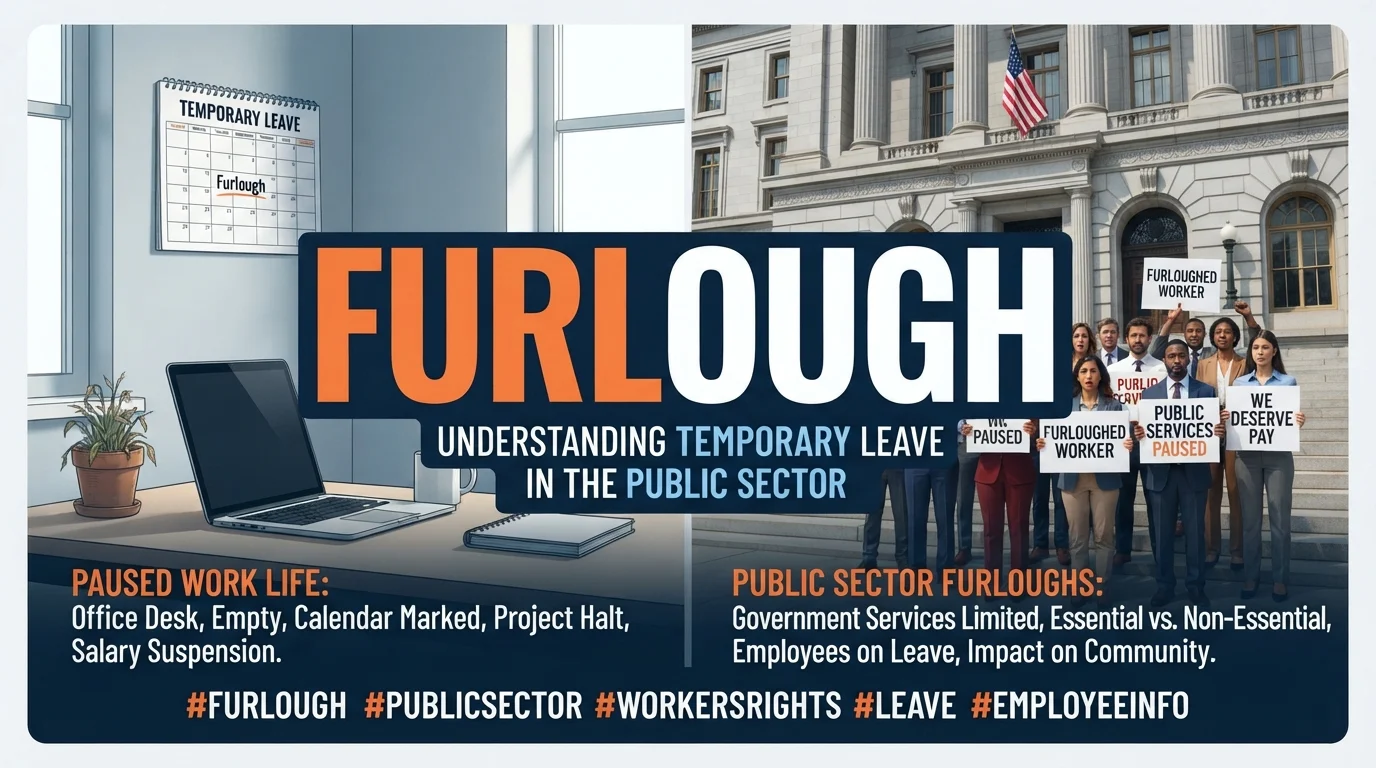
Quick Answer: A furlough is a temporary, unpaid leave of absence from work. Unlike a layoff, a furlough is meant to be short-term, and the employee usually keeps their job, benefits, and seniority. Employers use furloughs to cut costs during slow periods, government shutdowns, or economic downturns without permanently losing their workforce. Furloughed workers may qualify for unemployment benefits depending on local laws. The term comes from the Dutch word verlof, meaning “leave of absence,” and was originally used in military contexts before spreading to civilian employment. In 2026, furloughs remain a common tool for businesses navigating uncertain economic conditions.
Your boss calls a meeting. The room feels heavy. Someone says the word “furlough,” and suddenly everyone’s Googling it under the table. Is it a layoff? A firing? A permanent goodbye?
Not exactly. A furlough sits in a strange middle ground between having a job and not having one. It’s a pause button, not a stop button though that distinction doesn’t always make the experience less stressful.
The furlough meaning is rooted in the idea of temporary leave. It’s a tool employers use when they need to cut costs but don’t want to lose their people permanently. It’s also a term government workers know all too well, especially during shutdowns. And it’s become more common in the private sector as companies navigate economic uncertainty.
Understanding what a furlough is and what it isn’t can help you prepare if it ever happens to you. Let’s break it down.
Furlough Meaning: What Does It Actually Mean?
The Core Definition
A furlough is a temporary, unpaid leave of absence from work. The employee remains on the payroll but doesn’t work and doesn’t get paid during the furlough period. The key word here is “temporary” the expectation is that the employee will return to work once conditions improve.
The Cambridge Dictionary defines it as “a temporary leave of absence from military duty or employment.” Merriam-Webster adds that it’s “a leave of absence granted to a government employee” or “a temporary layoff from work.”
Furlough vs. Layoff: The Critical Difference
This is where people get confused. A layoff is permanent. A furlough is temporary. That’s the simplest way to remember it.
| Aspect | Furlough | Layoff |
|---|---|---|
| Duration | Temporary | Permanent |
| Job Status | Retained | Terminated |
| Benefits | Usually retained | Usually terminated |
| Return Date | Expected | None |
| Unemployment | Often eligible | Often eligible |
Furlough vs. Termination
A termination is a permanent end to employment. A furlough is a temporary pause. If you’re terminated, you’re off the payroll. If you’re furloughed, you’re still technically an employee, just not working or getting paid.
Furlough vs. Reduction in Force (RIF)
A reduction in force is a permanent elimination of positions. It’s a type of layoff. A furlough is temporary. The distinction matters for everything from benefits to morale.
The Origins of Furlough: From Dutch Soldiers to Modern Workplaces
The Dutch Root
The word “furlough” comes from the Dutch word verlof, which means “leave of absence.” It entered English in the 17th century, originally referring to military leave. Soldiers on furlough were granted time off from duty, often to go home or recover from illness.
Military Usage
For centuries, furlough was primarily a military term. It described a soldier’s authorized absence from duty. The soldier remained in service but wasn’t actively working. This is the same basic structure we see in modern employment furloughs.
Government Shutdowns and the Modern Furlough
The modern usage of “furlough” in civilian employment exploded during government shutdowns. When Congress fails to pass a budget, non-essential government workers are furloughed. They’re sent home without pay until the shutdown ends.
This usage has become so common that many people now associate furloughs primarily with government shutdowns. But the term has spread to the private sector, especially during economic downturns.
Why Employers Use Furloughs
Cost Cutting Without Losing Talent
Furloughs allow employers to cut costs without permanently losing their workforce. If a company is facing a temporary downturn a slow season, a lost contract, a pandemic furloughs can bridge the gap.
Laying off employees is expensive. You have to hire and train new people when things pick up. Furloughs avoid that cost. You keep your trained workforce on standby.
Flexibility
Furloughs can be structured in different ways. Some are full-time the employee doesn’t work at all. Others are part-time the employee works reduced hours with reduced pay. This flexibility lets employers tailor the furlough to their specific needs.
Avoiding Permanent Layoffs
Furloughs are often a last resort before layoffs. If a company furloughs workers and conditions improve, everyone wins. If conditions don’t improve, the furlough might turn into a permanent layoff. But the furlough gives the company time to figure things out.
Types of Furloughs
| Type | Description | Example |
|---|---|---|
| Full Furlough | Employee doesn’t work at all | Government shutdown |
| Partial Furlough | Reduced hours and pay | Four-day workweek |
| Rotating Furlough | Employees take turns being off | Factory slow season |
| Mandatory Furlough | Required by employer | Budget crisis |
| Voluntary Furlough | Employee chooses to participate | Cost-saving option |
Full Furlough
A full furlough means the employee doesn’t work at all during the furlough period. They’re completely off the job. This is the most common type during government shutdowns.
Partial Furlough
A partial furlough means the employee works reduced hours. They might work four days a week instead of five. Their pay is reduced accordingly. This is sometimes called a “furlough day” or “furlough Friday.”
Rotating Furlough
In a rotating furlough, employees take turns being off. This spreads the pain across the workforce. One group is furloughed for a week, then another group, and so on.
Mandatory vs. Voluntary
Mandatory furloughs are required by the employer. Employees have no choice. Voluntary furloughs allow employees to opt in, often as an alternative to layoffs. Some employers offer incentives for voluntary furloughs.
Furloughs and Unemployment Benefits
Can You Collect Unemployment During a Furlough?
In many cases, yes. Furloughed workers often qualify for unemployment benefits because they’re not working through no fault of their own. The exact rules vary by state and country.
During the COVID-19 pandemic, many governments expanded unemployment eligibility to include furloughed workers. Some programs covered the difference between the furloughed worker’s normal pay and the unemployment benefit.
The Waiting Week
Many states have a “waiting week” before unemployment benefits kick in. This means the first week of a furlough might be unpaid entirely. Some states waive this during emergencies.
Filing for Benefits
Furloughed workers should file for unemployment as soon as they know they’ll be off. The process typically requires documentation from the employer, including the reason for the furlough and the expected duration.
Furloughs in Government
Government Shutdowns
The most visible furloughs happen during government shutdowns. When Congress fails to pass a budget, non-essential government services stop. Workers in those positions are furloughed.
Essential workers those whose jobs are critical to safety and security continue working, often without pay until the shutdown ends. After the shutdown, they typically receive back pay.
The 2018-2019 Shutdown
The longest government shutdown in U.S. history lasted 35 days, from December 2018 to January 2019. Around 800,000 federal workers were furloughed or worked without pay. The economic impact was significant, with many families struggling to make ends meet.
Back Pay for Furloughed Workers
Federal workers who are furloughed during a shutdown typically receive back pay once the shutdown ends. This isn’t guaranteed for private-sector workers, though some employers choose to offer it.
Furloughs in the Private Sector
COVID-19 and Mass Furloughs
The COVID-19 pandemic triggered the largest wave of furloughs in modern history. Airlines, hotels, restaurants, and retail businesses furloughed millions of workers as demand collapsed. Governments around the world created programs to support furloughed workers.
In the United States, the CARES Act expanded unemployment benefits and provided additional support. In the United Kingdom, the Coronavirus Job Retention Scheme paid 80% of furloughed workers’ wages, up to a cap.
Airlines and Travel
Airlines were hit especially hard. With travel demand plummeting, carriers furloughed thousands of pilots, flight attendants, and ground crew. Some of these furloughs became permanent layoffs as the industry struggled to recover.
Retail and Hospitality
Retail and hospitality businesses also furloughed millions. Stores closed. Restaurants shifted to takeout only. Hotels sat empty. Furloughs became the norm for industries dependent on in-person contact.
How to Prepare for a Furlough
Financial Planning
If a furlough is possible, start preparing now. Build an emergency fund. Cut unnecessary expenses. Understand your unemployment eligibility. The more prepared you are, the less stressful the furlough will be.
Understanding Your Benefits
Know what happens to your benefits during a furlough. Health insurance might continue. Retirement contributions might stop. Paid time off might accrue or pause. Get clear answers before the furlough starts.
Legal Protections
Furloughed workers have certain legal protections. The WARN Act requires large employers to give notice of mass layoffs and some furloughs. Discrimination laws still apply. If you believe your furlough is unfair or illegal, consult an employment attorney.
Staying Connected
Furloughed workers should stay in touch with their employer. Check in periodically. Ask about the expected return date. Keep your skills sharp. When the furlough ends, you want to be ready to jump back in.
Frequently Asked Questions
What does furlough mean? A furlough is a temporary, unpaid leave of absence from work. The employee keeps their job but doesn’t work or get paid during the furlough period.
Is a furlough the same as a layoff? No. A layoff is permanent. A furlough is temporary, with the expectation that the employee will return to work.
Can you collect unemployment during a furlough? In many cases, yes. Furloughed workers often qualify for unemployment benefits because they’re not working through no fault of their own.
Do you keep your benefits during a furlough? It depends on the employer. Many employers continue health insurance during furloughs. Retirement contributions and paid time off may be affected.
What is a government furlough? During government shutdowns, non-essential federal workers are furloughed. They’re sent home without pay until the shutdown ends.
What is a furlough vs. termination? A furlough is temporary. A termination is permanent. Furloughed employees remain on the payroll; terminated employees are removed.
How long can a furlough last? There’s no set limit. Furloughs can last days, weeks, or months. Some become permanent layoffs if conditions don’t improve.
Key Takeaways
| Aspect | Key Point |
|---|---|
| Meaning | Temporary, unpaid leave of absence from work |
| Origin | Dutch verlof, meaning “leave of absence” |
| vs. Layoff | Furlough is temporary; layoff is permanent |
| Benefits | Often retained during furlough |
| Unemployment | Furloughed workers often qualify |
| Government | Common during shutdowns |
| COVID-19 Impact | Triggered largest wave of furloughs in modern history |
| Preparation | Build emergency fund, know your benefits, understand legal protections |
Conclusion: A Pause, Not a Goodbye
The furlough meaning is ultimately about hope. It’s an employer saying, “We want to keep you, but we can’t pay you right now.” It’s a pause button in a world that often feels like it only has stop and go.
That doesn’t make it easy. The pandemic showed just how devastating mass furloughs can be, even with government support.
But understanding what a furlough is and how it differs from a layoff can help you navigate it. It’s not a termination.
If you’re ever furloughed, remember: you’re not alone. Millions of workers have been through it. Prepare financially, understand your rights, stay connected, and keep your skills sharp. The furlough will end, and when it does, you’ll be ready to get back to work.