Quick Answer: Demisexuality is a sexual orientation on the asexual spectrum characterized by experiencing sexual attraction only after forming a strong emotional bond with someone. It is not a choice, a preference for waiting, or celibacy it’s about how attraction fundamentally works. Demisexual people can identify as gay, straight, bisexual, or any other orientation, and they may have varying interest in sex itself. The term emerged from the asexual community in the mid-2000s to describe those whose attraction to others is conditional on a deep emotional connection.
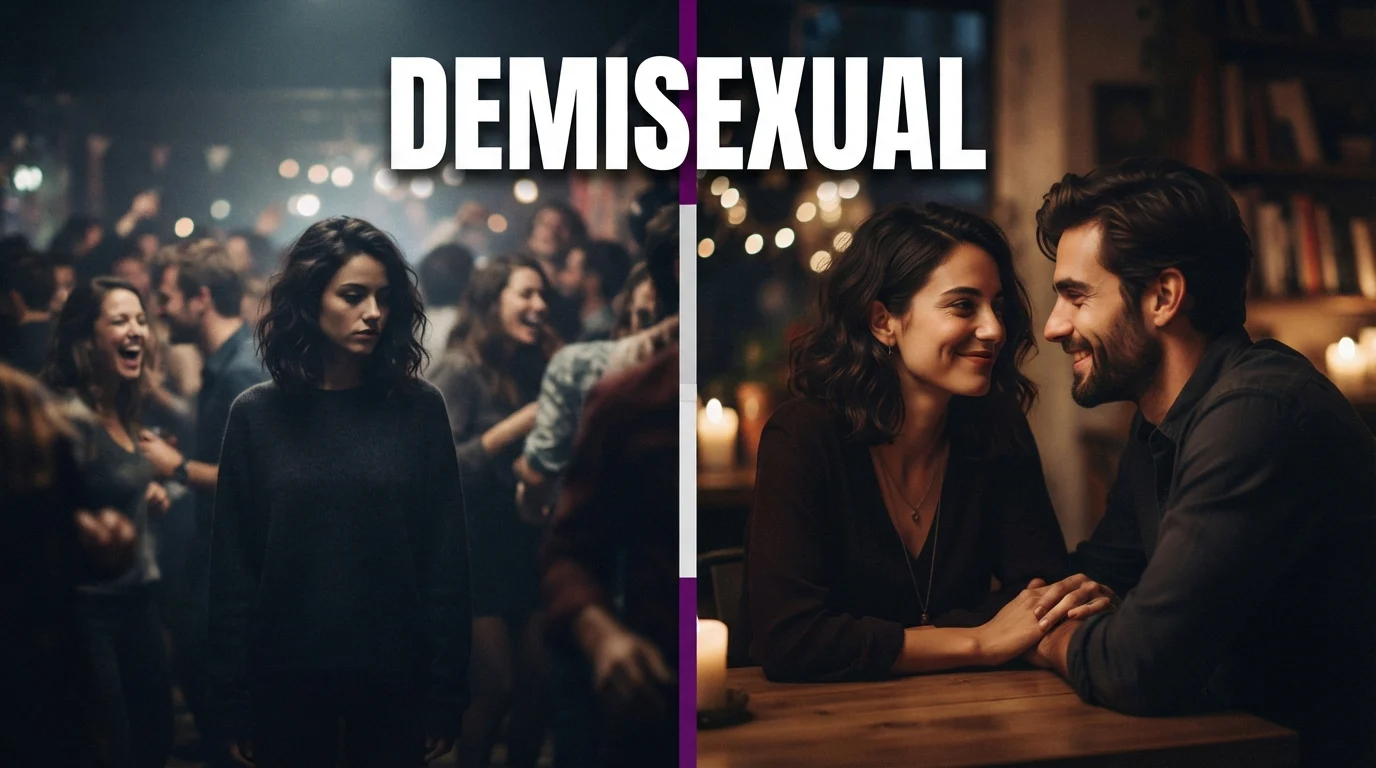
Imagine scrolling through a dating app and seeing a profile that makes you stop. The photos are great. The bio is witty. On paper, everything clicks. Yet, a key ingredient is missing sexual attraction just isn’t there. For many, this would be the end of the story. But for someone who is demisexual, it’s just the beginning, the opening chapter before the real story can even start. The initial lack of feeling isn’t a rejection. It’s a waiting room for a feeling that has yet to be unlocked.
Demisexuality has been a part of conversations about sexuality for nearly two decades, but it remains one of the most misunderstood orientations . It’s a real sexual orientation that applies to people across the world . Let’s unpack what it truly means to be demisexual.
Demisexual Meaning: What Does It Actually Mean?
The Core Definition
At its simplest, demisexuality is a sexual orientation defined by “feeling sexual attraction only after forming an emotional bond” . It sits on the asexual spectrum, meaning demisexual people experience sexual attraction less frequently or only in specific circumstances . This emotional bond is not just a feeling of like; it’s a deep, strong connection that can be romantic or platonic in nature.
The term itself is a combination of the prefix “demi,” meaning “half” or “partial,” and “sexual.” This reflects its position on the asexuality spectrum experiencing sexual attraction, but not in the way allosexuals (people who aren’t on the asexual spectrum) typically do .
The Crucial Difference: Orientation vs. Choice
One of the most common misunderstandings is confusing demisexuality with a conscious choice to wait. Here is the critical distinction:
- Demisexuality is an orientation: It describes the conditions under which a person can feel sexual attraction. It is not a decision, a rule, or a “good behavior.” It’s about how attraction works for that person .
- Celibacy or Abstinence is a choice: This is a decision to not have sex, regardless of whether a person feels sexual attraction . A demisexual person might choose to be celibate, but that’s separate from their identity. Conversely, a person who feels sexual attraction frequently can choose to abstain from sex.
As YouTuber Christi Kerr explains, being demisexual is “genuinely not being interested in sex with people outside of a relationship or close friendship” it’s not a lifestyle choice . The American Psychological Association notes that sexual orientation is not considered a conscious choice that can be voluntarily changed .
Demisexuality as Part of the Asexual Spectrum
To understand demisexuality, it’s helpful to see where it fits on the broader asexual spectrum .
- Asexual: Experiences little to no sexual attraction .
- Graysexual (Gray-A): Experiences sexual attraction rarely or only under very specific circumstances . Some demisexuals also use “graysexual” as a label because their attraction is conditional .
- Demisexual: Experiences sexual attraction only after a strong emotional bond is formed .
Asexual individuals are the most likely to identify as aromantic, while demisexual individuals are the most likely to identify as demiromantic (experiencing romantic attraction only after a bond forms). In a large-scale study of the ace community, demisexual individuals scored higher on measures of sex drive than asexual individuals, but lower than people who are not on the asexual spectrum . This shows a spectrum of experiences and desires even within the ace umbrella.
The Demisexuality Spectrum: Common Myths and Experiences
Demisexuality is a diverse experience, and it can be easy to believe misconceptions that don’t reflect the full picture .
Myth: Demisexuality is Just a “Preference”
A common dismissive response to demisexuality is “but that’s normal, everyone needs an emotional connection” . This is inaccurate. The key difference lies in whether the connection is a preference or a pre-requisite. An allosexual person might prefer sex with a partner they love, but they can still feel sexual attraction to a stranger or a celebrity. For a demisexual person, that attraction simply doesn’t exist without the bond. It’s not a preference; it’s a requirement for sexual attraction to emerge at all .
Myth: All Demisexual People Are Prudes
Because sexual attraction is rare or conditional, demisexual people can sometimes be labeled as “prudes” . However, this is a mischaracterization. Their experience of sex and sexuality is varied .
Some demisexual people have no interest in sex at all, while others are “sex-positive” and can enjoy a fulfilling sex life within the context of a strong romantic relationship. Others may be “sex-neutral,” not repelled by sex but not actively pursuing it .The label describes who they are attracted to, not what they choose to do .
Myth: A Strong Emotional Bond Guarantees Attraction
A strong bond is a necessary condition for sexual attraction, but it is not a guarantee. An emotional connection with someone creates the possibility of attraction for a demisexual person it doesn’t automatically create a sexual desire. Each relationship is subjective, and the amount of connection felt will determine what else is felt for that person .
Myth: Demisexuals Can Only Be Straight
Demisexuality describes how a person experiences attraction, not who they’re attracted to. A demisexual person can be gay, straight, bisexual, pansexual, or any other orientation . For example, someone could identify as a “panromantic demisexual,” meaning they are romantically attracted to people of any gender, but only feel sexual attraction to those they have a deep emotional bond with .
What Does It Look Like in Real Life?
For demisexual people, life and relationships can feel like navigating a world with different rules.
The “No Hookups” Stance
The “no hookups” line is a common refrain in the profiles of demisexual people on dating apps. However, this doesn’t always stop the confusion . One person who identified as demisexual and polyamorous noted that people often interpreted “polyamory” as an invitation for casual sex, ignoring the “demisexual” and “no hookups” disclaimers in their bio. Their experience highlights how society often defaults to assuming attraction and sexual desire are always present, which is not the case for demisexual people .
Navigating Relationships
Dating can be tricky because the timeline is different. There can be an expectation from a new partner that attraction will develop quickly. For a demisexual person, that initial date is more like a “get to know you” session without romantic or sexual chemistry. If feelings do develop, it often happens when a bond of friendship has already been established, which can completely change the dynamic of an existing friendship .
A Unique Relationship with the LGBTQ+ Community
The place of demisexuality within the LGBTQ+ community is nuanced. Demisexual people can be heteroromantic (romantically attracted to the another gender), some argue they do not fall under the LGBTQ+ umbrella. However, many others consider the asexual spectrum, including demisexuality, to be a vital part of the broader queer community . This is an ongoing conversation, and there isn’t always a clear consensus.
The Demisexual Flag
Like many identities, demisexuality has its own flag. It’s an adaptation of the asexual Pride flag, with each color representing something special to the community .
- Black: Represents the wider asexual community.
- Gray: Refers to the “gray area” between asexuality and allosexuality.
- White: Symbolizes sexuality.
- Purple: Represents the demisexual community.
Frequently Asked Questions
What does demisexual mean in simple terms? It means a person only feels sexual attraction to someone after they’ve formed a strong emotional bond with them .
Is demisexuality a choice? No, it is a sexual orientation and not a choice. It’s different from celibacy, which is a decision to abstain from sex .
Can a demisexual person be straight? Yes, a demisexual person can be gay, straight, bisexual, or any other orientation. The term explains how they experience attraction .
What is the difference between demisexual and asexual? Asexuality is feeling little to no sexual attraction. Demisexuality is feeling sexual attraction, but only after a strong emotional bond has been formed .
How do I know if I am demisexual? Signs include rarely being interested in sex with strangers, feeling confused by sexual attraction, and only developing sexual feelings for people you are already close to . Ultimately, it’s about whether the label feels true to your experience.
Key Takeaways
Conclusion: Reclaiming the Narrative of Attraction
Demisexuality is a powerful reminder that there is no one “right” way to experience attraction. It’s a direct challenge to the cultural narrative that sexual desire should be spontaneous and immediate.
It’s about recognizing that the way you experience the world isn’t a universal blueprint. The hope is that more visibility and understanding will replace dismissal with acknowledgment. As author and activist Cody Daigle-Orians points out, there is a “ridiculous amount of diversity in experience” on the asexual spectrum, and for all of them, sexual attraction occupies a very different, often non-primary, place in their lives . Ultimately, finding the language to describe this experience, like the word “demisexual,” helps people feel “so validated” and seen .