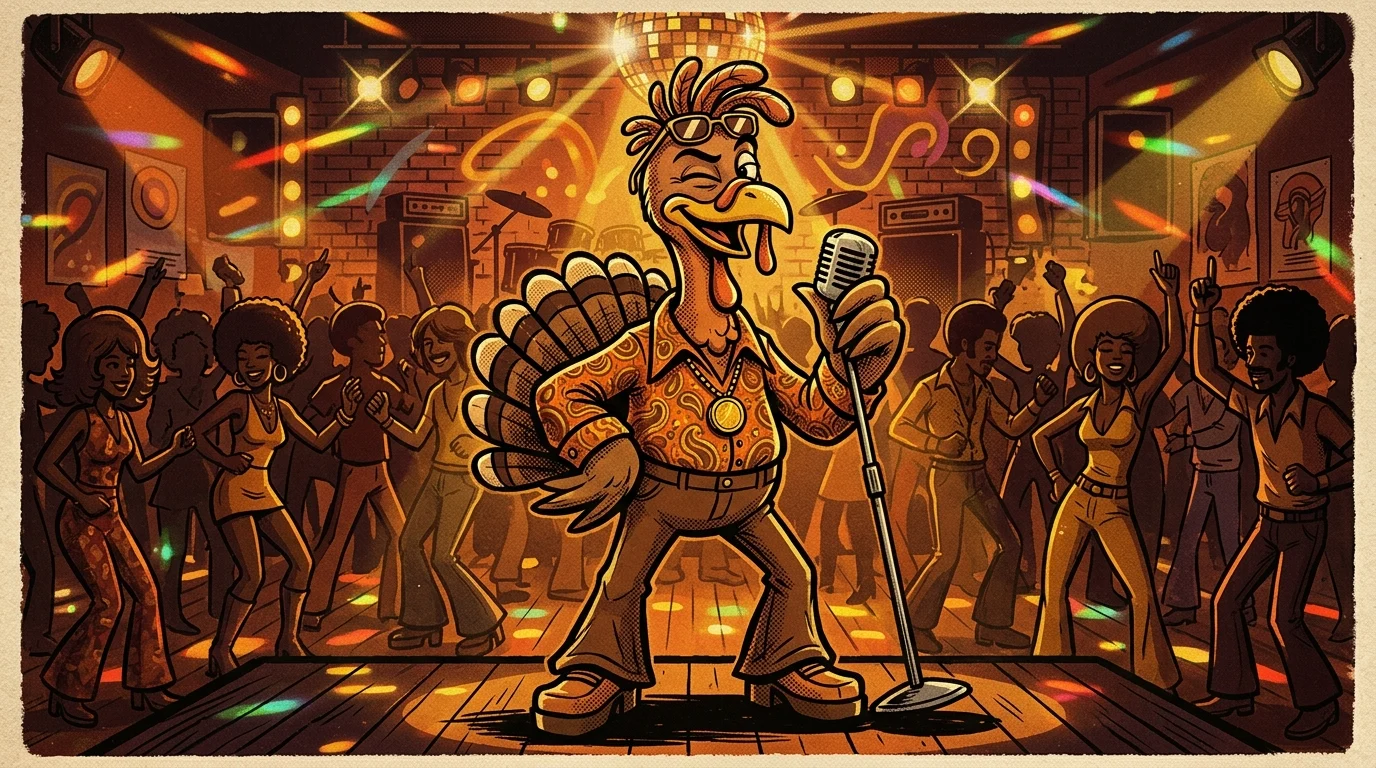
Quick Ans: The slang term jive turkey meaning points to a dishonest, insincere, or foolish person. It is a general term of abuse or disparagement that emerged in the 1960s and became a cultural staple of the 1970s . The phrase combines two distinct slang traditions, and understanding both helps explain why it carries such a specific sting.
What Does Jive Turkey Mean?
A jive turkey is someone who is unreliable, makes exaggerated claims, or acts in a deceptive manner . The term describes a person who talks big but delivers little. It also applies to someone who is simply foolish or contemptible .
The phrase carries a sense of frustration. Calling someone a jive turkey means you see through their act. You recognize that their words do not match their actions. The term works as both a direct insult and a playful jab, depending on the context .
The Origin of Jive
The word jive goes back to the 1920s and originated in African American vernacular . It initially referred to boasting, bragging, or empty talk. Someone who was full of jive was full of big promises that nobody believed .
Over time, jive took on additional meanings. It could describe deceptive talk, nonsense, or misleading behavior . The term evolved alongside jazz culture and beatnik slang, but its core sense of insincerity remained constant.
The Origin of Turkey
The turkey component has its own history. In show business, a turkey refers to a flop or a failure . The term migrated from Hollywood entertainment speak into mainstream English. A turkey is something that does not work, whether it is a play, a film, or a person.
Turkeys also gobble, which adds to the sense of noisy, empty talk . The bird has long been used as an insult for someone dull or worthless. Combining it with jive created a phrase that captured both empty talk and personal failure.
How Jive Turkey Became Popular
The phrase jive turkey emerged in the 1960s and exploded in the 1970s . The funk band Ohio Players released a song titled “Jive Turkey” in 1974, which helped cement the phrase in popular culture . The term also appeared frequently on popular sitcoms like The Jeffersons .
Television writers used jive turkey as a clean alternative to harsher insults. The phrase allowed characters to express strong disapproval without crossing the boundaries of broadcast standards . Viewers understood the weight behind the words even when the literal meaning was softened.
Jive Turkey in 1970s Culture
The 1970s was the peak era for jive turkey. The phrase fit the cultural moment perfectly. It was funky, playful, and carried a sharp edge. Films and television shows used it to signal that a character was out of line or not to be trusted .
By the end of the decade, the term had become so associated with the era that it started to feel dated. The 1990s brought a wave of nostalgia for 1970s culture, and jive turkey became a shorthand for that groovy, retro vibe .
Jive Turkey in Modern Usage
Today, jive turkey is mostly used for comedic effect . It is deliberately outdated, which makes it funny when deployed in the right context. Calling someone a jive turkey now is a playful way to call them a fool.
The phrase also appears in Thanksgiving jokes and puns. Since everyone has turkey on the mind during the holiday season, jive turkey becomes an easy punchline . A Brooklyn-based fried turkey store even adopted the name, embracing the phrase’s humorous potential .
When Not to Use Jive Turkey
Jive turkey is a dated slang term. Using it seriously in modern conversation can make you sound out of touch . The phrase works best when the irony is clear.
The term also carries racial and cultural history. Jive originated in African American vernacular, and the phrase has roots in Black English . Using it outside appropriate contexts can come across as insensitive or appropriative. Understanding the history helps you use the term respectfully.
Jive Turkey vs Similar Terms
Several other slang terms overlap with jive turkey. A jiver is someone who behaves in a glib and disingenuous fashion . A jive-ass describes behavior characterized by dishonest foolishness .
Punk, sucker, and buster are synonyms that carry similar meanings . Each term has its own cultural associations. Jive turkey stands out because of its specific 1970s flavor and its humorous potential.
Why Jive Turkey Endures
Jive turkey endures because it is fun to say. The alliteration and rhythm make it memorable. It captures a specific type of person, the boastful fool, in a way that few other phrases manage.
The term also carries nostalgia. For people who grew up in the 1970s, it evokes a specific era of television, music, and culture. For younger generations, it is a retro curiosity that still lands as an insult when delivered with the right tone.
FAQs
What does jive turkey mean?
A jive turkey is a dishonest, insincere, or foolish person. The term describes someone who talks big but cannot back it up. It is a general term of abuse or disparagement .
Where did jive turkey come from?
The phrase originated in the 1960s in African American vernacular. Jive referred to empty or deceptive talk, while turkey meant a failure or fool. The two words combined to describe someone full of empty boasts .
Is jive turkey still used today?
Jive turkey is mostly used for comedic effect today. It is deliberately outdated, which makes it funny in the right context. Using it seriously can make you sound out of touch .
Was jive turkey an insult in the 1970s?
Yes, jive turkey was a real insult in the 1970s. It described someone who was unreliable or dishonest. However, television writers also used it as a clean substitute for harsher language .
What does jive mean by itself?
Jive originally meant boasting, bragging, or empty talk in African American vernacular. Over time, it came to describe deceptive or misleading behavior in general .
What does turkey mean as an insult?
Calling someone a turkey means they are dull, worthless, or a failure. The term comes from show business, where a turkey is a flop. Turkeys also gobble, which adds to the sense of empty noise .
Who popularized the phrase jive turkey?
The funk band Ohio Players released a song called “Jive Turkey” in 1974. Television shows like The Jeffersons also used the phrase frequently, helping it spread through popular culture .
Is jive turkey offensive?
Jive turkey is dated and carries racial and cultural history. It originated in African American vernacular. Using it outside appropriate contexts can come across as insensitive. It works best as a humorous, ironic insult among people who understand its history .
What are synonyms for jive turkey?
Synonyms include jiver, jive-ass, punk, sucker, buster, and scrub. Each term carries similar meanings of foolishness or dishonesty, though with different cultural associations .
How do I use jive turkey in a sentence?
You can say “Stop acting like a jive turkey and tell me the truth.” Or “That jive turkey promised to pay me back weeks ago.” The phrase works as a noun describing a person .
Conclusion
The jive turkey meaning is clear. It describes a dishonest, insincere, or foolish person. The phrase combines jive, meaning empty or deceptive talk, with turkey, meaning a failure or fool. It peaked in the 1970s and remains a humorous, deliberately dated way to call someone out. Use it with irony, respect its history, and it will continue to serve as a colorful piece of American slang.