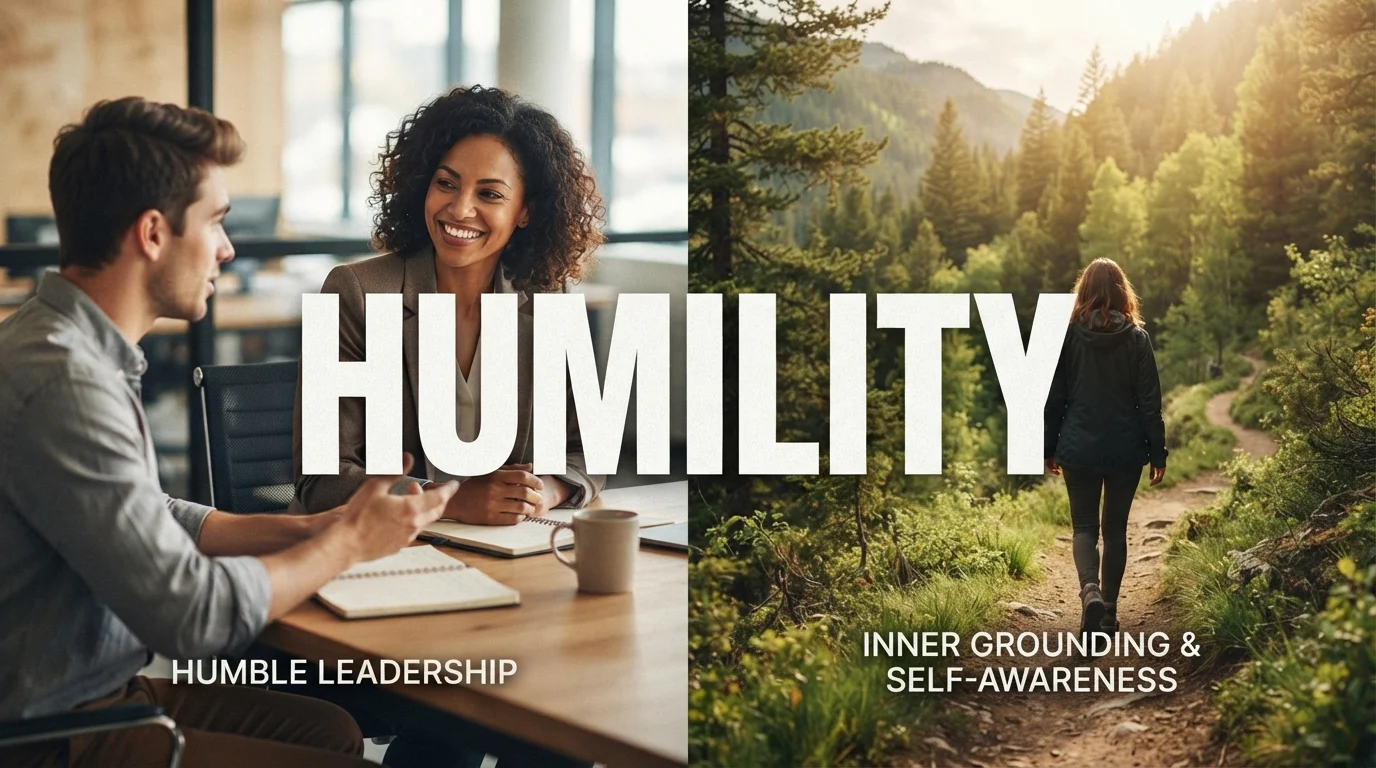
Quick Answer: Humility is a character trait defined by having a modest view of one’s own importance. It is the opposite of arrogance and pride. A humble person recognizes their limitations, acknowledges their mistakes, and appreciates others. It is not about thinking less of yourself, but rather thinking of yourself less shifting focus away from your ego and onto the world around you. True humility involves accurate self-assessment, openness to learning, and a deep respect for others. It is consistently rated as one of the most desirable leadership traits and is strongly linked to emotional intelligence and professional success.
Here is a quick challenge for you: think of a truly humble person. What comes to mind?
For many people, that image is someone who is quiet, maybe a bit soft-spoken, someone who downplays their achievements and avoids the spotlight. This is a common view, but it barely scratches the surface.
The real meaning of humility is far richer, more complex, and arguably more important than most of us realize. It’s not about being weak, insecure, or self-effacing. It’s about having a clear-eyed view of your own strengths and weaknesses, being open to new ideas, and recognizing that you don’t have all the answers.
What’s truly fascinating is that humility has almost nothing to do with how you dress or how loudly you speak. It has everything to do with how you process your own ego. Understanding the real humility meaning can change how you lead, how you learn, and how you relate to everyone around you.
Humility Meaning: What Does It Actually Mean?
The Core Definition
At its core, humility is a character trait defined by having a modest view of one’s own importance. The dictionary tells us it’s “the quality of not being proud” or “thinking of yourself as no better than others.”
But to really understand it, we need to go deeper. Humility isn’t about thinking you’re worthless. It’s about not thinking about yourself all the time. It’s the willingness to see yourself accurately, without the filters of ego or defensiveness, and to be open to the input and value of others.
The Latin Root
The word itself offers a clue. “Humility” comes from the Latin word humilitas, which also gives us “humus” (earth or ground) and “human.” There is an intrinsic connection here: to be humble is to be “grounded,” to remember we are all made of the same earth. It implies a connection to something greater and a recognition of our shared humanity.
Common Misconceptions
Many people confuse humility with low self-esteem. This couldn’t be further from the truth. A person with low self-esteem might avoid attention because they feel unworthy. A truly humble person can accept praise and acknowledge their skills without needing to brag or feel superior.
Humility is often confused with weakness. The humble person is seen as a doormat. In reality, it takes immense strength to admit a mistake, to change your mind when presented with new evidence, or to put someone else’s needs before your own ego.
Psychologist Dr. Rick Hanson explains the distinction clearly: “Humility means seeing yourself as small, not in the sense that you’re bad or unworthy, but in the sense that you’re at peace with not being the center of the universe.”
Why Humility Matters: The Science and Benefits
Leadership and Success
The research is clear: humble leaders build better teams. Humility in leadership is directly linked to higher team engagement, better collaboration, and greater innovation. A humble boss is more likely to listen to new ideas, admit when they’re wrong, and create a psychologically safe environment where people feel comfortable sharing concerns.
The business world has increasingly valued emotional intelligence over sheer IQ, and a key component of that is humility. It predicts who will succeed long-term and who will burn out or crash. When you are humble, you are more teachable and more resilient.
Psychological Health and Well-being
Humble people tend to be happier. They have lower levels of anxiety and depression. Why? Because their self-worth isn’t tied to being right or being superior. They handle criticism and failure much better than their proud counterparts.
Humility also helps build resilience. When you fall, you get back up and acknowledge your part in the fall without spiraling into shame. This balanced self-assessment acts as a psychological shock absorber for the difficulties of life.
Stronger Relationships
Humility is the antidote to arrogance, and it’s a glue for relationships. A humble partner is willing to say “I’m sorry,” a humble friend can listen without judgment, and a humble colleague doesn’t need all the credit. This creates trust and loyalty.
What Humility Looks Like: Key Characteristics
Accurate Self-Assessment
A humble person knows themselves well. They know their strengths and their weaknesses. They don’t exaggerate their talents, but they don’t downplay them either. It is a grounding in reality.
A truly humble individual embraces the reality that they are not the main character of everyone’s story. This accurate self-perception forms the foundation of all other humble behaviors.
Intellectual Humility
This is a modern concept gaining traction in psychology. Intellectual humility is the recognition that your beliefs might be wrong and that you don’t know everything. It’s the ability to hold your opinions lightly and to change your mind when presented with compelling evidence.
In our polarized world, this is a superpower. Intellectual humility fosters productive conversations, reduces conflict, and makes us better decision-makers. It’s the opposite of the know-it-all.
Openness to Learning
Humble people are lifelong learners. They ask more questions than they give answers. They are genuinely curious about the world and about other people’s perspectives.
Appreciation of Others
A key aspect of humility is recognizing the value and worth of others. It means acknowledging that you don’t have a monopoly on talent, wisdom, or virtue. It’s about celebrating others’ success without feeling threatened.
Gratitude
Humble people are grateful. They understand that their success isn’t solely their own doing. They recognize the role of luck, circumstance, and the contributions of others. This sense of gratitude keeps their ego in check.
Willingness to Admit Mistakes
This is one of the most visible signs of humility. It takes courage to say “I was wrong” or “I’m sorry.” A humble person can do this without making excuses or deflecting blame. The truth matters more to them than their reputation.
The Science and Practice of Humility
The Dunning-Kruger Effect
This cognitive bias describes how people with low ability tend to overestimate their competence, while experts tend to underestimate theirs. The unskilled are unaware of their shortcomings, and the skilled are aware of how much they don’t know. This arrogance born of ignorance is the opposite of humility.
Training the Brain
Humility is not just a personality trait you’re born with; it’s a skill you can practice and strengthen. Like a muscle, you can work it out.
One powerful practice is asking for feedback. Regularly ask people you trust for honest feedback, and resist the urge to get defensive. Another practice is practicing the pause before responding in a debate, pause and ask yourself, “What if I’m wrong?”
The Leadership Connection
The most effective leaders are often the most humble. They surround themselves with people who are smarter than them. They take responsibility for failures and give away credit for success. Steve Jobs was known for his brutal honesty, but also for his deep admiration of the people who built his products. This paradox is characteristic of great leadership.
Frequently Asked Questions
What is the difference between humility and low self-esteem? Humility is an accurate view of yourself, while low self-esteem is an undervaluing of yourself. A humble person can accept a compliment; a person with low self-esteem feels they don’t deserve it.
Is it possible to be too humble? Yes, false humility can become self-deprecation or holding yourself back from opportunities. True humility is not about thinking less of yourself, but thinking of yourself less.
What is intellectual humility? It is the recognition that your beliefs might be wrong and that you don’t have all the answers. It allows you to engage in conversations with open-mindedness.
How does humility make you a better leader? Humble leaders listen, admit mistakes, and make their teams feel psychologically safe. This leads to higher engagement, innovation, and performance.
Is humility the same as being a pushover? No. A humble person can still be assertive, set boundaries, and stand up for what’s right. Humility is about how you view yourself, not how you let others treat you.
Why do people confuse humility with weakness? Many confuse assertive strength with arrogance and quietness with humility. True humility often requires immense strength and courage to admit fault and put others first.
Key Takeaways
| Aspect | Key Point |
|---|---|
| Core Meaning | Having a modest view of one’s own importance; thinking of yourself less |
| Latin Root | Humilitas (grounded), related to “humus” (earth) and “human” |
| Not a Weakness | Humility is strength, requiring courage to admit mistakes |
| Misconceptions | It’s not low self-esteem or being a doormat |
| Key Traits | Accurate self-assessment, intellectual humility, gratitude, willingness to learn |
| Benefits | Better leadership, stronger relationships, improved mental health |
| Intellectual Humility | Acknowledging you might be wrong and being open to changing your mind |
Conclusion: The Quiet Power of Being Grounded
In a world that rewards self-promotion and loud confidence, humility can seem almost countercultural. And yet, the research is conclusive: humble people are happier, healthier, and more successful in the ways that truly matter.
The journey toward humility starts with a simple question: “Do I need to be right, or do I need to learn?” From there, it is about practicing gratitude, embracing the “I don’t know” moments, and recognizing that you are part of a larger story.
Humility is not about thinking less of yourself. It’s about thinking of yourself less. It means standing on solid ground, secure enough to say, “I don’t know,” “I was wrong,” and “You are right.” And ironically, you end up becoming someone others want to be around.