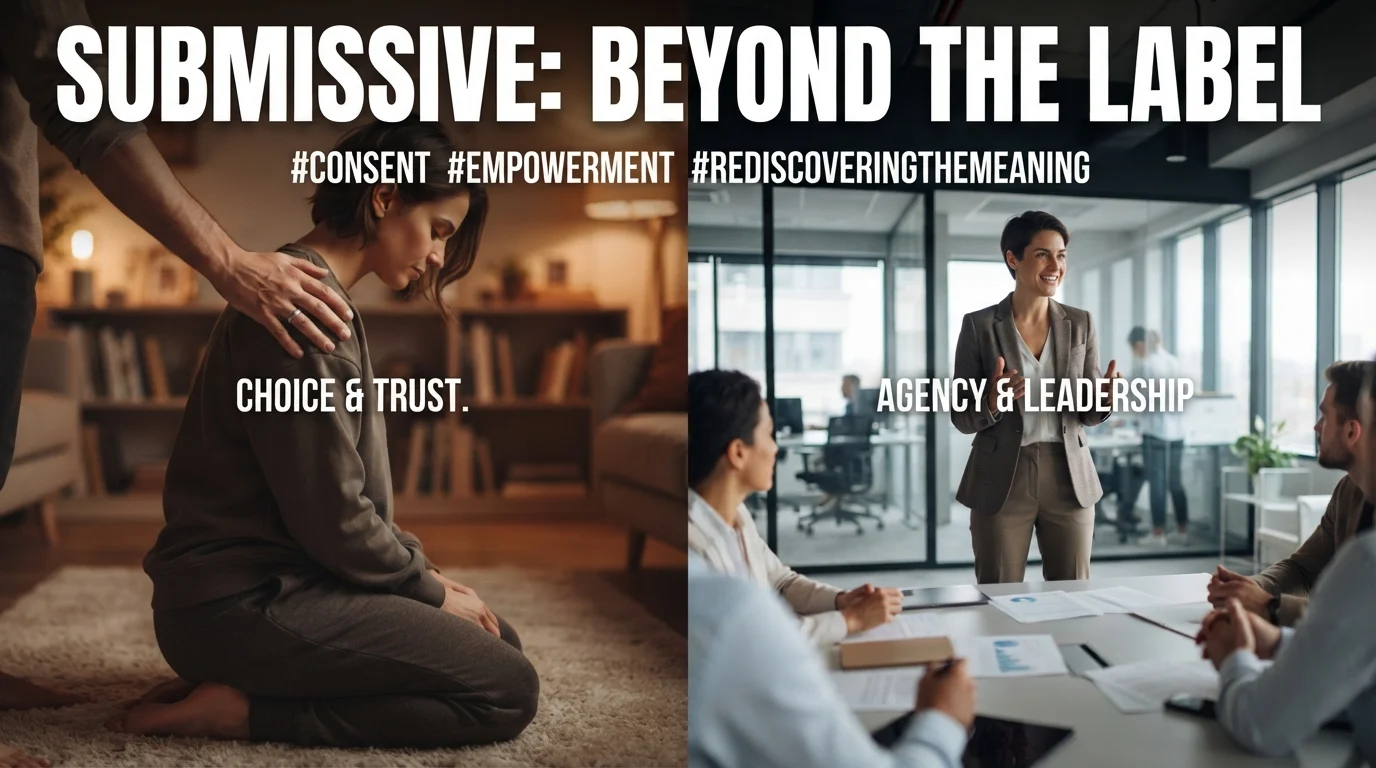
Quick Answer: Submissive describes a willingness or tendency to yield to the authority, will, or control of others. In everyday language, it often carries a negative connotation, suggesting weakness, passivity, or a lack of assertiveness. However, in psychology and relationships, submission can be a conscious, consensual choice rooted in trust, communication, and personal fulfillment. It is not the same as being passive, powerless, or abused. A submissive person can be confident, strong-willed, and assertive in other areas of life while choosing to defer to a partner or authority figure in specific contexts. The key distinction is consent and context.
Say the word “submissive” out loud, and watch what happens. People shift in their seats. Eyebrows raise. The word carries baggage centuries of cultural assumptions about power, weakness, and control.
But here is the thing: submission is not a dirty word. It is not a synonym for weakness. And it is definitely not the same as being a doormat.
Understanding the real meaning of submissive requires looking past the stereotypes. It means separating the cultural baggage from the psychological reality. It means recognizing that giving up control can be an act of profound strength and trust, not a sign of frailty.
Whether you are exploring relationship dynamics, curious about BDSM terminology, or simply trying to understand a word you have heard thrown around, this exploration of submissive meaning will give you the full picture. No judgment. No assumptions. Just clear, honest information.
Submissive Meaning: What Does It Actually Mean?
The Core Definition
At its most basic level, “submissive” is an adjective that describes someone who is inclined to submit to the authority or will of others. Merriam-Webster defines it as “inclined or willing to submit to others” or “showing a readiness to submit.”
The verb “submit” comes from the Latin submittere, which means “to lower” or “to yield.” It combines sub (under) and mittere (to send). So the original meaning is literally “to send under” to place oneself beneath another.
Beyond the Negative Connotation
In everyday conversation, calling someone “submissive” is rarely a compliment. It suggests they lack a backbone, that they let people walk all over them, that they cannot stand up for themselves.
But this narrow view misses the full picture. Submission is not always about weakness. It can be a strategic choice, a relational dynamic, or a deeply fulfilling personal preference. The context matters enormously.
Submission vs. Passivity
One of the biggest misconceptions about submission is that it is the same as passivity. It is not.
A passive person does nothing. They wait for things to happen. They avoid conflict and responsibility. A submissive person, by contrast, actively chooses to yield control. They are making a decision. They are engaging with the dynamic, not retreating from it.
Think of it this way: a doormat has no choice in the matter. A submissive partner has made a choice and continues to make it every day.
The Psychology of Submission
Why People Choose to Submit
Psychologists have studied submission for decades. The reasons people choose to be submissive are varied and complex.
Some people find relief in giving up control. In a world full of decisions and responsibilities, submission offers a break. Someone else takes the lead. Someone else makes the choices. For a person burdened by decision fatigue, this can be profoundly relaxing.
Others find submission fulfilling because it allows them to serve. They derive satisfaction from pleasing their partner, from being useful, from contributing to someone else’s happiness. This is not servitude born of low self-esteem. It is service born of love.
For some, submission is erotic. The exchange of power creates sexual tension and excitement. This is the foundation of BDSM dynamics, where submission is often a carefully negotiated, consensual act.
And for others, submission is spiritual. Many religious traditions value submission to a higher power as a path to peace and enlightenment.
The Difference Between Healthy and Unhealthy Submission
| Aspect | Healthy Submission | Unhealthy Submission |
|---|---|---|
| Consent | Freely given and ongoing | Coerced or forced |
| Boundaries | Clear and respected | Ignored or violated |
| Communication | Open and honest | Suppressed or manipulative |
| Power balance | Both parties have agency | One party dominates completely |
| Effect on self-esteem | Builds trust and intimacy | Erodes self-worth |
| Exit options | Always available | Blocked or dangerous |
Submission in BDSM Contexts
In the BDSM community, submission is a well-defined role. A submissive (or “sub”) consents to give up control to a dominant partner. But here is the counterintuitive truth: the submissive often holds the most power.
How? Because the sub sets the boundaries. The sub defines what is acceptable and what is not. The sub can stop the scene at any time using a safe word. The dominant partner acts within the limits the sub has established.
This is why BDSM practitioners talk about “topping from the bottom” and “the power exchange.” Submission is not about being powerless. It is about voluntarily exchanging power within a framework of trust and consent.
Submission in Everyday Life
Cultural and Religious Submission
Submission is woven into the fabric of many cultures and religions. In Islam, the word “Islam” itself means “submission” to the will of God. In Christianity, believers are called to submit to God and, in some interpretations, to earthly authorities.
These traditions frame submission not as weakness but as humility. It is a recognition that there is something greater than oneself. It is a surrender of ego in favor of a higher purpose.
Submission in Relationships
Traditional relationship advice has long encouraged women to be submissive to their husbands. This teaching, rooted in patriarchal interpretations of religious texts, has been widely criticized for promoting inequality and enabling abuse.
Modern relationships, by contrast, emphasize partnership and mutual respect. Submission, when it exists, is a consensual choice on both sides. It flows from trust, not obligation.
Submission in the Workplace
In professional settings, submission takes the form of following orders, deferring to supervisors, and respecting organizational hierarchies. This is necessary for any organization to function.
However, there is a difference between healthy deference and unhealthy subservience. A good employee can respectfully disagree and suggest alternatives. A subservient employee never speaks up, even when they see problems.
The Misconceptions About Submission
Misconception: Submissive People Are Weak
This is the most common and damaging misconception. In reality, submission requires immense strength. It takes courage to trust someone else with your well-being. It takes confidence to admit you do not need to control everything.
Many submissive people are leaders in other areas of their lives. They raise children. They make important decisions every day. Submission is not a lack of strength. It is a different expression of it.
Misconception: Submission Means Being a Doormat
A doormat has no power. A submissive person has power and chooses how to use it. A doormat cannot say no. A submissive person says yes through a deliberate, ongoing choice.
The distinction matters. If someone cannot say no, that is not submission. That is coercion or abuse. True submission always includes the freedom to withdraw consent.
Misconception: Submission Is Always Sexual
Submission can be sexual, but it is not only sexual. People submit to bosses, teachers, coaches, and spiritual leaders. They submit to rules, laws, and social norms. The dynamic of yielding to authority is a fundamental part of human society.
Misconception: Men Cannot Be Submissive
Submissiveness knows no gender. Men can be submissive in relationships, in BDSM dynamics, and in professional settings. Cultural expectations often make it harder for men to admit submissive desires, but the reality is that submission is a human trait, not a gendered one.
The Benefits of Healthy Submission
Trust and Intimacy
Healthy submission builds trust. When you give someone control, you are saying, “I trust you with my well-being.” When they honor that trust, your bond deepens. This creates a level of intimacy that is hard to achieve in other ways.
Relief from Decision Fatigue
Modern life is exhausting. We make thousands of decisions every day. For some people, submission offers a break from that burden. Someone else takes the reins. For a while, you can just be.
Fulfillment Through Service
Many people find deep satisfaction in serving others. It gives their life meaning and purpose. Whether it is caring for a partner, supporting a cause, or serving a spiritual ideal, submission can be a path to fulfillment.
Freedom from Ego
Submission can liberate you from the tyranny of ego. When you stop needing to be in charge, you free up energy for other things. You become more present, more connected, more at peace.
How to Explore Submission Safely
Communication First
Any exploration of submission should start with conversation. Talk about desires, boundaries, and limits. Be honest about what you want and what you are not willing to do. This is not a one-time conversation. It is ongoing.
Establish Safe Words
If you are exploring submission in a BDSM context, safe words are non-negotiable. A safe word is a pre-agreed signal that stops the scene immediately. It does not matter what the dominant wants. When the safe word is spoken, everything stops.
Start Slowly
You do not have to jump into the deep end. Start with small acts of submission. See how they feel. Talk about the experience. Adjust as needed. This is a journey, not a destination.
Check In Regularly
Submission dynamics can be intense. Regular check-ins ensure that both partners are still comfortable and fulfilled. Ask, “How are you feeling about this?” “Is there anything you want to change?” “Do you want to continue?”
Seek Community
If you are exploring submission, you are not alone. Online forums, local groups, and educational resources can provide support and guidance. You do not have to figure everything out by yourself.
Frequently Asked Questions
What does submissive mean? Submissive describes a willingness to yield to the authority or will of others. It can be a personality trait, a relationship dynamic, or a consensual role.
Is being submissive the same as being weak? No. Submission can require great strength and trust. It is not the same as weakness or passivity.
What is the difference between submissive and passive? A passive person avoids action. A submissive person actively chooses to yield control. It is a decision, not a retreat.
What does submissive mean in BDSM? In BDSM, a submissive consents to give up control to a dominant partner within agreed-upon boundaries. The sub retains the power to stop the scene at any time.
Can men be submissive? Yes. Submissiveness is a human trait, not a gendered one. Men can be submissive in relationships, work, and other contexts.
Is submission always sexual? No. Submission can be sexual, but it also appears in religious, professional, and relational contexts.
How do I know if I am submissive? If you find fulfillment in yielding control, serving others, or following a partner’s lead, you may have submissive tendencies. Exploring these feelings with a trusted partner or community can help you understand yourself better.
Key Takeaways
| Aspect | Key Point |
|---|---|
| Core Meaning | Willingness to yield to the authority or will of others |
| Origin | Latin submittere, meaning “to lower” or “to send under” |
| Not Weakness | Submission can require strength, trust, and courage |
| Not Passivity | Submissive people actively choose to yield control |
| Context Matters | Submission in BDSM is consensual, negotiated, and safe-worded |
| Healthy vs. Unhealthy | Healthy submission respects boundaries; unhealthy submission violates them |
| Benefits | Trust, intimacy, relief from decision fatigue, fulfillment through service |
| Safe Exploration | Communication, safe words, going slowly, checking in, and community support |
Conclusion: Rethinking Submission
The word “submissive” has a PR problem. It conjures images of weakness, passivity, and victimhood. But the reality is far more nuanced and, frankly, more interesting.
Submission, at its best, is an act of trust. It is saying to another person, “I trust you with my well-being.” It is an act of strength. Serving someone else can be the most fulfilling thing you do.
None of this means submission is for everyone. It is not. And none of this means submission is always healthy. It can be a mask for inequality and control.
But when submission is consensual, communicated, and grounded in mutual respect, it can be a profound source of connection and fulfillment. It can be a path to freedom from ego, relief from decision fatigue, and a deeper understanding of yourself and your partner.
The next time you hear the word “submissive,” pause. Ask yourself what you are really hearing. You might be hearing a stereotype. Or you might be hearing someone who has found strength in surrender.