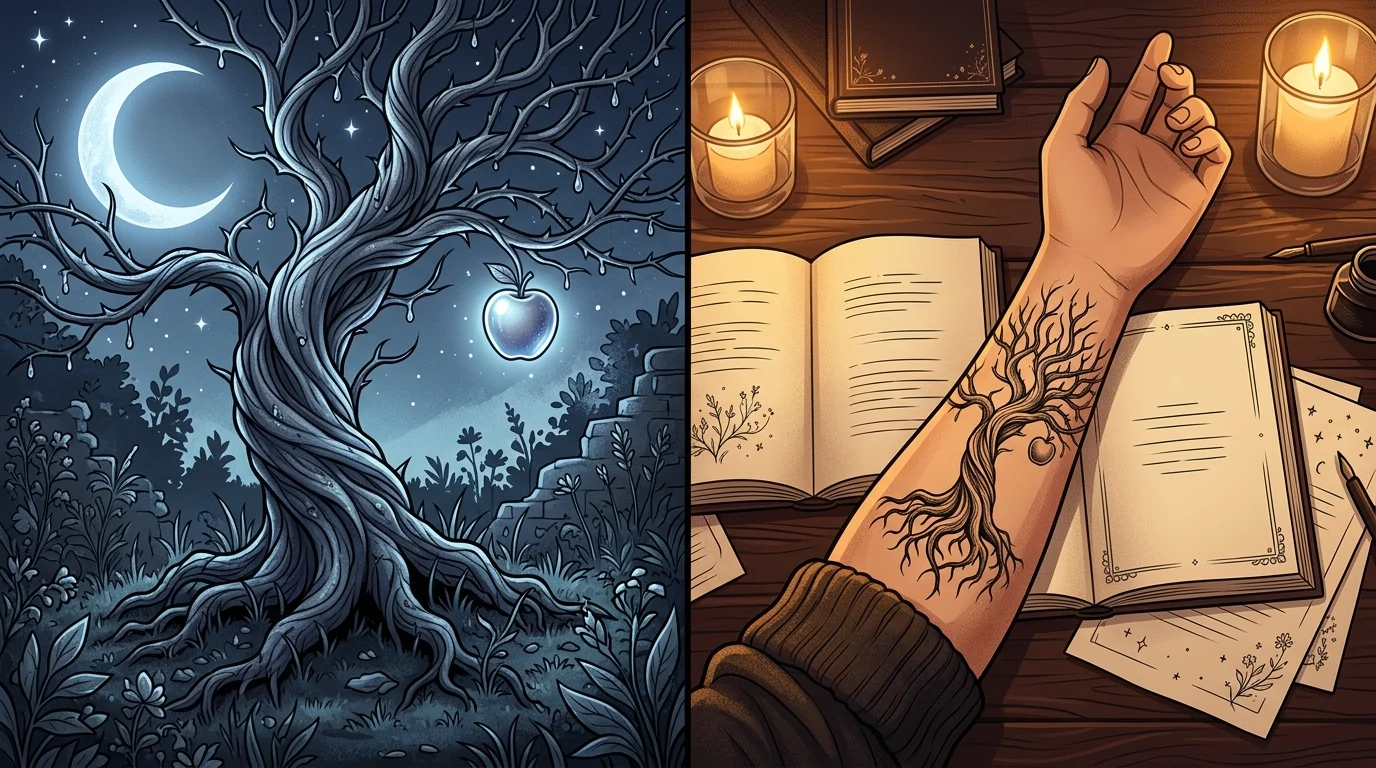
Quick Ans: The poison tree tattoo meaning depends entirely on context, yet unlike many tattoo symbols, this design carries centuries of literary and biblical weight. It can point to suppressed anger, hidden resentment, spiritual decay, or the dangerous growth of unchecked emotion. This guide breaks down every major meaning so you can decode the symbol no matter where you encounter it.
Understanding symbolic tattoo vocabulary has become a daily necessity for anyone engaging with body art, literature, or personal expression. New tattoo trends appear every week; consequently, older symbols accumulate fresh meanings as they spread across cultures and platforms. The poison tree is a perfect example of this evolution. It started as a biblical metaphor, became a William Blake poem, and now appears on skin as a declaration of inner struggle. Some interpretations are literary. Some are spiritual. One is purely psychological. Knowing which one applies can save you from an awkward misunderstanding.
The Core Poison Tree Tattoo Meanings
In tattoo culture, the poison tree most often carries one of two meanings. The first is emotional and introspective. The second is biblical and moral.
The most widespread interpretation is suppressed anger and hidden resentment. This reading traces directly to William Blake’s 1794 poem “A Poison Tree,” which describes how nursing wrath in silence causes it to grow into a deadly fruit. The speaker in the poem nurtures his anger toward a friend, and that anger ultimately destroys them both. People who choose this tattoo often identify with the struggle of holding in negative emotions until they rot from within.
A second interpretation is the biblical Tree of Knowledge of Good and Evil. In Genesis, this tree bears forbidden fruit, and eating from it brings sin and death into the world. A poison tree tattoo can represent the consequences of temptation, the loss of innocence, or the burden of forbidden wisdom. This reading carries moral and spiritual weight, often chosen by those reflecting on guilt, redemption, or the human condition.
Both meanings share a common thread. They describe growth with destructive consequences. One is growth of resentment. The other is growth of sin.
Poison Tree Tattoo in Literature and Poetry
The poison tree takes on a rich literary life through William Blake’s poem. There, it serves as a parable about the dangers of repressed emotion.
Blake’s poem opens with the lines: “I was angry with my friend: / I told my wrath, my wrath did end. / I was angry with my foe: / I told it not, my wrath did grow.” These lines establish the central contrast between honest confrontation and silent resentment. When anger is spoken, it dissolves. When anger is hidden, it festers.
The poem continues with imagery of watering fears, sunning deceit, and nurturing wrath with tears. By night, the speaker’s foe steals into the garden and eats the poisoned apple. The next morning, the speaker finds his enemy outstretched beneath the tree. The poem ends with the chilling realization that the speaker’s own nurtured anger has killed another person.
For tattoo collectors, this poem resonates because it captures a universal experience. Everyone has felt anger they could not express. Everyone has watched a grudge grow larger than the original wound. The poison tree becomes a permanent reminder to speak truth before resentment takes root.
Poison Tree Tattoo in Spiritual and Psychological Contexts
The poison tree carries profound weight in spiritual and psychological traditions. There, it represents the internal consequences of unprocessed emotion.
In Buddhist psychology, holding onto anger is compared to grasping a hot coal. The person who holds it burns themselves before anyone else. A poison tree tattoo can symbolize this teaching, reminding the wearer that resentment harms the holder first. The image of a tree growing from poisoned roots reflects the Buddhist understanding that suffering originates within the mind.
In Christian theology, the poison tree connects to the Fall of Man. The forbidden fruit brought death into the world, and every subsequent sin echoes that original choice. A poison tree tattoo can express repentance, awareness of human weakness, or gratitude for redemption. Some wearers pair the image with crosses, serpents, or biblical verses.
In psychology, the poison tree mirrors the concept of rumination. When people replay grievances without resolution, those grievances strengthen neural pathways of bitterness. The tattoo becomes a commitment to breaking the cycle. It marks a decision to process pain rather than bury it.
How to Tell Which Poison Tree Tattoo Meaning Is Being Used
Context is everything with this symbol. The placement, accompanying elements, and personal story reveal the intended meaning before the tree alone does.
If the tattoo features an apple with a serpent or biblical imagery, the Tree of Knowledge meaning is likely. Phrases like “forbidden fruit” or “original sin” point to the spiritual definition. These designs often appear on the forearm, ribs, or back. The tone is usually reflective or repentant.
When the tattoo shows a tree with roots deep in the ground and a single fruit, the Blake poem interpretation usually applies. References to “wrath,” “foe,” or “garden” clearly point to the literary definition. The presence of thorns, tears, or watering imagery distinguishes this usage.
A design that combines the tree with personal names or dates likely uses the grief or resentment meaning. The placement within a memorial piece, rather than a pure literary tribute, is the giveaway. Look for other symbolic elements like broken branches or wilting leaves.
If the tattoo appears alongside meditation symbols or lotus flowers, the psychological or Buddhist meaning becomes relevant. Mentions of “letting go,” “mindfulness,” or “healing” point in this direction.
When Not to Use Poison Tree Symbolism Casually
The poison tree does not belong in every tattoo conversation. Its most common meaning carries deep emotional weight and expresses profound struggle. Using it casually, as a joke, or in inappropriate contexts can come across as disrespectful or ignorant of its significance.
There is also a literal botanical meaning to consider. Several real trees are called “poison trees,” including the manchineel tree of the Caribbean, whose fruit is deadly. If someone is discussing botany or toxicology, treating the poison tree as pure symbol can seem dismissive of real danger. It is a symbol for inner struggle, not for clinical diagnosis.
Other tattoo traditions use trees differently. The Tree of Life represents connection and vitality. The Bodhi Tree represents enlightenment. The poison tree carries darker meanings that rarely overlap with these positive symbols. The safest approach is to match the register of the conversation. Symbolic trees belong in artistic, literary, or memorial discussions.
Poison Tree Tattoo vs Similar Symbols
Several other tattoo symbols overlap with the poison tree in meaning. Understanding the differences helps avoid confusion.
The Tree of Life represents growth, connection, and the cycle of existence. It carries positive, life-affirming meanings. The poison tree is its shadow, representing growth that destroys rather than nourishes.
The Bodhi Tree represents enlightenment and spiritual awakening. It carries peaceful, meditative associations. The poison tree carries turmoil and unresolved emotion.
The Withered Tree represents death, loss, or barrenness. It implies dormancy rather than active poison. The poison tree suggests something growing and spreading, not something that has already died.
The Apple alone represents temptation, knowledge, or sin. It is a single element rather than a full image. The poison tree combines the apple with roots, branches, and a narrative of growth.
Why Poison Tree Tattoos Became Popular
The poison tree tattoo grew alongside a broader cultural interest in mental health and emotional literacy. Tattoo culture rewarded personal storytelling. A design that said “I have struggled” got noticed. A design that said “I am healing” got shared. The poison tree captured a feeling that felt too big to explain simply.
Literary tattoos and poetry-inspired designs have made symbolic vocabulary more common on social platforms. People share their ink, their stories, and their emotional journeys in ways previous generations kept private. The poison tree gave this generation a visual label for a specific kind of pain. It was not quite grief.
The image also spread through William Blake appreciation and tattoo artist portfolios. It appeared in flash sheets, convention galleries, and Instagram posts. A tree with roots and fruit did the job better than a paragraph of explanation. It also created an in-group signal. Those who understood the reference felt a small connection with the person wearing it.
Regional and Platform Variations
The poison tree tattoo does not mean the same thing everywhere. Culture and platform shape how the symbol is understood.
On Instagram and Pinterest, the literary meaning dominates. Users share Blake-inspired designs with captions quoting the poem.
On Reddit, the psychological meaning appears frequently. Users in tattoo forums discuss the symbolism of repressed anger and healing.
In Christian communities, the biblical meaning dominates. The tree connects to the Garden of Eden and the consequences of sin.
In Buddhist and mindfulness circles, the psychological interpretation takes precedence. The tree becomes a reminder to release resentment before it grows.
FAQs
What does a poison tree tattoo mean?
A poison tree tattoo symbolizes suppressed anger, hidden resentment, or the biblical consequences of forbidden knowledge.
Is a poison tree tattoo bad?
No, a poison tree tattoo is not evil, though it carries dark and introspective meanings.
What does a poison tree tattoo mean on Instagram?
On Instagram, a poison tree tattoo usually references William Blake’s poem about repressed wrath.
What does a poison tree tattoo mean in Christianity?
In Christianity, a poison tree tattoo refers to the Tree of Knowledge of Good and Evil in Genesis.
Can a poison tree tattoo mean something positive?
Yes, it can represent healing, growth, and the decision to release resentment.
What is the difference between a poison tree and a Tree of Life tattoo?
The Tree of Life represents vitality, while the poison tree represents destructive growth.
Does a poison tree tattoo have a literary meaning?
Yes, it references William Blake’s 1794 poem “A Poison Tree.”
Is a poison tree tattoo safe to get?
Yes, the tattoo is safe, though the symbolism carries emotional weight.
Why do people get poison tree tattoos on TikTok?
On TikTok, people share poison tree tattoos to express struggles with anger, grief, or healing.
How do I know which poison tree tattoo meaning is being used?
Look at the accompanying imagery, the placement, and the person’s story to determine the intended meaning.
Conclusion
The poison tree tattoo meaning shifts with every wearer. In a literary tribute, it references William Blake’s poem about wrath. In a Christian context, it points to the Garden of Eden. If it is a psychological framework, it symbolizes rumination and the need to release pain. In case of a Buddhist reading, it reminds the wearer that anger burns the holder first. The only way to know which meaning applies is to read the imagery, the placement, and the story behind the ink. When in doubt, a simple question clears up any confusion faster than guessing.
Symbols evolve quickly, and the poison tree may take on new shades of meaning in the coming years. For now, these interpretations cover almost every situation you will encounter. Learn them once, and you will never be lost when this image appears on skin.