Quick Ans: The HBCU meaning depends entirely on context, yet unlike many slang acronyms, these four letters carry decades of educational, cultural, and political weight. It can point to a historically Black college, a vibrant campus community, a legacy of resilience, or a debated admissions policy. This guide breaks down every major meaning so you can understand the term no matter where you encounter it.
Understanding acronyms with cultural significance has become a daily necessity for anyone navigating modern conversations about education and race. New slang appears every week; consequently, older institutional terms accumulate layers of meaning as they spread across platforms. HBCU is a perfect example of this evolution. It started as a legal designation, became a cultural badge of honor, and now sparks debates about legacy, inclusion, and the future of higher education. Some meanings are historical. Some are celebratory. One is purely administrative. Knowing which one applies can save you from a serious misunderstanding.
The Core HBCU Meaning
In everyday conversation, HBCU most often carries one primary meaning. It describes an institution with a specific history and mission.
The most widespread definition is Historically Black College or University. This phrase identifies a college or university established before 1964 with the primary mission of educating Black Americans . You are not merely talking about any school. You are pointing to an institution born from exclusion and built for empowerment. People use it in discussions of higher education, civil rights history, and Black culture. The acronym says more than “Black college” sometimes could.
The term carries legal weight. The Higher Education Act of 1965 defined an HBCU as any historically Black college or university accredited by a nationally recognized accrediting agency that was established prior to 1964 . This definition matters for federal funding, policy, and institutional recognition.
HBCU in History and Civil Rights
HBCU takes on profound weight in historical discussions. There, it represents a legacy of resilience and self-determination.
The first HBCUs emerged before the Civil War. Cheyney University, founded in 1837 in Pennsylvania, is often cited as the first institution of higher learning for Black Americans. Lincoln University followed in 1854. These schools offered education when white institutions refused admission.
After the Civil War, the Freedmen’s Bureau and northern philanthropists helped establish more HBCUs across the South. More than ninety HBCUs opened between 1865 and 1900. They became engines of Black progress, producing teachers, doctors, lawyers, and leaders.
The civil rights movement drew strength from HBCU campuses. Students at Shaw University organized the Student Nonviolent Coordinating Committee. Fisk University hosted sit-in training sessions. Howard University became a hub of legal strategy for desegregation. These institutions did not merely educate. They mobilized.
HBCU in Modern Culture and Debate
HBCU carries vibrant meaning in contemporary culture. There, it signals community, pride, and a distinctly Black collegiate experience.
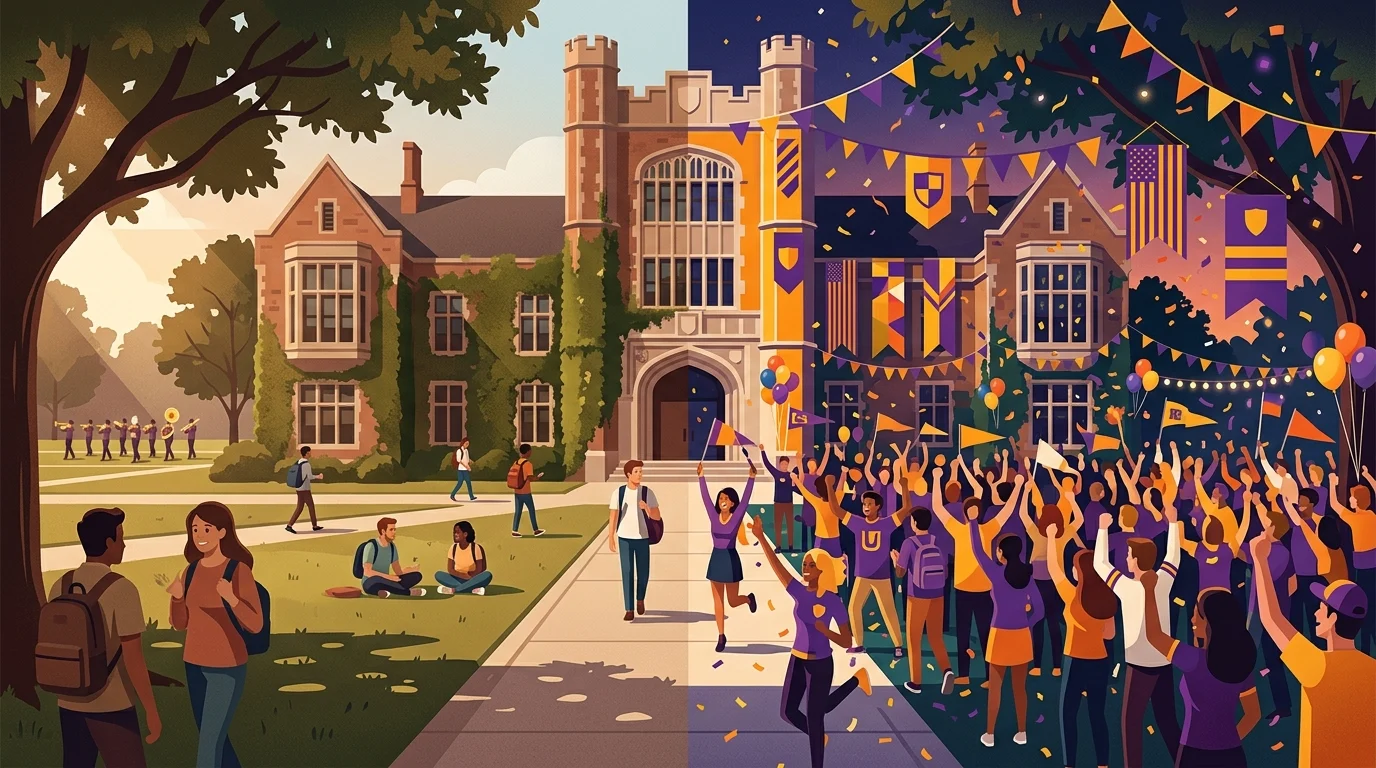
The HBCU experience includes marching bands, homecoming celebrations, Greek life, and a deep sense of belonging. Schools like Howard, Spelman, Morehouse, and Florida A&M are cultural icons. Their alumni networks span politics, entertainment, sports, and business. Vice President Kamala Harris graduated from Howard University. Actor Chadwick Boseman attended Howard. Director Spike Lee is a Morehouse man.
Yet HBCUs also face debates. Some people ask whether the term still fits in an era of desegregation. Others question whether non-Black students should attend. Most HBCUs today enroll diverse student bodies, though their mission remains rooted in Black achievement. The acronym sparks conversations about race, access, and the purpose of higher education.
How to Tell Which HBCU Meaning Is Being Used
Context is everything with this acronym. The setting and tone reveal the intended meaning before the letters do.
If the message involves college admissions, campus life, or alumni networks, the institutional meaning is likely. Phrases like “I go to an HBCU” or “HBCU homecoming” point to the educational definition . These references appear in college discussions, cultural commentary, and personal bios.
When HBCU appears in historical discussions, the civil rights meaning usually applies. References to Freedmen’s Bureau, segregation, or landmark legislation point in this direction.
A cultural post that mentions HBCU likely uses the community meaning. Captions about band battles, step shows, or Black excellence clearly refer to the cultural definition.
In policy discussions, the legal meaning becomes relevant. Mentions of federal funding, accreditation, or the 1964 cutoff point in this direction.
When Not to Use HBCU Casually
HBCU does not belong in every conversation. Its historical meaning carries deep weight and expresses a legacy of struggle. Using it casually, in jest, or in dismissive contexts can come across as disrespectful.
There is also a definitional sensitivity to consider. Not every school with a majority Black student body qualifies as an HBCU. The term requires a specific founding date and mission. Misusing it can seem ignorant of history.
Other educational contexts use different terms. Predominantly White Institutions, Hispanic-Serving Institutions, and Tribal Colleges all carry their own definitions and histories. Each serves a distinct purpose.
The safest approach is to match the register of the conversation. Historical terms belong in serious discussions. When in doubt, clarity beats casualness.
HBCU vs Similar Terms
Several other terms overlap with HBCU in meaning. Understanding the differences helps avoid confusion.
PWI stands for Predominantly White Institution. It describes schools where white students form the majority. HBCUs are not PWIs by definition, though some HBCUs now enroll non-Black majorities.
MSI stands for Minority-Serving Institution. It includes HBCUs, Hispanic-Serving Institutions, and Asian American and Native American Pacific Islander-Serving Institutions. HBCU is more specific.
TCU stands for Tribal College or University. It serves Native American students. The two terms parallel each other but describe different communities.
PBI stands for Predominantly Black Institution. It describes schools with majority Black enrollment but without the historical designation of HBCU. The distinction is legal and historical.
Why HBCU Endures as a Term
The word HBCU endures because it names something that matters. Every American president since Jimmy Carter has issued proclamations recognizing HBCUs. Every major city with an HBCU knows its cultural footprint.
The term also adapts. It appears in policy debates, admissions discussions, and cultural celebrations. It works as a legal category, a point of pride, and a conversation starter.
Its survival also reflects a universal tension. People admire HBCUs for their history but debate their future. The word names that tension. It reminds listeners that education and race have never been separate in America.
Regional and Platform Variations
HBCU does not mean the same thing everywhere. Platform culture shapes how the term is used.
On Instagram, the cultural meaning dominates. Users post homecoming photos, band videos, and graduation tributes with HBCU hashtags.
On Twitter and X, the political meaning appears. Users debate funding, admissions, and the role of HBCUs in modern America.
On TikTok, the student meaning dominates. Creators share campus tours, dorm tours, and day-in-the-life videos tagged HBCU.
In academic and policy circles, the legal meaning prevails. Reports cite the 1964 definition and track federal funding.
FAQs
What does HBCU mean?
HBCU stands for Historically Black College or University, an institution established before 1964 to educate Black Americans.
Is HBCU a bad word?
No, HBCU is not profane and carries pride and historical significance.
What does HBCU mean on Instagram?
On Instagram, HBCU refers to campus life, homecoming, and Black collegiate culture.
What does HBCU mean in texting?
In texting, HBCU usually refers to a historically Black college or university.
Can HBCU mean something political?
Yes, HBCU carries political weight in discussions of funding, access, and civil rights.
What is the difference between HBCU and PWI?
HBCU describes historically Black institutions, while PWI describes predominantly white institutions.
Does HBCU have a legal meaning?
Yes, the Higher Education Act of 1965 defines HBCUs for federal funding purposes.
Is HBCU safe to use in professional settings?
Yes, HBCU is appropriate in educational and professional contexts.
Why do people say HBCU on TikTok?
On TikTok, HBCU appears in campus tours, homecoming videos, and student life content.
How do I know which HBCU meaning is being used?
Look at the platform, the tone, and the surrounding words to determine the intended meaning.
Conclusion
The HBCU meaning shifts with every context. In a history book, it means a legacy of resilience. On Instagram, it means homecoming and band battles. In a policy brief, it means federal funding and accreditation. On TikTok, it means dorm tours and Black excellence. The only way to know which meaning applies is to read the setting, the tone, and the relationship between the people involved. When in doubt, a simple question clears up any confusion faster than guessing.
Language evolves quickly, and HBCU may take on new shades of meaning in the coming years. For now, these definitions cover almost every situation you will encounter. Learn them once, and you will never be lost when those four letters appear in your feed.