Quick Ans: The maiden name meaning depends entirely on context, yet unlike many slang terms, this traditional phrase carries centuries of legal, cultural, and personal weight. It can point to a woman’s surname before marriage, a genealogical clue, a feminist debate, or a bureaucratic checkbox. This guide breaks down every major meaning so you can wield the term with precision.
Understanding family vocabulary has become a daily necessity for anyone navigating forms, family trees, or cultural conversations. New slang appears every week; consequently, older terms accumulate fresh meanings as they spread across platforms. Maiden name is a perfect example of this evolution. It started as a legal descriptor, became a genealogical necessity, and now functions as a site of personal choice and cultural debate. Some usages are practical. Some are emotional. One is purely administrative. Knowing which one applies can save you from an awkward misunderstanding.
The Core Maiden Name Meaning
In everyday conversation, maiden name most often carries one primary meaning. It describes the surname a woman held before marriage.
The most widespread definition is a woman’s family name before she takes her spouse’s name in marriage. This phrase captures a state of transition. You are not merely talking about any surname. You are pointing to the name that preceded a marital name change. People use it on forms, in genealogy, and in family discussions. The term says more than “previous name” sometimes could.
A secondary definition is a surname used by a person before any name change. This broader reading includes people who changed names for reasons other than marriage. However, the traditional association remains with women and weddings.
Both usages share a common thread. They describe a name from before. One is a name before marriage. The other is a name before change.
Maiden Name in Genealogy and Family History
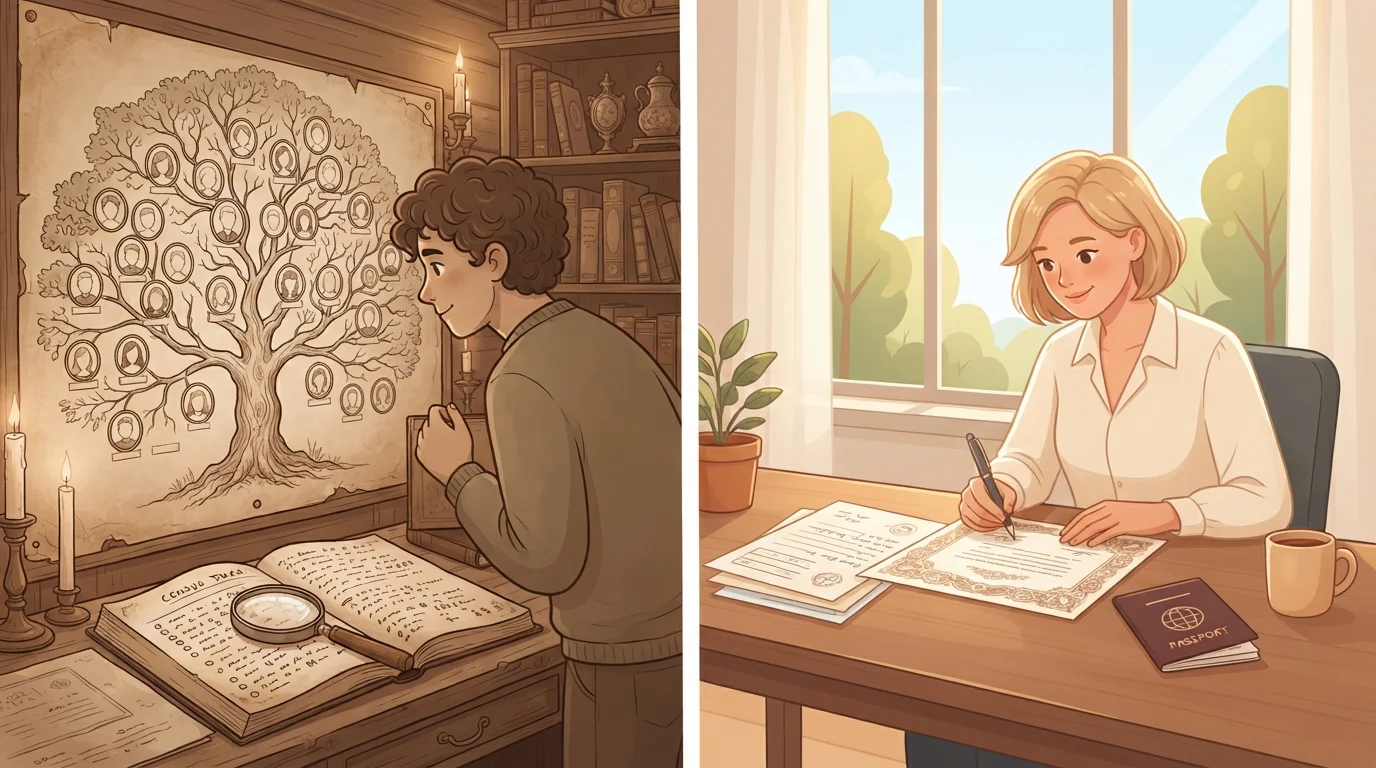
Maiden names carry enormous weight in genealogy. There, they function as essential clues that unlock family trees.
Historically, women’s maiden names often disappeared from records after marriage. Census data, land deeds, and death certificates frequently listed only the married name. As a result, tracing maternal lineages became notoriously difficult. Genealogists advise researchers to search for marriage records, which typically list both the bride’s maiden name and the groom’s surname.
The term itself reflects a patriarchal convention. In many Western cultures, women historically surrendered their birth surnames upon marriage. That convention made the maiden name a temporary identifier, one that vanished from official records once the wedding occurred. For descendants trying to trace their roots, recovering a maiden name feels like finding a missing key.
Modern genealogy platforms now prioritize maiden names in search fields. Family trees often display both names, with the maiden name in parentheses. This practice honors the maternal line and acknowledges that identity does not begin at marriage.
Maiden Name in Legal and Administrative Contexts
Maiden names carry practical weight in legal and administrative settings. There, they function as identifiers that link past and present.
On government forms, the field “maiden name” appears on passport applications, marriage licenses, Social Security records, and bank documents. The purpose is to trace identity across name changes. A woman who took her husband’s name may need to prove that her current identity connects to her former one.
In some jurisdictions, a woman can legally resume her maiden name after divorce by simply requesting the change. In others, the process requires a court order. The rules vary widely, which means the term carries different legal consequences depending on location.
Employers, universities, and licensing boards often ask for maiden names to verify credentials. A diploma issued under a maiden name must match the person presenting it. Without that link, verification becomes difficult.
Maiden Name in Feminist and Cultural Debates
Maiden names carry symbolic weight in feminist and cultural discussions. There, they function as a site of choice and critique.
Feminists have long noted that the term itself assumes a woman will change her name. The word “maiden” implies youth, purity, and unmarried status, reinforcing the idea that a woman’s identity transfers from father to husband. Critics argue that the term reduces a woman’s birth name to a temporary label.
In response, many women now keep their maiden names after marriage. Others hyphenate. Others use their maiden name professionally while using their married name socially. Some couples combine names or invent new ones. Each choice challenges the default.
Cultural differences shape the debate. In parts of Asia, women may keep their birth names after marriage. The English term “maiden name” reflects a specific cultural tradition, not a universal rule.
How to Tell Which Maiden Name Meaning Is Being Used
Context is everything with this term. The setting and tone reveal the intended meaning before the words do.
If the discussion involves forms, documents, or bureaucracy, the legal meaning is likely. Phrases like “maiden name on passport” or “maiden name verification” point to the administrative definition. The tone is usually practical or procedural.
When the discussion involves family trees or ancestry, the genealogical meaning usually applies. References to “tracing maiden names” or “maternal lineage” clearly point to the research definition. The tone is often curious or reverent.
A feminist or cultural discussion that mentions maiden names likely uses the symbolic meaning. References to “keeping my maiden name” or “the politics of maiden names” point to the debate definition. The tone is usually critical or reflective.
If the message sounds personal and appears after a wedding announcement, the transitional meaning becomes possible. This usage often follows a name change or a marriage. The tone is warmer and more celebratory.
When Not to Use Maiden Name Casually
Maiden name does not belong in every conversation. Its traditional meaning carries gendered assumptions and expresses a historical convention. Using it carelessly can come across as insensitive or outdated.
There is also a personal sensitivity to consider. Some women dislike the term because it implies their birth name was temporary. Others embrace it as a practical descriptor. Asking about someone’s maiden name can feel intrusive if the person changed names for personal reasons.
Other professional contexts use the term differently. In law, it is a formal identifier. In genealogy, it is a research tool. Each field has its own conventions, and casual usage rarely crosses into these spaces.
The safest approach is to match the register of the conversation. Administrative terms belong in administrative contexts. When in doubt, asking politely beats assuming.
Maiden Name vs Similar Terms
Several other terms overlap with maiden name in meaning. Understanding the differences helps avoid confusion.
Birth name means “the name given at birth.” It is broader and more neutral. A birth name may or may not be a maiden name. Birth name is what appears on a certificate. Maiden name is what precedes marriage.
Married name means “the surname taken after marriage.” It is the counterpart to maiden name. One is before. The other is after.
Given name means “the first name.” It is unrelated to surnames. Given name is what your parents chose. Maiden name is what your family carried.
Family name means “the shared surname of a family.” It is broader and more general. Family name is what you share. Maiden name is what you leave.
Why Maiden Name Endures as a Term
The term maiden name endures because it names something real. Marriage still involves name changes in many cultures. Documents still ask for previous surnames. Family trees still depend on maternal links.
The term also adapts. Some people use it without thinking about its gendered roots. Others reclaim it as a neutral descriptor. Still others reject it entirely. Its survival reflects both tradition and the slow work of change.
Its persistence also reflects a practical need. Without a term for the pre-marital surname, forms and genealogies would struggle. The word fills a gap, even as its assumptions evolve.
Regional and Platform Variations
Maiden name does not mean the same thing everywhere. Culture and platform shape how the term is used.
In English-speaking countries, the term appears on official forms and in genealogy research.
In Spanish-speaking countries, the concept differs because people typically keep both parental surnames for life. The English term does not translate directly.
In Iceland, surnames follow a patronymic or matronymic system, so the concept of a maiden name does not apply in the same way.
On social media, the term appears in wedding announcements, genealogy posts, and feminist discussions. Each platform shapes the tone.
FAQs
What does maiden name mean?
A maiden name is a woman’s family name before she takes a spouse’s name in marriage.
Is maiden name a bad term?
No, maiden name is not profane, though some consider it outdated or gendered.
What does maiden name mean on forms?
On forms, maiden name means the surname held before marriage.
What does maiden name mean in genealogy?
In genealogy, maiden name is a key clue for tracing maternal lineage.
Can maiden name mean something else?
Yes, maiden name can broadly mean any surname used before a name change.
What is the difference between maiden name and birth name?
Birth name is the name given at birth, while maiden name specifically precedes marriage.
Does maiden name have a legal meaning?
Yes, maiden name is a legal identifier on passports, licenses, and records.
Is maiden name safe to use in professional settings?
Yes, maiden name is appropriate in administrative and genealogical contexts.
Why do people say maiden name on TikTok?
On TikTok, maiden name appears in genealogy videos, wedding content, and feminist discussions.
How do I know which maiden name meaning is being used?
Look at the platform, the tone, and the surrounding words to determine the intended meaning.
Conclusion
The maiden name meaning shifts with every context. On a passport form, it means a previous surname. In a family tree, it means a maternal clue. The only way to know which meaning applies is to read the setting, the tone, and the relationship between the people involved. When in doubt, a simple question clears up any confusion faster than guessing.
Language evolves quickly, and maiden name may take on new shades of meaning in the coming years. For now, these definitions cover almost every situation you will encounter. Learn them once, and you will never be lost when this term appears in your feed.