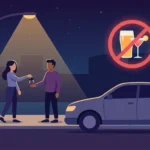
Quick Answer: Sober means not drunk or not affected by alcohol or drugs. It also means serious, calm, and realistic in attitude, and plain or subdued in colour or style.
Sober is one of those English words that changes its feeling depending on where you meet it. At a party, sober means the person who can safely drive home. At a funeral, sober means quiet, respectful, and serious. In a business report, a sober assessment means a realistic one, free from hype. All of these uses are connected by one idea: clear-headed, without excess, and without distortion.
That connection is why sober is so useful, and also why learners sometimes get confused. If you only learn “not drunk,” you will miss half of what native speakers mean when they say “a sober look,” “sober colours,” or “a sobering thought.” This guide covers all the main meanings, with examples, so you can recognise and use each one.
What Does Sober Mean in Simple Words?
In its most common sense, sober means not intoxicated. A sober person has not been drinking alcohol, or has not taken drugs that affect their judgement, and is thinking clearly. It can describe a moment, as in “I need to stay sober tonight because I am driving,” or a longer way of life, as in “He has been sober for five years,” meaning he has not drunk alcohol for five years.
From that core idea, the word extended to character and mood. A sober person is serious, thoughtful, and not carried away by excitement. In this sense, a sober view is realistic, not overly optimistic or dramatic. A sober suit is plain, dark, and not showy. In each case, the word suggests restraint: no excess, no flash, no fog.
Sober as Not Drunk or Drug-Free
This is the meaning most people learn first, and it is also the one with the most practical importance. Being sober matters for driving, for work, for medical decisions, and for safety. Laws about drink driving, for example, are built around whether a driver is sober enough to drive safely, usually measured by blood alcohol level rather than by feeling.
It is worth noting a subtle difference. “Not drunk right now” and “sober as a lifestyle” are not the same. Someone can be sober tonight because they chose not to drink at dinner, even if they drink on other nights. Someone who says “I am sober” in a recovery context usually means they have stopped drinking or using drugs altogether, often for months or years. Context usually makes it clear which one is meant, but if you are unsure, it is polite to ask gently rather than assume.
Related phrases include “stone cold sober,” meaning completely sober, with no doubt at all, and “sober up,” meaning to become sober after drinking, or, figuratively, to become more serious after a shock.
Sober as Serious, Thoughtful, and Realistic
The second major meaning is about attitude. A sober assessment, a sober warning, or a sober reminder is one that makes you think carefully. It is not funny, not exaggerated, and not meant to cheer you up. It is meant to bring you back to reality.
For example, a news article might call a rise in prices “a sober reminder of how fragile the economy is.” That does not mean the reminder is drunk or not drunk. It means the news is serious and should make readers think. Similarly, a “sober look at the problem” is a calm, honest look, without wishful thinking.
You can also describe people this way. A sober young leader might be hardworking, reliable, and not given to wild promises. A sober crowd at a memorial is quiet and respectful. In all these cases, sober is a compliment about steadiness, although it can also suggest a lack of fun if used critically, as in “a rather sober party,” meaning dull or overly serious.
Sober as Plain in Colour and Style
The third meaning is visual. Sober colours are plain, dark, or muted: grey, navy, black, brown, or dark green, rather than bright red, neon yellow, or vivid patterns. Sober clothes are simple, well cut, and not attention seeking. A sober room might have plain walls, simple furniture, and no loud decoration.
This use comes from the same idea of restraint. Just as a sober person does not overindulge, a sober style does not overdo colour or decoration. People often use it for formal occasions, workplaces, and traditional settings, where standing out would be inappropriate. A lawyer in a sober grey suit, for example, is dressing to look trustworthy and serious, not fashionable or flamboyant.
Sober as a Verb: To Sober Up
Sober is also a verb. To sober someone means to make them serious or clear-headed, often after a shock. “The bad news sobered us all” means it made everyone suddenly serious. “He sobered up overnight” can mean he became sober after drinking, or, figuratively, he became more realistic after a period of excitement.
The adjective “sobering” comes from this verb. A sobering thought, a sobering experience, or a sobering statistic is one that makes you serious, often because it shows a risk or a loss you had not fully considered. For example, visiting a hospital can be a sobering experience for a young person who thought they were invincible.
Origin and History of Sober
Sober comes from Latin sobrius, meaning not drunk, temperate, moderate, and sensible. It reached English through Old French sobre in the 14th century. At first it mainly meant moderate in desires and actions, and abstaining from strong drink. The sense of “not drunk at the moment” developed in the late 14th century, and the sense of “appropriately solemn or serious” came around the same time.
The colour sense, plain or simple in appearance, is recorded from the 1590s. The playful word “sobersides,” for a very serious, sedate person, dates to the early 1700s. That long history explains why sober feels both old fashioned and modern: it has been describing clear-headedness for more than six centuries, while picking up new shades along the way.
How to Pronounce Sober
In British English, people usually pronounce sober SOH-buh. In American English, it is SOH-bur, with a clearer “r” at the end. The related forms are soberly, soberness, sobriety for the noun meaning the state of being sober, and sobering for the adjective meaning making you serious.
Be careful not to confuse sober with somber, spelled sombre in British English. They sound similar and both can mean serious or gloomy, but somber mainly means dark, gloomy, or sad in mood or colour, while sober mainly means not drunk, serious, or restrained. A sober suit and a sombre mood overlap, but they are not identical.
Examples of Sober in Sentences
- “I am driving tonight, so I need to stay sober.”
- “She has been sober for three years and is proud of her recovery.”
- “After the accident, he gave a sober account of what had happened, without exaggeration.”
- “The report offered a sober assessment of the company’s future, neither optimistic nor pessimistic.”
- “He wore a sober dark suit to the interview.”
- “It was a sobering thought that one small mistake could have cost so much.”
- “The news sobered the whole room in an instant.”
Sober on Social Media and in Modern Speech
In recent years, sober has also become part of lifestyle language online. Phrases like “sober curious,” “sober living,” and “California sober” appear in wellness, recovery, and social media discussions. “Sober curious” usually means someone who is questioning their drinking habits and experimenting with not drinking, without necessarily committing to lifelong abstinence. “Sober living” can refer to a drug- and alcohol-free home or community that supports recovery.
“California sober” is a more contested term, sometimes used to mean avoiding alcohol and hard drugs but still using cannabis. Because people define it differently, it is best to clarify what someone means rather than assume. In general, if someone says they are sober without a qualifier, the safest understanding is that they are not drinking alcohol or using intoxicating drugs.
On social media, people also use sober figuratively in phrases like “sober reality” or “sober truth,” meaning the plain, unglamorous facts without hype or filters. That use fits the older sense of sober as realistic and free from exaggeration.
Synonyms and Antonyms
Synonyms depend on which meaning you intend:
- For not drunk: clear-headed, drug-free, teetotal, abstinent.
- For serious and realistic: serious, thoughtful, grave, level-headed, realistic, restrained.
- For plain in style: plain, muted, subdued, understated, modest.
Antonyms also change with meaning. For not drunk, the opposite is drunk, intoxicated, or impaired. When sober means serious, the opposite might be lighthearted, flippant, or giddy. For plain style, the opposite is flashy, gaudy, or flamboyant. Choosing the right opposite is a good test of whether you have understood which sober is being used.
When (Not) to Use Sober
Use sober when you mean clear-headed, serious, or restrained, and the context makes the meaning clear. It is a respectful, neutral word in most settings, and it is widely used in formal and informal English alike.
Be careful when talking about someone’s recovery. Do not ask intrusive questions about why someone is sober, how long they have been sober, or what they used to drink, unless they invite that conversation. For many people, sobriety is personal, hard won, and tied to health or family history. A simple, supportive response is better than curiosity.
Also avoid using sober as a joke about someone who is usually drunk, such as “I have never seen him sober.” That can sound like mockery, even if it is meant as humour, and it can be hurtful if the person is struggling with alcohol.
Common Mistakes With Sober
One mistake is using sober only for alcohol, and missing the serious or plain meanings. If a writer calls a speech “sober,” they are probably praising its seriousness, not saying the speaker had not been drinking.
Another mistake is confusing sober with sombre or somber. Both can describe mood, but sober is broader, covering clear-headedness and restraint, while sombre is mainly about gloom or darkness.
A third mistake is thinking “sober up” works instantly. In real life, only time allows the body to process alcohol. Coffee, cold air, or food do not make someone sober faster, even though they might make them feel more awake. That is an important safety point, especially for driving.
Frequently Asked Questions About Sober
What does sober mean in slang?
In everyday slang, sober still mainly means not drunk or not high. In recovery and wellness slang, it can also mean living without alcohol or drugs.
What is the noun form of sober?
Sobriety is the noun for the state of being sober. People also use soberness, but sobriety is far more common.
What does “sober curious” mean?
It means interested in reducing or stopping drinking, and exploring what life feels like without alcohol, without necessarily identifying as fully abstinent for life.
Is sober a compliment?
Often yes, when it means serious, thoughtful, or reliable. It can be negative if it means dull or overly serious, so tone and context matter.
What does “stone cold sober” mean?
Completely sober, with no alcohol or drugs affecting the person at all.
Conclusion
Sober meaning starts with a simple idea, not drunk, and grows into a whole family of related ideas: clear-headed, serious, realistic, and plain. A sober driver is safe to drive. Such a judgement is trustworthy because excitement or excess does not cloud it. A sober suit earns trust because it does not try too hard. Once you see that thread of restraint running through all the uses, the word stops being confusing and becomes a precise tool. Use it for clear thinking, for honest assessments, and for respectful descriptions of recovery, and you will be using one of English’s most useful, and most human, words correctly.