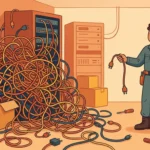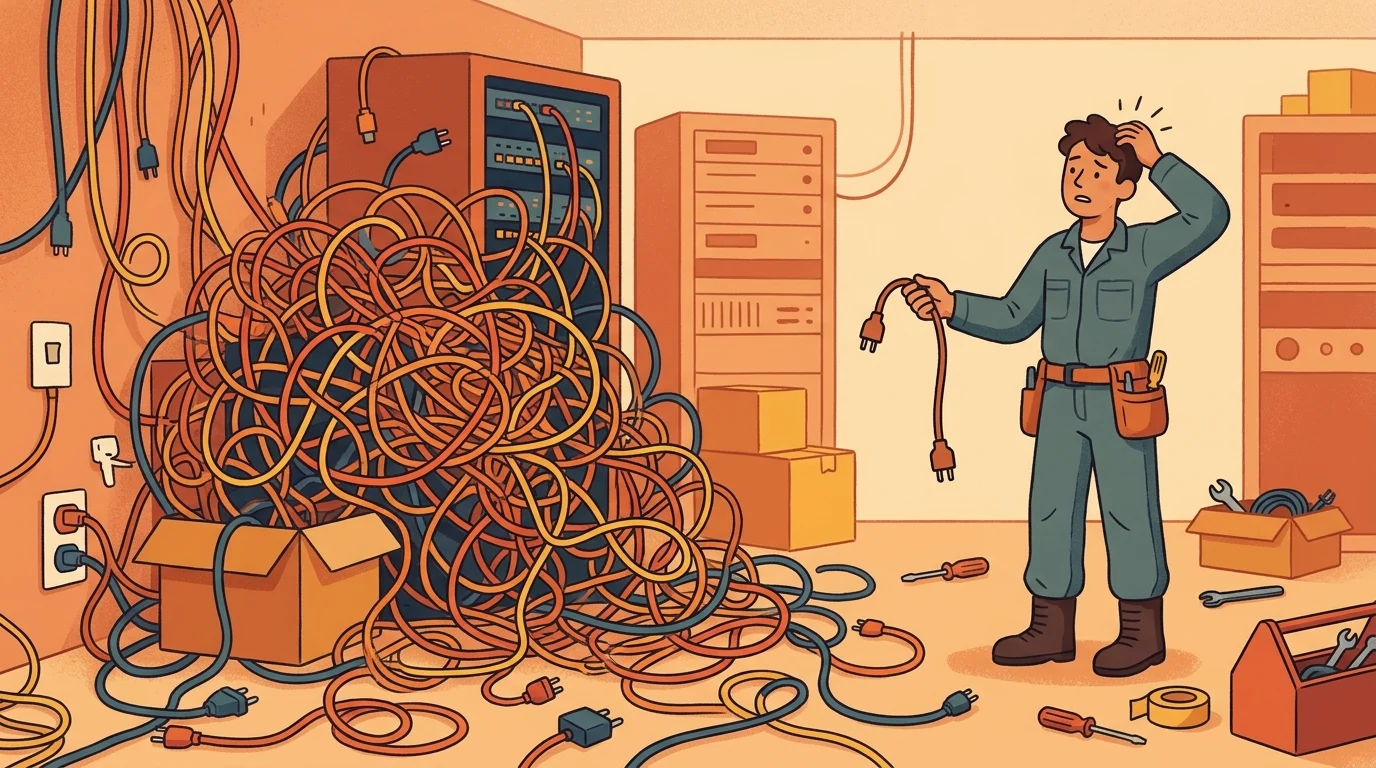
Quick Answer: Snafu means a confused, muddled situation caused by a mistake or a series of small errors. If plans go wrong in a tangled, hard-to-untangle way, that is a snafu. It can also mean the error itself, and it can describe something that has gone wrong or become chaotic.
You have probably heard someone say, “There was a snafu with the booking,” and instantly understood that something went wrong, even if nobody explained the details. Snafu is one of those words that sounds playful but describes a very real frustration: the moment when a simple plan turns into a mess. This guide explains snafu meaning, where it came from, how to use it correctly, and what to say instead when you need a more formal word.
What Does Snafu Mean?
At its simplest, snafu meaning is a situation marked by confusion, mistakes, and disorder. It is not just one tiny slip. It is the kind of mix-up where several things go wrong at once, or where one error creates a chain of problems that takes time to sort out.
For example, if a flight is delayed, a bag goes to the wrong city, and a hotel booking cannot be found, that whole experience could fairly be called a snafu. If only the flight is ten minutes late, that is probably just a delay, not a snafu.
The word works as a noun, an adjective, and a verb:
- Noun: “A scheduling snafu left two speakers booked for the same time slot.”
- Adjective: “The whole system went snafu after the update.”
- Verb: “One wrong address snafued the entire delivery route.”
In everyday speech, the noun form is by far the most common. People use it for travel problems, office mix-ups, technical glitches, election counting errors, and any project that somehow ends up tangled.
Snafu Meaning in Context
Snafu sits in informal to semi-formal English. You will hear it in news reports, workplace conversations, and casual writing, but you would rarely see it in a legal contract or a very formal academic paper. It carries a slightly humorous, understated tone, as if the speaker is saying, “This is a mess, but we will sort it out.”
That tone matters. Calling something a snafu often softens the blame. It suggests confusion rather than deliberate wrongdoing. A manager who says “there was a snafu in payroll” is framing the problem as an unfortunate tangle, not as someone’s serious failure, even if the payroll team still needs to fix it quickly.
On social media and in headlines, snafu is popular because it is short, vivid, and instantly clear. Headlines like “Ticketing Snafu Frustrates Fans” tell readers everything they need to know in three words: something went wrong, it was messy, and people were affected.
Origin and History of Snafu
Snafu began as military slang during the Second World War. It started as an acronym built from the phrase “situation normal, all fouled up,” although soldiers often used a much stronger word than “fouled.” The joke was dark but honest: in wartime, confusion felt normal, and plans rarely survived contact with reality.
The first known printed use dates to around 1941, and the word spread quickly through American forces. It belonged to a family of cynical military acronyms that mocked the army’s love of abbreviations. While some of those terms faded away, snafu survived because civilians found it useful too.
After the war, returning soldiers brought the word home, and it moved into newspapers, offices, and everyday conversation. Over time, the polite version with “fouled” became the standard public explanation, and the word lost most of its shock value. Today, most people use snafu without thinking about its rough origin at all.
There is also a famous wartime cartoon character called Private Snafu, created to teach soldiers important lessons through comedy. The character’s constant blunders helped cement the word in American culture.
How to Pronounce Snafu
Snafu is pronounced “sna-FOO” in American English, with the stress on the second syllable. In British English, you may also hear “SNA-foo,” with the stress on the first syllable. Both are accepted, so use whichever sounds natural in your accent.
It is usually written in lowercase when used as a common noun (“a snafu”), but in all capitals as SNAFU when someone wants to emphasise its acronym origin. The plural is snafus.
Snafu in Sentences: Real Examples
Seeing a word in real sentences is the fastest way to learn it. Here are examples from everyday life:
- “A baggage snafu meant we waited two hours at the airport carousel.”
- “Thanks to a snafu with the invitations, half the guests got the wrong date.”
- “The online exam crashed because of a technical snafu, so the teacher extended the deadline.”
- “After the address snafu, the parcel finally arrived a week late.”
- “The wedding seating plan went snafu when three extra guests showed up.”
Notice that in each case, the problem is annoying and confusing, but not tragic. Snafu fits best for everyday chaos, not for disasters.
Synonyms for Snafu and Similar Words
If you want variety in your writing, these words overlap with snafu, though each has a slightly different shade of meaning:
- Mix-up: A confusion, often involving swapped items or wrong information.
- Foul-up: A mistake that spoils a plan, very close to snafu in tone.
- Muddle: A confused, disordered state.
- Mess: A general, informal word for disorder.
- Glitch: Best for a brief technical fault, rather than a whole tangled situation.
- Blunder: A careless, often embarrassing mistake by one person.
- Debacle: Stronger than snafu; a complete, public failure.
Snafu is different from a simple “mistake” because it implies confusion and knock-on effects. A typo is a mistake. A typo that sends a thousand letters to the wrong addresses and triggers a week of refunds is a snafu.
When to Use Snafu (and When Not To)
Use snafu when you want to describe a confusing mix-up in a light, conversational way. It works well in emails to colleagues, news stories, blog posts, and friendly conversation.
Avoid snafu in very formal writing, in serious reports about harm or loss, or when you need to be precise about who was responsible. Because snafu softens blame, it can sound evasive if a situation genuinely needs accountability. In those cases, say exactly what happened: “The payment file was sent to the wrong bank account,” rather than hiding behind “a snafu occurred.”
Also avoid using snafu for a deliberate act. A scam is not a snafu. A lie is not a snafu. The word implies accidental confusion, not intention.
Snafu in Pop Culture
Beyond its military roots, snafu has appeared for decades in films, television, sports commentary, and news headlines. It is a favourite of journalists because it packs a story into a single punchy word. Sports writers use it for scheduling errors, refereeing confusion, and ticketing problems. Tech writers use it for outages and failed launches.
Its staying power is remarkable. Many wartime slang words disappeared within a few years, but snafu is still in daily use more than eighty years after it first appeared. That is because the experience it describes — plans going sideways in a confusing way — never goes out of date.
Common Mistakes With Snafu
The most common mistake is overusing snafu for every small problem. A late bus is not a snafu. A forgotten password is not a snafu. Save the word for situations that genuinely involve confusion or a tangle of errors.
Another mistake is spelling it as “snafu” in one place and “SNAFU” in another without reason. Pick one style and stay consistent, except when you deliberately want the capitalised form for emphasis.
Finally, some learners confuse snafu with “fiasco” or “catastrophe.” A snafu can be fixed, even if it is annoying. A catastrophe cannot be fixed so easily. Keep the scale in mind.
FAQs About Snafu
What does snafu stand for?
It originally stood for “situation normal, all fouled up,” with a stronger word often used in place of “fouled” by soldiers. In polite modern use, “fouled” is the standard version.
Is snafu a rude word?
No, not in modern everyday use. Its origin was coarse military humour, but the word itself is now considered informal rather than offensive.
Is snafu a noun or a verb?
It can be both, and also an adjective. The noun is most common: “a snafu.”
What is the difference between snafu and FUBAR?
Both are Second World War military acronyms, but FUBAR describes a situation that is far worse and often beyond repair, while a snafu is usually a fixable mess.
Can I use snafu in a work email?
Yes, in most casual or semi-formal workplaces. For a formal report to senior management or a client, a plainer phrase like “an administrative error” may be safer.
Conclusion
Snafu is a short, colourful word for a very common human experience: the plan that goes wrong in a confusing, tangled way. Born in wartime as a piece of dark military humour, it has grown into a mainstream English word for mix-ups, glitches, and administrative messes. Use it when the situation is muddled but fixable, when the tone can stay light, and when a single vivid word will do the work of a whole explanation. The next time a booking, a schedule, or a delivery goes sideways, you will know exactly what to call it.