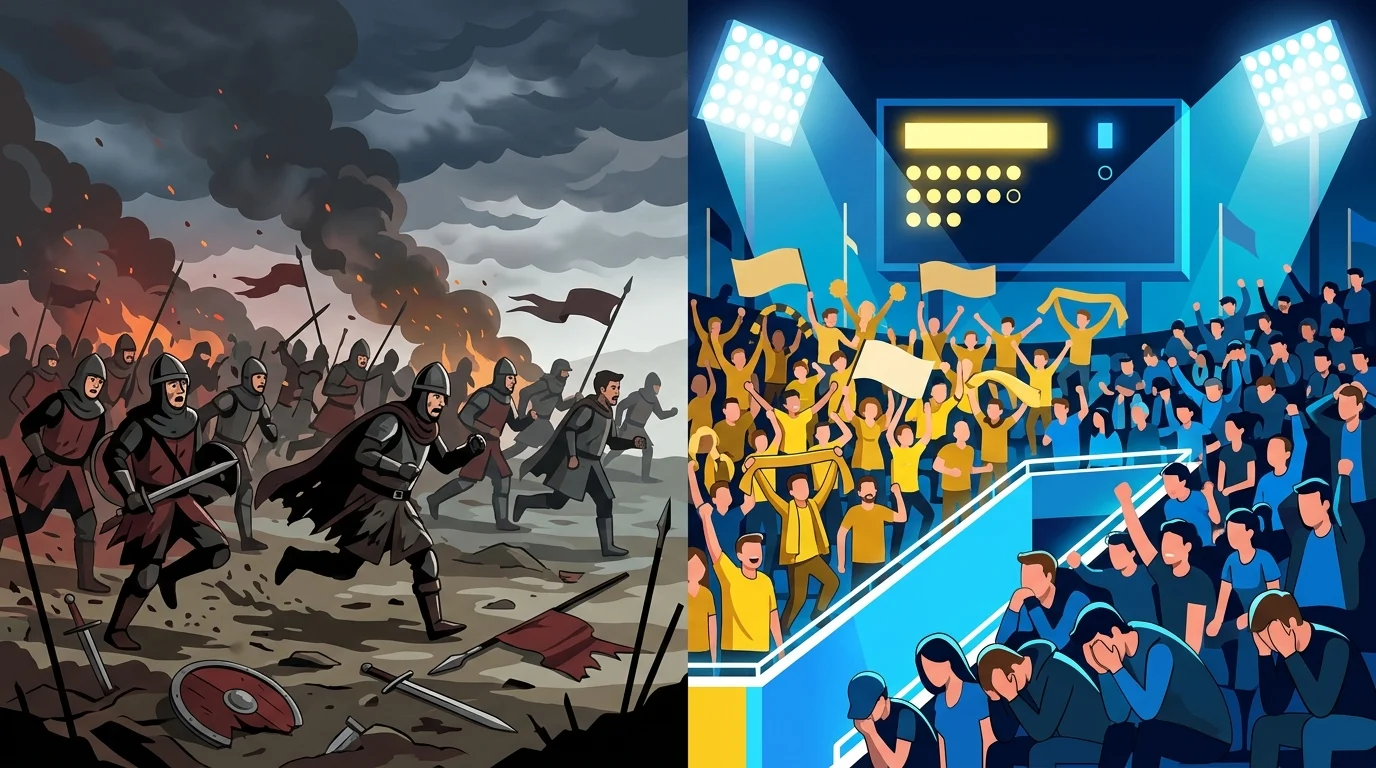
Quick Ans: The rout meaning depends entirely on context, yet unlike many slang terms, this compact word carries centuries of military, political, and sporting weight. It can point to a crushing defeat, a disorderly retreat, a violent riot, or a decisive victory. This guide breaks down every major meaning so you can wield the word with precision.
Understanding layered vocabulary has become a daily necessity for anyone following news, sports, or history. New slang appears every week; consequently, older words accumulate fresh relevance as they appear in headlines and match reports. Rout is a perfect example of this evolution. It started as a Latin term for breaking apart, became a military descriptor for shattered armies, and now functions as sports shorthand for lopsided scores. Some usages are martial. Some are athletic. One is purely chaotic. Knowing which one applies can save you from an awkward misunderstanding.
The Core Rout Meanings
In everyday conversation, rout most often carries one of two meanings. The first is military and historical. The second is competitive and modern.
The most widespread definition is a disorderly retreat of defeated troops. This phrase captures a state of complete collapse. You are not merely talking about a loss. You are pointing to an army breaking apart and fleeing in panic. People use it in history books, war reporting, and strategic analysis. The word says more than “defeat” ever could.
A secondary definition is a decisive and overwhelming defeat. This version appears in sports, politics, and elections. A team routed its opponent by a massive margin. A candidate routed the incumbent. The word carries finality and humiliation.
Both usages share a common thread. They describe total breakdown. One is breakdown on the battlefield. The other is breakdown on the scoreboard.
Rout in Military and Historical Contexts
Rout takes on a grim life in military history. There, it describes the moment an army ceases to function as a fighting force.
A rout differs from a retreat. A retreat is orderly and strategic. A rout is chaotic and desperate. Soldiers abandon equipment, break formation, and flee without direction. Commanders lose control. Casualties mount not from combat but from panic.
Classical and medieval battles often ended in routs. When one side’s line collapsed, the victorious army pursued fleeing soldiers and slaughtered them in the chaos. The word appears in accounts of battles from Cannae to Waterloo.
Historians use rout to describe more than battlefield collapse. A political party can be routed at the polls. A movement can be routed by opposition. The word signals that an organized force has been shattered beyond recovery.
Rout in Sports and Competition
Rout takes on a vivid life in sports reporting. There, it describes a lopsided victory that leaves no doubt about superiority.
A football team that wins 45-3 has routed its opponent. A basketball team that wins by forty points has routed the other side. Tennis players rout rivals in straight sets. The word appears constantly in headlines, match reports, and post-game analysis.
The term carries a hint of embarrassment for the losing side. A narrow loss is respectable. A rout is humiliating. It suggests that the losing team never had a chance, that the contest was over before it began.
In politics, rout describes electoral landslides. A candidate who loses every state has been routed. A party that loses dozens of seats has suffered a rout. The word signals a wave election and a rejected platform.
How to Tell Which Rout Meaning Is Being Used
Context is everything with this word. The setting and tone reveal the intended meaning before the word does.
If the discussion involves armies, battles, or historical campaigns, the military meaning is likely. Phrases like “the enemy was routed” or “a rout ensued” point to the battlefield definition. These references often appear in history books, war documentaries, or strategic analysis. The tone is usually serious or dramatic.
When rout appears in a sports report or a match recap, the competitive meaning usually applies. Headlines like “Team Routed in Finals” or “Champions Rout Rivals” clearly point to the athletic definition. The presence of scores or stats distinguishes this usage.
A political analysis that mentions a rout likely uses the electoral meaning. References to landslides, waves, or seat counts point in this direction.
If the message sounds chaotic and appears in a discussion of crowds or riots, the disorderly meaning becomes possible. This older usage describes a violent mob or a disruptive gathering.
When Not to Use Rout Casually
Rout does not belong in every conversation. Its military meaning carries the weight of death and collapse. Using it casually in discussions of real conflict can come across as dismissive of genuine suffering.
There is also a political sensitivity to consider. Calling an election a rout can seem triumphalist or mocking. The word carries judgment about the losing side’s competence and credibility.
Other professional contexts use rout differently. In law, rout can describe an unlawful assembly. In medicine, it rarely appears. Each field has its own vocabulary, and the casual version rarely crosses into these spaces.
The safest approach is to match the register of the conversation. Strong words belong in contexts that warrant them. When in doubt, clarity beats drama.
Rout vs Similar Words
Several other words overlap with rout in meaning. Understanding the differences helps avoid confusion.
Defeat means “a loss in a contest or battle.” It is neutral and broad. Rout is more extreme and more humiliating. Defeat is what happens. Rout is how it happens.
Retreat means “a withdrawal from danger.” It implies strategy and order. Rout implies chaos and collapse. Retreat is planned. Rout is panicked.
Massacre means “a brutal slaughter of many people.” It implies disproportionate violence. Rout focuses on disorderly flight rather than killing itself. Massacre is about death. Rout is about disintegration.
Landslide means “an overwhelming electoral victory.” It is specific to politics. Rout applies to sports, war, and elections alike. Landslide is one type of rout.
Why Rout Endures as a Word
The word rout endures because it names something decisive. Every conflict produces moments when one side breaks. Every competition produces outcomes that leave no doubt.
The word also adapts. It works on battlefields, in stadiums, and at polling stations. It appears in ancient chronicles and modern headlines. Few words capture collapse so efficiently.
Its survival also reflects a human fascination with turning points. People remember the moment an army broke. They remember the game that ended in humiliation. The word names that moment.
Regional and Platform Variations
Rout does not mean the same thing everywhere. Platform culture shapes how the word is used.
In sports journalism, rout appears constantly in headlines and recaps. It signals a story worth reading.
In history and military studies, rout describes specific battlefield events. It carries academic precision.
On social media, rout trends after lopsided games and elections. Users post reactions and memes about the losing side.
In legal and political contexts, rout can describe an unlawful assembly or a chaotic protest.
FAQs
What does rout mean?
Rout means a disorderly retreat or a decisive, overwhelming defeat.
Is rout a bad word?
No, rout is not profane, though it carries harsh judgment about the losing side.
What does rout mean in sports?
In sports, rout means a lopsided victory by a large margin.
What does rout mean in military history?
In military history, rout means an army breaking apart and fleeing in panic.
Can rout mean something political?
Yes, rout describes an electoral landslide or a party losing badly.
What is the difference between rout and retreat?
Retreat is orderly and strategic, while rout is chaotic and desperate.
Does rout have a legal meaning?
Yes, rout can describe an unlawful assembly in legal contexts.
Is rout safe to use in professional settings?
Rout is appropriate in sports, history, and political analysis.
Why do people say rout on TikTok?
On TikTok, rout appears in sports reactions, election commentary, and history content.
How do I know which rout meaning is being used?
Look at the platform, the tone, and the surrounding words to determine the intended meaning.
Conclusion
The rout meaning shifts with every context. On a battlefield, it means an army shattered. In a stadium, it means a lopsided score. At a polling station, it means a rejected platform. In a legal text, it means an unlawful crowd. The only way to know which meaning applies is to read the setting, the tone, and the stakes involved. When in doubt, a simple question clears up any confusion faster than guessing.
Language evolves quickly, and rout may take on new shades of meaning in the coming years. For now, these definitions cover almost every situation you will encounter. Learn them once, and you will never be lost when this word appears in your feed.