Quick Ans: The ROFL meaning depends entirely on context, yet unlike many slang acronyms, these four letters carry a specific kind of laughter that has endured for decades. It can point to genuine hysterics, polite amusement, sarcastic dismissal, or nostalgic internet culture. This guide breaks down every major meaning so you can decode the term no matter where you encounter it.
Understanding acronyms with layered meanings has become a daily necessity for anyone navigating modern communication. New slang appears every week; consequently, older ones shift in tone as they spread across generations. ROFL is a perfect example of this evolution. It started in early chat rooms, exploded through forums and text messages, and now functions as both sincere reaction and ironic commentary. Some usages are genuine. Some are performative. One is purely nostalgic. Knowing which one applies can save you from an awkward misunderstanding.
The Core ROFL Meaning
In everyday conversation, ROFL most often carries one primary meaning. It describes an extreme reaction of laughter that goes beyond simple amusement.
The most widespread definition is “Rolling On the Floor Laughing.” This phrase captures a state of uncontrollable hilarity. You are not merely chuckling. You are completely overwhelmed by laughter, as if the joke has physically knocked you over. People use it when something is so funny that words fail. The acronym says more than “LOL” ever could.
A common variation is ROFLMAO, which adds “My Ass Off” to the phrase. This version intensifies the laughter even further. It signals that the humor has reached maximum capacity. The tone is usually playful or exaggerated.
Both usages share a common thread. They describe a loss of composure. One is laughter that floors you. The other is laughter that takes everything with it.
ROFL on Social Media and in Memes
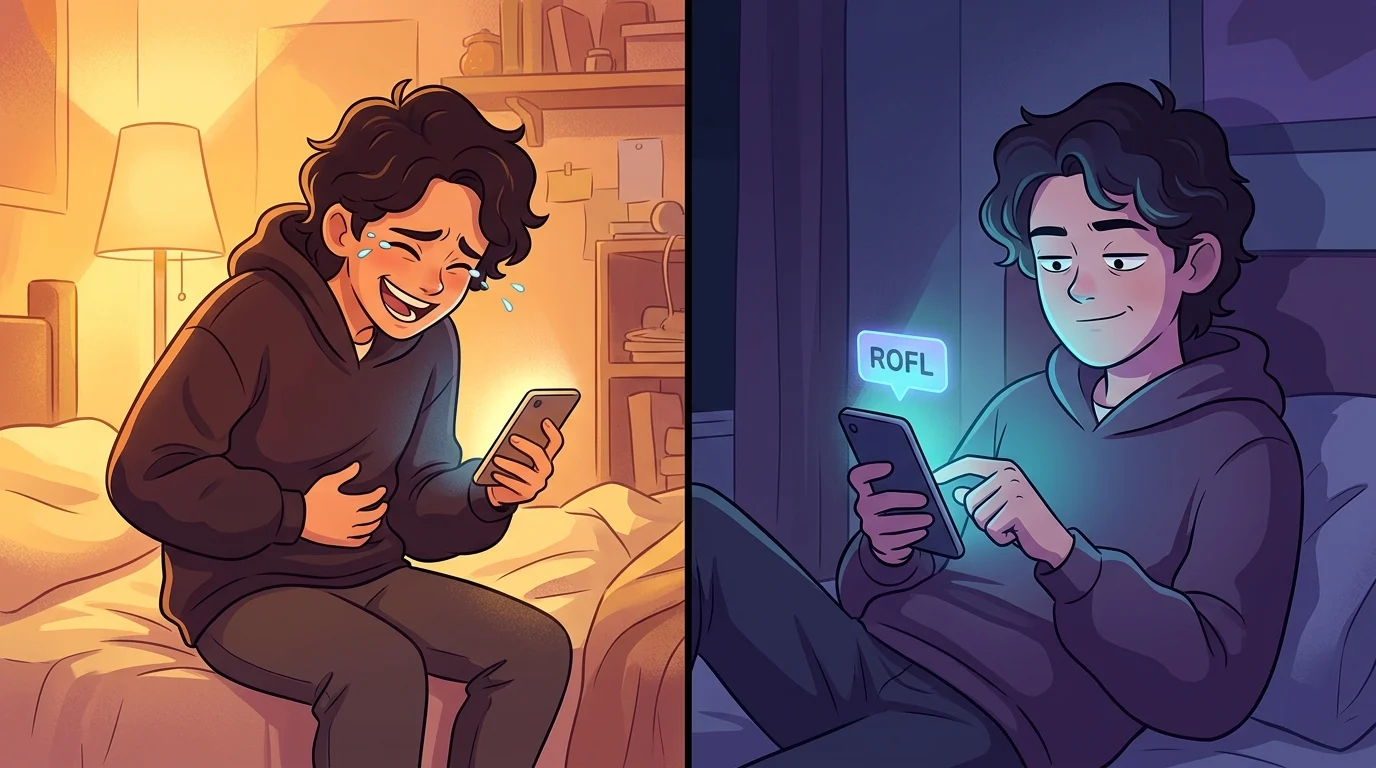
ROFL takes on a playful life on social media. There, it often accompanies images of people doubled over, crying with laughter, and clutching their stomachs. A picture of someone in hysterics is captioned “ROFL.” This is the visual equivalent of the acronym.
The “ROFL meme” has become a cultural phenomenon in its own right. People use it to react to jokes, fails, and moments of collective absurdity. The posts are loud, exaggerated, and often hilarious. Laughing until you cannot breathe is a shared experience. Seeing someone else’s ROFL reaction validates your own.
In comment sections and forums, ROFL often means “I am genuinely losing it.” People use it as a self-aware wink. It signals that the content is so funny that nothing more is needed. The irony of typing four letters while claiming to roll on the floor is part of the charm. It also protects the person from seeming too earnest. If the joke turns out to be mediocre, the reaction was just a formality anyway.
Another variation exists in older internet communities. ROFL can signal nostalgic appreciation for early internet humor. This usage appears in forums, retro gaming chats, and throwback threads. It signals genuine, unfiltered connection to a specific era of online culture.
How to Tell Which ROFL Meaning Is Being Used
Context is everything with this acronym. The setting and tone reveal the intended meaning before the letters do.
If the message follows a genuinely funny joke or a hilarious video, the sincere laughter meaning is likely. Phrases like “ROFL that’s amazing” or “I’m ROFL right now” point to the genuine definition. These messages often appear in casual chats, comment threads, or group texts. The tone is usually warm or playful.
When ROFL appears as a standalone reaction, the performative laughter meaning usually applies. A simple “ROFL” with no elaboration clearly signals amusement without commitment. The brevity distinguishes this usage.
A message that uses ROFL after something mildly amusing likely uses the sarcastic meaning. The placement within an ironic thread or a dry conversation is the giveaway. Look for other signals like eye-roll emojis or exaggerated punctuation.
If the message sounds nostalgic and appears in a retro context, the early internet meaning becomes possible. This usage often follows references to chat rooms, old memes, or classic forums. The tone is wistful or affectionate.
When Not to Use ROFL Casually
ROFL does not belong in every conversation. Its most common meaning contains implied exaggeration and expresses a strong emotional reaction. Using it in formal writing, academic papers, or professional emails can come across as informal or unprofessional.
There is also a generational sensitivity to consider. ROFL is strongly associated with early internet culture and older millennials. Using it as a younger speaker can seem dated or ironic. The acronym carries baggage that goes beyond its literal meaning.
Other professional contexts use vivid language differently. In journalism, ROFL can appear in quotes but rarely in the reporter’s own voice and in legal writing, it stands out as too casual. In business communication, it may seem unmeasured. Each field has its own vocabulary, and the casual version rarely crosses into these spaces.
The safest approach is to match the register of the conversation. Slang belongs in casual chats with friends. Formal writing and professional communication call for clarity over shorthand.
ROFL vs Similar Acronyms
Several other acronyms overlap with ROFL in digital spaces. Understanding the differences helps avoid confusion.
LOL means “Laughing Out Loud.” It is milder and more common. ROFL is more intense and more dramatic. LOL is what you type when something is funny. ROFL is what you type when something is unforgettable.
LMAO means “Laughing My Ass Off.” It sits between LOL and ROFL in intensity. LMAO is sharper and more casual. ROFL is more physical and more exaggerated.
ROFLMAO combines both ROFL and LMAO for maximum effect. It is longer and less common in modern texting. The extra letters signal extra laughter.
KEK means “Laughing” in gaming culture, originating from World of Warcraft. It is more niche and more community-specific. ROFL is broader and more universal.
Why ROFL Became Popular
The acronym grew alongside the rise of instant messaging and online chat rooms. Early internet users needed a quick way to signal laughter without typing full sentences. Four letters did the job better than a paragraph of explanation.
Forum culture and texting trends have made shorthand vocabulary more common on social platforms. People share their reactions, their jokes, and their everyday amusement in ways previous generations kept private. ROFL gave this generation a quick label for a specific kind of hilarity. It was not quite LOL nor a simple amusement. It was something in between, and the acronym fit perfectly.
The word also spread through gaming communities and meme culture. It appeared in chat logs, comment sections, and group messages. The acronym created an in-group signal. Those who understood it felt a small connection with the person using it.
Regional and Platform Variations
ROFL does not mean the same thing everywhere. Platform culture shapes how the acronym is used.
On Reddit, the sincere laughter meaning dominates. Users comment “ROFL” under genuinely funny posts and comments.
On Twitter and X, the performative meaning appears. Users tweet “ROFL” as a standalone reaction to absurd takes and wild statements.
On TikTok, the acronym is less common. When it appears, it often carries ironic or nostalgic weight.
In gaming chats, ROFL appears alongside KEK, LMAO, and other laughter acronyms. The tone depends on the community and the game.
In group chats among close friends, any of the meanings can appear. The shared context makes the intended definition obvious.
FAQs
What does ROFL mean?
ROFL stands for “Rolling On the Floor Laughing,” indicating extreme amusement.
Is ROFL a bad word?
No, ROFL is not profane and works fine in casual settings.
What does ROFL mean on Instagram?
On Instagram, ROFL usually means genuine or exaggerated laughter.
What does ROFL mean in texting?
In texting, ROFL means rolling on the floor laughing.
Can ROFL mean something sarcastic?
Yes, ROFL can be used sarcastically when something is only mildly funny.
What is the difference between ROFL and LOL?
LOL is milder, while ROFL indicates more intense laughter.
Does ROFL have a formal meaning?
No, ROFL is purely slang and has no formal definition.
Is ROFL safe to use in professional settings?
No, ROFL does not belong in professional communication.
Why do people say ROFL on TikTok?
On TikTok, ROFL appears in comments as a nostalgic or ironic reaction.
How do I know which ROFL meaning is being used?
Look at the platform, the tone, and the surrounding words to determine the intended meaning.
Conclusion
The ROFL meaning shifts with every context. In a comment on a funny video, it means genuine hilarity and in a stand alone tweet, it means performative amusement. In case of a retro forum, it means nostalgic appreciation. If it is a group chat, it means shared laughter. The only way to know which meaning applies is to read the setting, the tone, and the relationship between the people involved. When in doubt, a simple question clears up any confusion faster than guessing.
Slang evolves quickly, and ROFL may take on new shades of meaning in the coming years. For now, these definitions cover almost every situation you will encounter. Learn them once, and you will never be lost when those four letters appear in your feed.