Quick Ans: The sea change meaning describes a complete and dramatic transformation. When people use this phrase, they are not talking about a small adjustment or a minor shift. They mean a total change in direction, character, or nature. This guide explains the origin, usage, and modern applications of this vivid idiom.
Understanding idioms like sea change helps you read and write more effectively. English is full of phrases that carry meaning beyond their literal words. Sea change is a perfect example. It comes from Shakespeare and has survived for centuries because it captures something deep about transformation. Knowing how to use it correctly makes your communication more precise and colorful.
What Does Sea Change Mean?
Sea change means a profound or complete transformation. The phrase describes a major shift that alters the fundamental nature of something. It is not a small tweak or a gradual adjustment. It is a dramatic turn that changes everything.
The term belongs to both formal and casual communication. It fits perfectly in literary analysis, business writing, political commentary, and everyday conversation. The meaning stays consistent across contexts. Something has changed so completely that it is no longer what it was before.
Sometimes people use it to describe personal growth. Other times they use it for societal shifts, market trends, or cultural movements. In every case, the change is significant and lasting.
Sea Change Origin and Shakespeare
The sea change origin traces back to William Shakespeare. The phrase first appears in his play The Tempest, written around 1610. In Act I, Scene 2, Ariel sings a song to Ferdinand, who believes his father has drowned.
The song describes how the sea transforms the drowned man into something rich and strange. The full line reads: “Nothing of him that doth fade, but doth suffer a sea change into something rich and strange.”
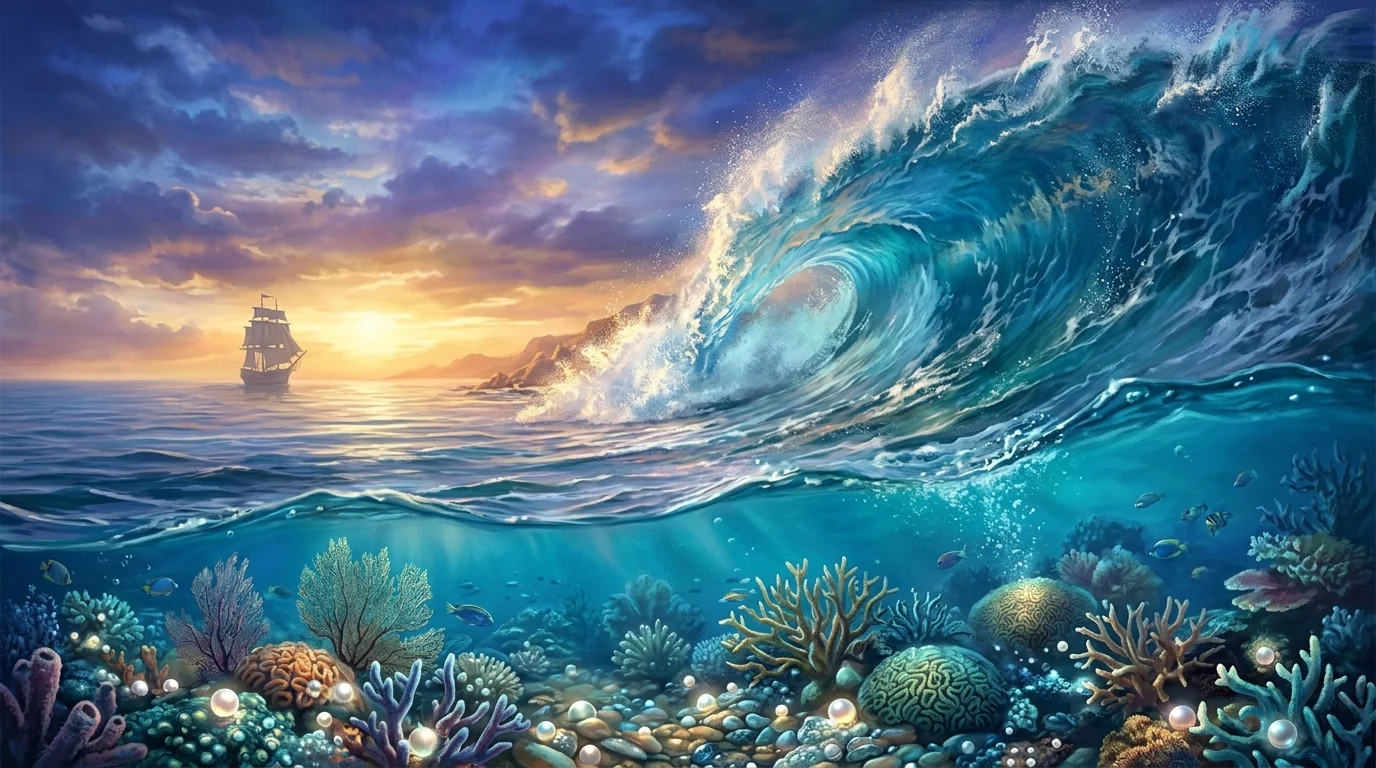
The original meaning was literal. The sea physically changed a body into coral, pearls, and other treasures of the deep. Over time, the phrase took on a broader meaning. It came to represent any profound transformation, not just one caused by water.
Shakespeare’s coinage has proven remarkably durable. Four centuries later, people still use the phrase without knowing its literary origin. This staying power shows how well the image captures the idea of deep, irreversible change.
How to Use Sea Change in Sentences
Sea change works in many different situations. Its flexibility is one reason it remains so popular.
The most common usage is describing a major shift in opinion or policy. A sentence like “The election marked a sea change in public attitudes toward climate policy” uses the phrase to describe a broad, lasting change. The tone is serious and analytical.
Another common usage is describing personal transformation. A sentence like “After the accident, he underwent a sea change in how he viewed his priorities” uses the phrase to describe deep internal change. The tone is reflective and emotional.
Sea change also appears in business and technology writing. Phrases like “The rise of remote work created a sea change in office culture” use the term to describe industry wide shifts. The tone is informative and forward looking.
The phrase can also describe cultural movements. A sentence like “The film sparked a sea change in how audiences viewed independent cinema” uses the term to describe a lasting impact on art and society.
Sea Change in Business and Technology
Sea change appears frequently in business and technology writing. The phrase captures the scale of disruption that industries sometimes face.
In business, a sea change can describe a shift in consumer behavior. The move from brick and mortar shopping to e commerce was a sea change. It altered how companies operate, how they market, and how they measure success.
In technology, a sea change can describe a new paradigm. The rise of artificial intelligence represents a sea change in how work gets done. It affects every sector from healthcare to finance.
In finance, a sea change can describe a shift in market conditions. A sudden change in interest rates or regulations can create a sea change in investment strategy. Analysts use the phrase to signal that old assumptions no longer apply.
The term works well in these contexts because it communicates scale. A sea change is not a trend or a fad. It is a fundamental shift that reshapes the landscape.
Sea Change vs Change and Similar Terms
Several other terms overlap with sea change in everyday writing. Understanding the differences helps avoid confusion.
Change is a general word. It can describe anything from a small adjustment to a major shift. Sea change is more specific. It always implies depth and significance.
Transformation is close in meaning to sea change. Both describe major shifts. Transformation often implies a process, while sea change often implies a moment or event. You can undergo a transformation over years. A sea change can happen suddenly.
Revolution is stronger than sea change. A revolution implies a complete overthrow of an existing system. A sea change implies a deep shift but not necessarily a violent or total replacement.
Paradigm shift is a technical term from science and business. It describes a fundamental change in how people understand a subject. Sea change is more poetic and general. Both phrases signal that something important has changed.
When Not to Use Sea Change
Sea change does not belong in every conversation. Its dramatic tone makes it unsuitable for minor situations.
Avoid using sea change to describe small adjustments. Changing your morning routine is not a sea change. Switching from coffee to tea is not a sea change. The phrase loses its power when overused.
There is also a risk of sounding pretentious in casual conversation. Sea change carries a literary flavor. Using it at a casual gathering might make you sound formal or out of place. Reserve it for situations where the scale of change justifies the phrase.
In technical writing, sea change is acceptable when the context is clear. In academic papers, define the term if your audience may not know its origin. From business reports, use it to signal significance but do not overuse it.
Alternative Meanings of Sea Change
While profound transformation is the dominant meaning, sea change carries other associations in specific contexts.
In environmental science, sea change can refer to changes in ocean chemistry. Ocean acidification, warming waters, and rising sea levels are all sea changes in the literal sense. Scientists use the term to describe measurable shifts in marine conditions.
In literature, sea change appears in titles and themes. Many authors have borrowed Shakespeare’s phrase to explore themes of loss, renewal, and transformation. The phrase carries emotional weight that simple words cannot match.
In music, Sea Change is the title of a 2002 album by Beck. The album marked a departure from his earlier style. Critics described it as a sea change in his artistic direction. The title reflects the album’s themes of heartbreak and renewal.
In politics, sea change describes electoral shifts. A wave election that changes the balance of power is often called a sea change. The phrase signals that voters have fundamentally altered the political landscape.
Why Sea Change Endures
Sea change has survived for over four hundred years. Its endurance comes from its precision and power.
The phrase captures something that other words cannot. It combines the image of the sea with the idea of transformation. The sea is vast, deep, and mysterious. It changes things in ways that are hard to reverse. This imagery gives the phrase emotional and intellectual weight.
Shakespeare’s original line described a body turning into coral and pearls. That image of beauty emerging from loss resonates across centuries. It speaks to the human experience of change and renewal.
The phrase also works across contexts. It fits in poetry and business writing alike. This versatility keeps it alive in modern language. Writers reach for it when they need to signal that something important has shifted.
FAQs
What does sea change mean?
Sea change means a profound or complete transformation. It describes a major shift that alters the fundamental nature of something. It is not a small adjustment but a dramatic change.
Where does sea change come from?
Sea change comes from William Shakespeare’s play The Tempest, written around 1610. The phrase appears in a song sung by Ariel to Ferdinand.
What is the difference between sea change and change?
Change is a general word for any shift. Sea change is more specific. It always implies depth, significance, and lasting impact.
Can sea change be used in business writing?
Yes. Sea change is common in business and technology writing. It describes major shifts in markets, consumer behavior, or industry practices.
Is sea change formal or casual?
Sea change works in both formal and casual contexts. It has a literary flavor, so it may sound formal in casual conversation. Use it when the scale of change justifies the phrase.
What is an example of a sea change?
The rise of the internet is an example of a sea change. It transformed how people work, communicate, shop, and learn. The shift was deep, lasting, and global.
Is sea change a metaphor?
Yes. Sea change is a metaphor. It compares a profound transformation to the way the sea changes things over time. The phrase is not literal in most modern usage.
Can sea change be used for personal growth?
Yes. Sea change can describe personal transformation. A major life event, a new perspective, or a shift in priorities can all be described as a sea change.
What is the opposite of sea change?
The opposite of sea change is stability or stasis. If something remains the same, it has not undergone a sea change. Small changes are also opposites in terms of scale.
Why is it called a sea change?
It is called a sea change because Shakespeare used the image of the sea transforming a drowned body into coral and pearls. Over time, the phrase came to mean any profound transformation.
Conclusion
The sea change meaning is rich with history and power. It describes a complete transformation that alters the fundamental nature of something. From Shakespeare’s The Tempest to modern business writing, the phrase has traveled far and lost none of its force. It captures the human experience of deep change and renewal. When you see sea change in a text or hear it in conversation, you now know exactly what it means. Use it naturally, and your communication will carry more weight and precision.