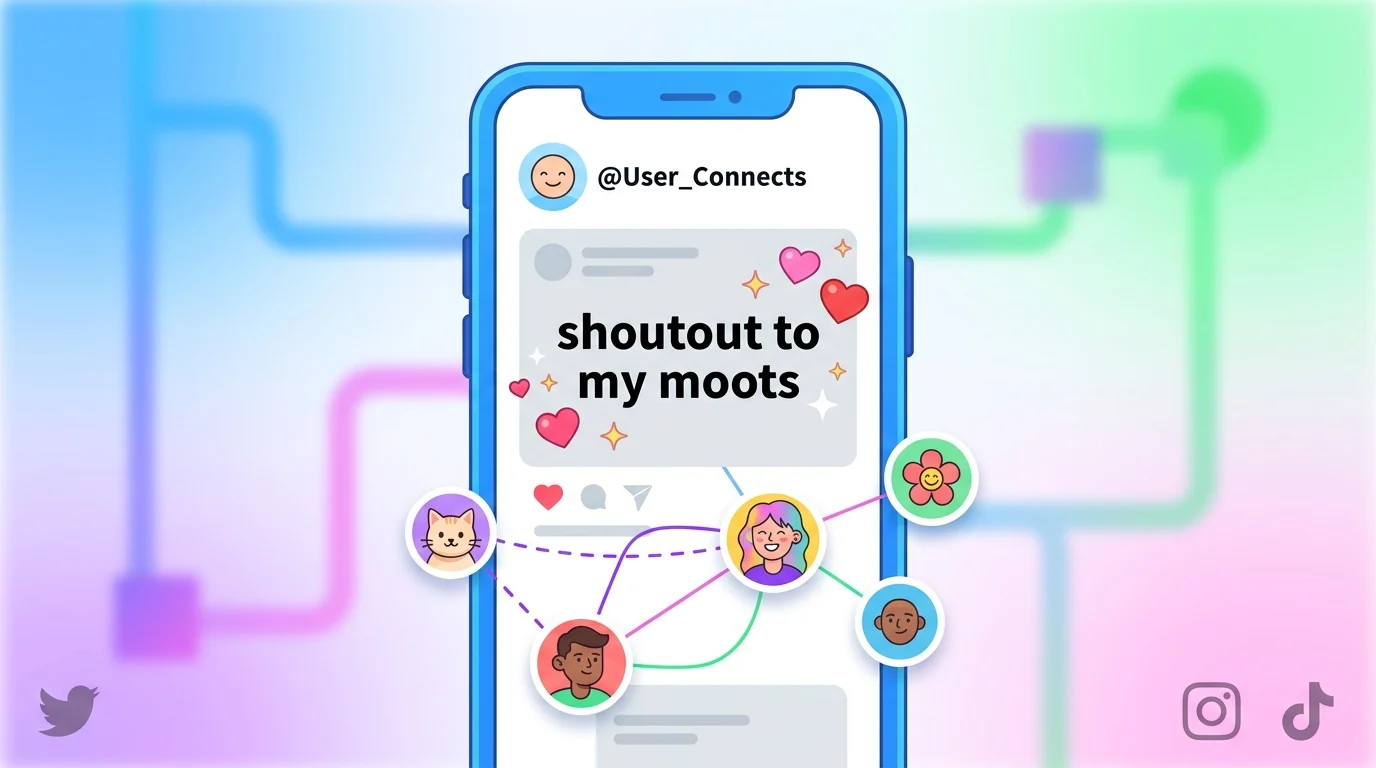
Quick Ans: The moots meaning is one of the most common terms in social media culture. On Twitter, Instagram, TikTok, and Tumblr, moots refers to the people you follow and who follow you back. These are your mutual followers. They form your inner circle on each platform. This guide explains what moots means, where it came from, and how to use it correctly.
Understanding social media slang helps you follow conversations online. New terms appear constantly, and some become essential vocabulary for entire communities. Moots is a perfect example. It started in Tumblr culture and spread across every major platform. Knowing how to use it correctly helps you build connections and understand your feed.
What Does Moots Mean?
Moots is short for mutuals. It refers to accounts that follow each other on social media. If you follow someone and they follow you back, that person is your moot. The relationship is mutual, which is where the word comes from.
The term belongs to casual, online communication. It fits perfectly in tweets, captions, comments, and direct messages. It does not belong in professional emails, business reports, or formal writing. The tone is friendly and community focused.
Sometimes people write it as “moots” in plural form. Other times they say “moot” for a single mutual. Both versions are common. The usage depends on whether you are referring to one person or a group.
Where Did Moots Come From?
The moots origin traces back to Tumblr in the early 2010s. Tumblr users needed a short way to refer to the people they followed and who followed them back. “Mutuals” was the standard term, but it was long and formal. “Moots” shortened it while keeping the meaning clear.
The term spread to Twitter, where it became standard vocabulary for users with large followings. Twitter’s character limit made abbreviations valuable, and moots fit perfectly. From there it moved to Instagram, TikTok, and other platforms.
By the late 2010s, moots was common across all major social media. Today it is one of the most recognizable terms in online communities. It describes the people you interact with most regularly.
How to Use Moots in Conversations
Moots works in several different situations. Its flexibility is one reason it became so popular.
The most common usage is referring to your mutual followers as a group. A tweet like “shoutout to my moots” thanks the people who follow you back. The tone is warm and appreciative.
Another common usage is asking about mutuals. A message like “any moots online” checks if your friends are active. This usage appears often in group chats and reply threads.
Moots also appears in expressions of affection. Phrases like “I love my moots” or “my moots are the best” use the term to show appreciation for online friends. These messages often appear after someone receives support or kindness.
The term can also appear in a questioning context. “Who are your moots” asks someone to identify their mutual followers. This usage helps new users understand someone’s social circle.
Moots on Twitter and X
Moots is especially common on Twitter, now called X. The platform’s culture revolves around following, replying, and quote tweeting. Mutuals form the core of most users’ experience.
On Twitter, moots often appear in pinned tweets. A user might write “moots, please read this” to address their mutual followers specifically. The term creates a sense of in-group connection.
Twitter users also use moots in community events. “Moots only” threads invite mutuals to reply and interact. These threads build engagement and strengthen relationships. The practice became so common that it shaped how people use the platform.
When someone says “moots, check this out,” they are asking their inner circle to engage with their content. It is a direct appeal to the people who already know and support them.
Moots on Instagram and TikTok
Moots spreads across Instagram and TikTok with slightly different usages. On Instagram, moots often refers to mutual followers in stories and comments. A story caption like “for my moots” signals that the content is meant for close online friends.
On TikTok, moots appears in comments and video captions. A creator might say “shoutout to my moots” when responding to a supportive comment. The term helps build community on a platform that often feels anonymous.
TikTok users also use moots to describe collaborations. “Moots edit” refers to a video made with mutual followers. This usage highlights the collaborative spirit of the platform.
Moots vs Followers and Following
Several other terms overlap with moots. Understanding the differences helps avoid confusion.
Followers are accounts that follow you. They may or may not follow you back. Moots specifically means followers who also follow you back.
Following refers to the accounts you follow. Some of them follow you back. Moots are the subset of your following who are also your followers.
Friends on social media can mean many things. Some platforms have a formal “friend” status. Moots is more specific. It always means mutual following.
Moots should not be confused with moot, which can mean unimportant or debatable in standard English. In social media slang, moot has a different meaning entirely.
When Not to Use Moots
Moots does not belong in every conversation. Its casual nature makes it unsuitable for professional or formal settings.
Avoid using moots in work emails, school assignments, business reports, or any communication with people who are not active on social media. Slang terms can come across as unprofessional or confusing in these contexts.
There is also a risk of misinterpretation. People unfamiliar with social media culture may not know what moots means. In mixed company, “mutuals” or “online friends” is safer and more universally understood.
The term also carries a specific tone. It signals that you are part of online culture. Using it incorrectly can make you sound out of touch. Understand the platform before using it.
Alternative Meanings of Moots
While mutual followers is the dominant meaning, moots carries other definitions in specific contexts.
In law, moot refers to a hypothetical case used for practice or debate. Law students participate in moot court competitions. The word “moots” can appear as a verb meaning to practice arguing hypothetical cases.
In British English, moot can mean a meeting or assembly. This usage is archaic but still appears in historical texts.
In standard English, moot means open to debate or unimportant. A moot point is one that no longer matters or has no clear answer. This meaning is unrelated to social media slang.
Why Moots Became Popular
Moots grew because social media users needed a word for a specific relationship. Followers and following are one way relationships. Mutuals are two way relationships. That distinction matters.
The term also creates a sense of belonging. Calling someone your moot signals that you recognize them as part of your community. It is a small but meaningful acknowledgment.
The spread of moots followed the rise of online friendship. As more people formed meaningful connections online, they needed words for those relationships. Moots filled that gap.
Today, moots is standard vocabulary for anyone active on social media. It describes the people who make platforms feel like communities rather than broadcast channels.
FAQs
What does moots mean?
Moots is short for mutuals. It refers to accounts that follow each other on social media. If you follow someone and they follow you back, that person is your moot.
Is moots the same as followers?
No. Followers are accounts that follow you. They may not follow you back. Moots are followers who also follow you back.
Where did moots come from?
Moots originated on Tumblr in the early 2010s. It spread to Twitter and then to Instagram, TikTok, and other platforms. The term shortened “mutuals” for convenience.
Is moots used on all social media platforms?
Yes. Moots is common on Twitter, Instagram, TikTok, Tumblr, and other platforms with follow features. It is especially popular on Twitter.
Can moots be singular?
Yes. You can say “moot” for a single mutual. “Moots” is the plural form. Both are common in casual usage.
What does “moots only” mean?
“Moots only” means that a post, thread, or event is intended only for mutual followers. It signals that the content is for your inner circle.
Is moots rude or offensive?
No. Moots is a neutral and friendly term. It expresses appreciation and community. It carries no offensive meaning.
Can I use moots in professional emails?
No. Moots is too casual for professional settings. Use “mutual followers” or “contacts” in formal writing.
What is the difference between moots and friends?
Friends is a broader term. Moots specifically means mutual followers on social media. Some moots become friends, but not all.
Why do people say moots instead of mutuals?
Moots is shorter and easier to type. It fits the fast pace of social media. The abbreviation also sounds friendlier and more playful.
Conclusion
The moots meaning is simple and community focused. It stands for mutuals, the people you follow who follow you back. You can use it in tweets, captions, comments, and direct messages. It is a friendly term that describes the core of your social media experience. When you see moots in a post or message, you now know exactly what it means. Use it naturally, and your online conversations will feel more connected and welcoming.