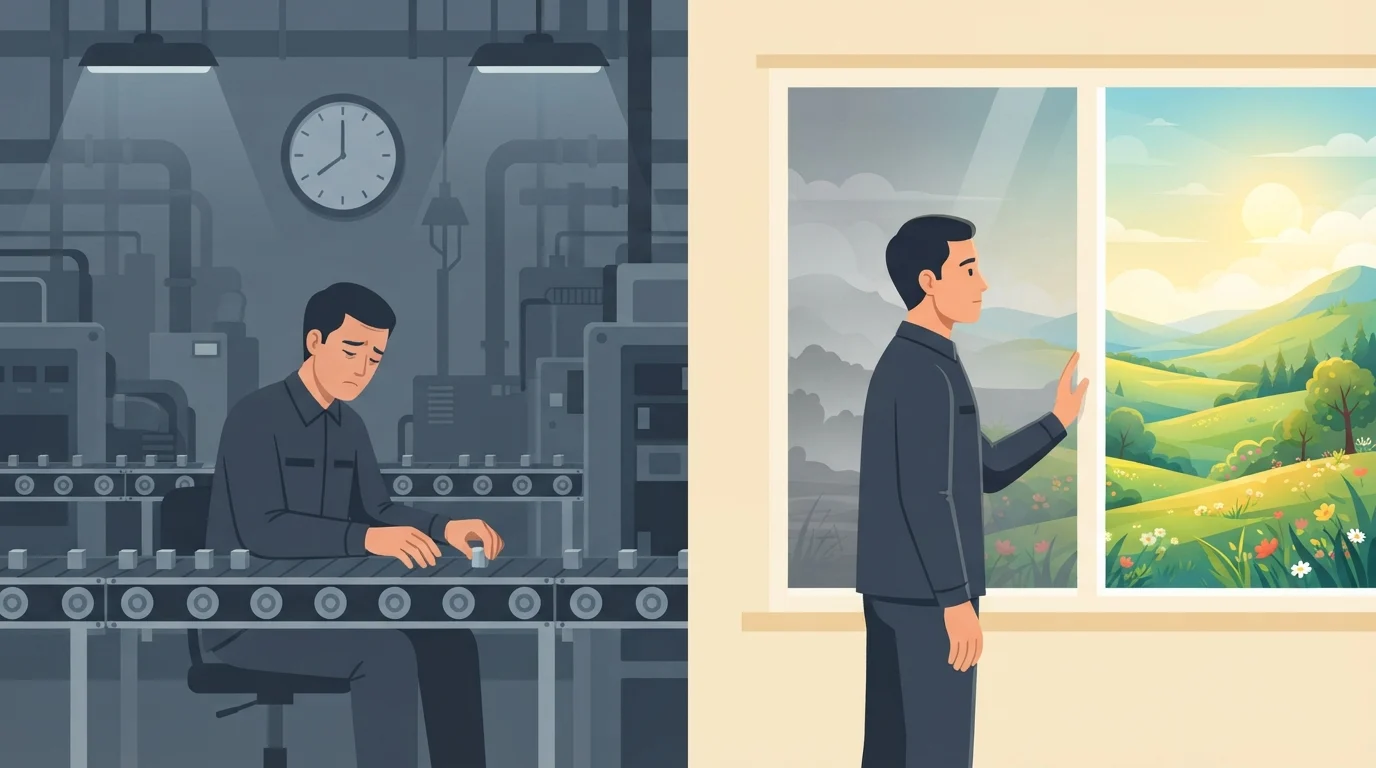
Quick Ans: The monotonia meaning depends entirely on context, yet unlike slang acronyms, this is a full word with roots in ancient Greek. It describes a specific kind of wearisome sameness the kind that drains color from daily life. This guide breaks down every major meaning and usage so you can wield the word like a native speaker.
Understanding precise vocabulary has become a daily necessity for anyone who wants to communicate with nuance online. New slang appears every week; consequently, some words carry centuries of philosophical weight. Monotonia is a perfect example of this durability. It started as a Greek term for “one tone” and gradually became a psychological and cultural label. Today, it describes a state so common that it borders on universal. Knowing when to use it can save you from understating a real struggle.
The Core Monotonia Meaning
In everyday conversation, monotonia most often carries one primary meaning. It describes a state of wearisome constancy, routine, and lack of variety. You are not merely bored. You are utterly drained by sameness, as if every day has dissolved into the next.
The most widespread definition is “lack of variety or interest; tedious repetition or routine”. This phrase captures a state of dull uniformity. You are not just unchanging. You are completely trapped in a pattern that refuses to shift. People use it after long work weeks, repetitive tasks, or seasons of life that feel stagnant. The word says more than “boredom” ever could.
A lighter variation in texting is “pure monotonia.” This version expresses a dramatic level of sameness, often with a humorous tone. If someone shares a photo of an identical daily routine, a friend might reply with “monotonia” to signal that they recognize the pattern. The humor comes from how formal it sounds. One word replaces an entire paragraph of complaint.
Both usages share a common thread. They describe a lack of change. One is a lack in external stimulation. The other is a lack in internal engagement.
Monotonia in Work and Psychology
Monotonia takes on a completely different weight in occupational psychology. There, it refers to a functional state of reduced capacity that arises during repetitive work with frequent stereotyped actions in a stimulus-poor environment. This is not just boredom. It is a measurable decline in alertness, attention, and memory.
The psychological condition has been studied extensively. Symptoms include decreased tone, weakened conscious control, and a desire to change activities. The most intelligent workers often suffer the most from monotonia, since their unused capacities turn inward and create distress. One young worker doing routine comptometer work developed “day-mares” so severe they invaded her life outside the office.
The physiology behind monotonia is well documented. When stimuli are few, sensory input declines, and the brain reduces its activity to protect itself from overload. Habituation and adaptation serve as physiological indicators of monotonous conditions. Over time, this underload proves as stressful as overload, producing increased adrenaline and long-term health risks.
How to Tell Which Meaning Is Being Used
Context is everything with this word. The setting and tone reveal the intended meaning before the word does.
If the message follows a repetitive task or a long shift, the psychological meaning is likely. Phrases like “I’m in monotonia mode” or “this job is pure monotonia” point to the “wearisome routine” definition. These messages often appear after work, chores, or any activity that drains engagement. The tone is usually flat or self-deprecating.
When monotonia appears in artistic or literary discussions, the aesthetic meaning usually applies. References to “the monotonia of the landscape” or “a voice full of monotonia” clearly point to the uniform tone definition. The mention of sound, color, or style distinguishes this usage.
A philosophical discussion that mentions Walter Benjamin or modern alienation likely uses the critical meaning. Benjamin described monotonia as a “pathology of freedom,” a figure of time that engenders no action, only discouragement, sadness, and despair. This usage carries intellectual weight.
If the message sounds playful and appears after a boring day, the casual meaning becomes possible. This usage often follows a shrug or a sigh. The tone is softer and more resigned than the other definitions.
When Not to Use Monotonia Casually
Monotonia does not belong in every conversation. Its psychological meaning carries real weight and expresses genuine distress. Using it casually, in jest, or in inappropriate contexts can come across as dismissive of a real condition.
There is also a mathematical meaning to consider. In mathematics and science, monotonia refers to monotonicity, the property of a function that either never increases or never decreases. If someone is discussing calculus or sequences, treating monotonia as casual slang can seem ignorant of a precise technical term.
Other professional contexts use monotonia differently. In music, it refers to sameness of tone or pitch. In literature, it describes prose that lacks variation and fails to move the reader. Each field has its own vocabulary, and the casual version rarely crosses into these spaces.
The safest approach is to match the register of the conversation. Psychological terms belong in serious discussions. When in doubt, clarity beats casualness.
Monotonia vs Similar Words
Several other words overlap with monotonia in meaning. Understanding the differences helps avoid confusion.
Boredom is the emotional response to monotonia. It is the reaction, not the condition. Monotonia is the environment or state. Boredom is what you feel within it.
Tedium means “the state of being tedious.” It emphasizes the quality of being tiresome. Monotonia is broader and more structural. Tedium is what a long speech produces. Monotonia is what a repetitive life produces.
Uniformity means “the quality of being uniform.” It is neutral and descriptive. Monotonia adds a negative judgment. Uniformity can be efficient. Monotonia is draining.
Sameness means “the quality of being identical.” It is simple and direct. Monotonia carries emotional weight. Sameness is a fact. Monotonia is a burden.
Why Monotonia Became Popular
The word monotonia grew alongside a broader cultural conversation about burnout and meaning. Social media rewarded strong reactions. A comment that said “I’m bored” got ignored. A comment that said “monotonia” got likes. The word captured a feeling that felt too big to explain simply.
Work culture and wellness trends have made psychological vocabulary more common on social platforms. People share their routines, their struggles, and their everyday emptiness in ways previous generations kept private. Monotonia gave this generation a quick label for a specific kind of exhaustion. It was not quite depression.
The word also spread through philosophy and literature. It appeared in Benjamin’s writings, in occupational studies, and in cultural criticism. Four syllables did the job better than a paragraph of explanation.
Regional and Platform Variations
Monotonia does not mean the same thing everywhere. Language and platform shape how the word is used.
In Italian, monotonia carries the same core meaning: uniformità, piattezza, noia. The Treccani dictionary lists it alongside grigiore (grayness) and tedio (tedium).
In Portuguese, monotonia means falta de variedade, mesmice, sensaboria. The Dicio dictionary emphasizes the lack of novelty and the absence of vigor.
In French, monotonie refers to uniformité de ton and manque lassant de variété. The Larousse definition connects it to both sound and landscape.
On TikTok and Instagram, the casual meaning dominates. Users post about their repetitive routines with captions like “monotonia” or “same day, same monotonia.”
FAQs
What does monotonia mean?
Monotonia means wearisome constancy, lack of variety, and tedious repetition in daily life or work.
Is monotonia a bad word?
No, monotonia is not profane, but it carries a negative emotional weight.
What does monotonia mean in psychology?
In psychology, monotonia is a functional state of reduced capacity from repetitive work in a stimulus-poor environment.
What does monotonia mean in texting?
In texting, monotonia usually means complete boredom or a draining sense of sameness.
Can monotonia mean something romantic?
No, monotonia describes dullness and lack of variety, not romance.
What is the difference between monotonia and boredom?
Monotonia is the condition of sameness, while boredom is the emotional reaction to it.
Does monotonia have a mathematical meaning?
Yes, in mathematics, monotonia refers to monotonicity, the property of never-increasing or never-decreasing functions.
Is monotonia safe to use in professional settings?
It depends, but monotonia may seem too emotional in formal business communication.
Why do people say monotonia on TikTok?
On TikTok, monotonia appears in comments under videos about repetitive routines or draining daily life.
How do I know which monotonia meaning is being used?
Look at the context, the tone, and the surrounding words to determine the intended meaning.
Conclusion
The monotonia meaning shifts with every context. In a psychological study, it describes a measurable decline in alertness. philosophical essay, it marks a pathology of freedom. In a casual text, it signals utter boredom. A mathematical discussion, it refers to a precise property of functions. The only way to know which meaning applies is to read the setting, the tone, and the relationship between the people involved. When in doubt, a simple question clears up any confusion faster than guessing.
Language evolves quickly, and monotonia may take on new shades of meaning in the coming years. For now, these definitions cover almost every situation you will encounter. Learn them once, and you will never be lost when this word appears in your feed.