Quick Answer: Lily of the valley means the return of happiness, along with humility, purity, sweetness, and good luck. It is the May birth flower, the flower gifted in France on 1 May, and a favourite in spring wedding bouquets.
Small, white, and almost absurdly fragrant, lily of the valley is a flower. It carries far more meaning than its size suggests. Its tiny bells nod downward under broad green leaves, hiding a little even as they perfume a whole garden. That shy posture helped turn it into one of the most beloved symbols in the language of flowers. So did its timing, just as winter finally loosens its grip.
If you received lily of the valley, saw it in a wedding bouquet, or noticed it as a May birth flower, you were seeing a plant with centuries of stories behind it. Those stories include legends about tears, royal weddings, French May Day, and a surprising warning about poison. All of those layers belong to its meaning.
What Is Lily of the Valley?
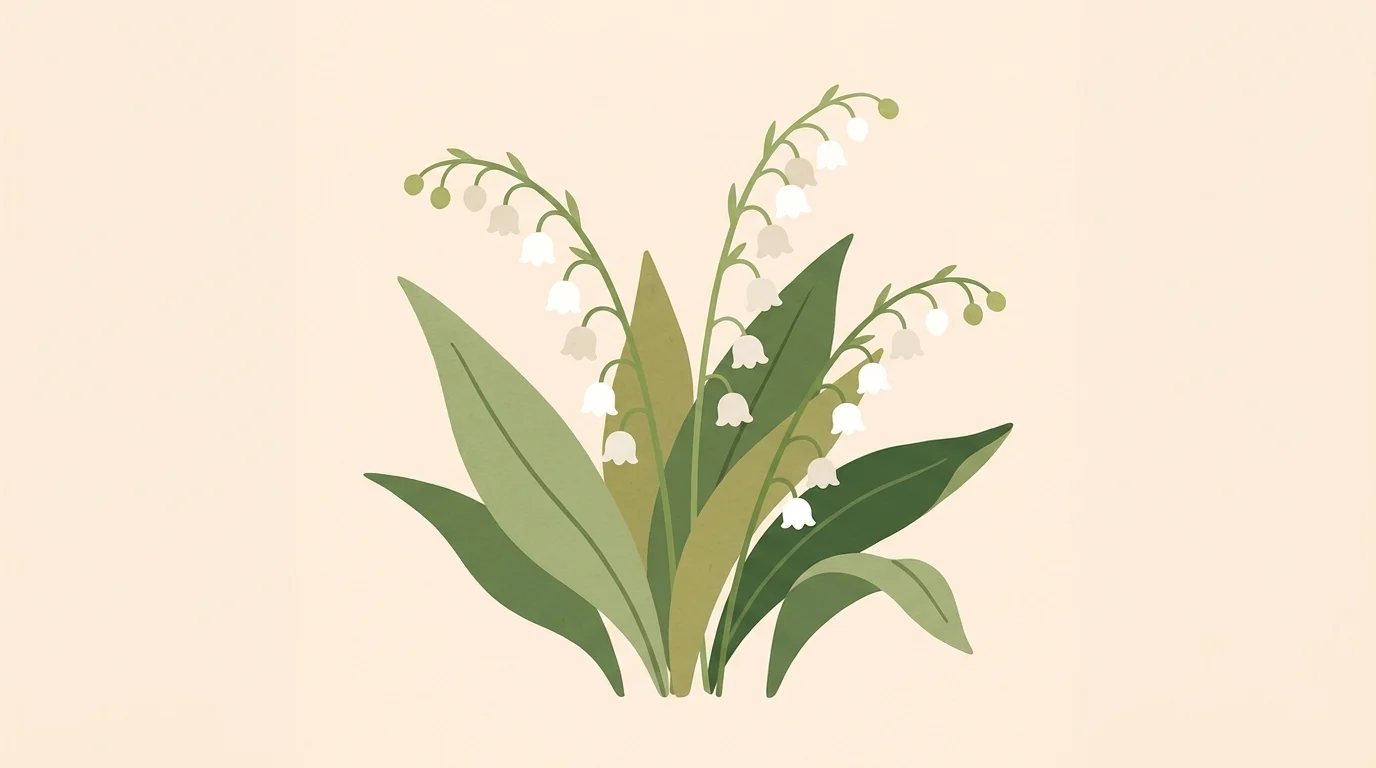
Lily of the valley, scientific name Convallaria majalis, is a low-growing perennial. It spreads through underground stems called rhizomes, forming carpets of green in shady woodland and gardens. In spring, usually April or May, it produces slender stems with rows of small, bell-shaped white flowers. Each flower has a sweet, powerful scent that seems far too large for such a tiny bloom.
Despite its common name, it is not a true lily. The name comes from its habitat. It grows in valleys and shady places, and its flowers hang like little bells. Other traditional names include “ladder to heaven,” for the step-like arrangement of bells along the stem. In Ireland, it is also called “fairy ladders.” The second part of its scientific name, majalis, means “of May.” That is a fitting name for a flower so tied to that month.
It is hardy in cool climates, thrives in shade where many flowers struggle, and gardeners often use it as ground cover. Gardeners love it for its scent and its ability to fill difficult corners. They also learn quickly that it spreads enthusiastically and needs space, or a barrier, to keep it in bounds.
What Does Lily of the Valley Mean?
In the language of flowers, known as floriography, lily of the valley stands first and foremost for the return of happiness. This language was popular in the Victorian era. That phrase is specific and important. It does not just mean “happy.” Happiness returning after a hard time is the meaning. Think of spring returning after winter, or joy returning after sorrow.
Around that core meaning, several related meanings have grown:
- Humility: the bells bow downward and hide under leaves, a posture read as modesty and quiet grace.
- Purity: the clean white colour has long tied the flower to innocence and virtue.
- Sweetness: its scent and delicate form suggest gentleness and a kind heart.
- Good luck: especially in France, where people believe a sprig given on 1 May brings fortune for the year.
- Hope and renewal: as one of spring’s early flowers, it signals new beginnings.
- Trust and completeness: in wedding language, it can mean “You have made my life complete.”
Together, those meanings make lily of the valley a flower for encouragement. It also suits congratulations after a difficult period, and celebrations of new life, love, or hope.
Lily of the Valley as the May Birth Flower
Lily of the valley is the birth flower for May, alongside hawthorn as a traditional alternative. Birth flowers, like birthstones, assign a flower to each month. People often give them as birthday gifts with a personal message.
For a May birthday, lily of the valley is a thoughtful choice. Its meaning fits a birthday wish so well: happiness returning, a fresh year, and good luck ahead. A small bouquet, a scented candle inspired by it, or even a card with its image can carry that message. It needs no long explanation. Just remember the toxicity warning below if you give the real plant to a home with pets or small children.
May Day in France: La Fête du Muguet
No tradition explains lily of the valley better than French May Day. In France, 1 May is a public holiday, officially Labour Day. It is also called La Fête du Muguet, Lily of the Valley Day. Muguet is the French name for the flower.
In the days before 1 May, florists and street sellers offer small bunches, called porte-bonheur, literally “bringers of happiness.” People give sprigs to friends, family, colleagues, and loved ones as a wish for good luck. The tradition began on 1 May 1561. King Charles IX received a sprig as a lucky charm. He then began giving them to the ladies of his court each year.
That custom has lasted for centuries because it is simple, kind, and inexpensive. A single sprig, given with a smile, carries a whole message: I wish you luck, happiness, and a good year. If you visit France in late April or early May, you will see the flower everywhere. Look in markets, in shop windows, and pinned to coats.
Legends, Myths, and Religious Stories
Lily of the valley has collected legends from many traditions. Those stories help explain why its meaning feels both joyful and sorrowful at once.
One Christian legend says the flowers sprang from the tears of Eve after her expulsion from the Garden of Eden. Another says they grew from the tears of Mary, the mother of Jesus, as she wept at the cross. This gave the flower the name “Mary’s Tears” or “Our Lady’s Tears.” Both versions turn tears into flowers: sorrow transformed into beauty, which fits the “return of happiness” meaning perfectly.
In Norse mythology, people linked the flower to Ostara, goddess of spring and renewal, appearing when the earth awoke. Christian art often showed it with Mary as a symbol of humility. A legend about Saint Leonard says the flowers bloomed where his blood fell after battling a dragon. In each story, the flower marks a place where hardship gave way to something living and hopeful.
Those legends are not history in the scientific sense, but they are cultural history. They show how people over centuries used a small spring flower to talk about grief, purity, and the return of joy. This happened long before modern florists wrote it down as a symbol.
Lily of the Valley in Weddings and Royal Traditions
Lily of the valley has been a royal wedding favourite for generations. That has kept its meaning in the public eye. Prince Rainier III of Monaco chose it for Grace Kelly’s bouquet in 1956. Catherine Middleton carried it in her bouquet at her wedding in 2011, alongside other meaningful flowers. Other royal brides have used it too, drawn by its purity, its scent, and its message of happiness and completeness.
For non-royal weddings, it works for similar reasons. It is elegant without being showy, and fragrant without being heavy. It is symbolic without needing explanation to guests who know flower language. Spring weddings suit it especially well, when the flower is naturally in season. Florists often pair it with roses, peonies, or greenery. They use lily of the valley as a delicate accent rather than the whole bouquet. The stems are short and the flowers are small.
Beyond weddings, it appears in memorial arrangements as well. This may seem surprising until you remember its dual story: a flower born from tears, yet promising happiness again. That makes it fitting for both celebration and remembrance, for beginnings and for saying goodbye with hope.
The Toxicity Warning You Must Know
Here is the part of lily of the valley that surprises most people: every part of the plant is poisonous if eaten. It contains compounds called cardiac glycosides, which can affect the heart. Other substances in it can cause nausea, vomiting, stomach pain, dizziness, and, in serious cases, heart problems.
That does not mean you cannot enjoy it in a garden or a bouquet. It does mean you should handle it with care. Keep it away from small children and pets who might chew leaves or flowers. Wash hands after handling. Do not let pets drink the water from a vase. If someone eats any part of the plant, seek medical or veterinary help promptly. If possible, bring a sample or photo of the plant for identification.
The paradox of a sweet, innocent-looking flower that is also toxic adds to its mystique. Victorian writers sometimes noted it as a reminder that even innocence can carry a bite. They also noted that beauty and danger can live in the same small bell. For modern gardeners, the practical lesson is simpler. Admire it, smell it, gift it with a warning, and keep it out of reach of curious mouths.
Examples of Lily of the Valley in Sentences
- “She carried lily of the valley in her bouquet because it means the return of happiness.”
- “In France, friends exchange sprigs of muguet on 1 May for good luck.”
- “Lily of the valley is the birth flower for May, so it makes a perfect May birthday gift.”
- “The garden was full of lily of the valley in the shade, and the scent filled the whole path.”
- “Remember that lily of the valley is toxic if eaten, so keep it away from dogs and toddlers.”
Similar Flowers and Related Symbols
People often confuse lily of the valley with other white bell flowers, such as snowdrops or bluebells. Its scent, its paired broad leaves, and its spring timing set it apart. In flower language, it sits near other spring symbols of hope, such as daffodils for new beginnings and tulips for perfect love. Its specific message, happiness returning after sorrow, is uniquely its own.
Its perfume history is also notable. Muguet scents have been popular in perfumery for decades. Early examples like Muguet des Bois entered the market in the 1940s. Perfumers love the flower’s green, fresh, innocent character. Perfume makers usually recreate true lily of the valley scent synthetically, because the natural flower yields very little oil.
When to Give Lily of the Valley
Give lily of the valley to wish someone happiness, luck, or a fresh start. It is ideal after a difficult time. May birthdays, spring celebrations, weddings, new jobs, recoveries, and French May Day greetings all suit it. It also suits quiet encouragement. Give a small sprig for a friend who is finally feeling better, or a bouquet for someone starting again.
Do not give the live plant without a toxicity note to homes with pets or young children. In those cases, a scented product, a print, or a card with the flower’s image carries the meaning. It does so without the risk.
Frequently Asked Questions About Lily of the Valley
What does lily of the valley symbolise?
Mainly the return of happiness, plus humility, purity, sweetness, and good luck.
What month is lily of the valley the birth flower for?
May, with hawthorn as the traditional alternative for the same month.
Is lily of the valley poisonous?
Yes, all parts are toxic if eaten, to people and pets. Seek help promptly if ingestion happens.
Why do the French give lily of the valley on 1 May?
It is a centuries-old tradition, La Fête du Muguet. People give a sprig as a porte-bonheur, a bringer of happiness and luck for the year.
Is lily of the valley a true lily?
No, despite its name, it is not a true lily. It belongs to a different plant family, and its name refers to its valley habitat and bell-like flowers.
Conclusion
Lily of the valley meaning is a small flower with a large heart. It stands for happiness coming back and humility in how it bows. It also stands for purity in its white bells and luck in a French sprig given on a spring morning. Its legends turn tears into blooms, and its royal weddings turn modesty into elegance. Its toxicity reminds us that even the gentlest things deserve respect. Whether you meet it in a garden, a bouquet, or a May birthday card, you are meeting a symbol. It has comforted and celebrated people for centuries. Each spring, it still quietly promises that joy can return.