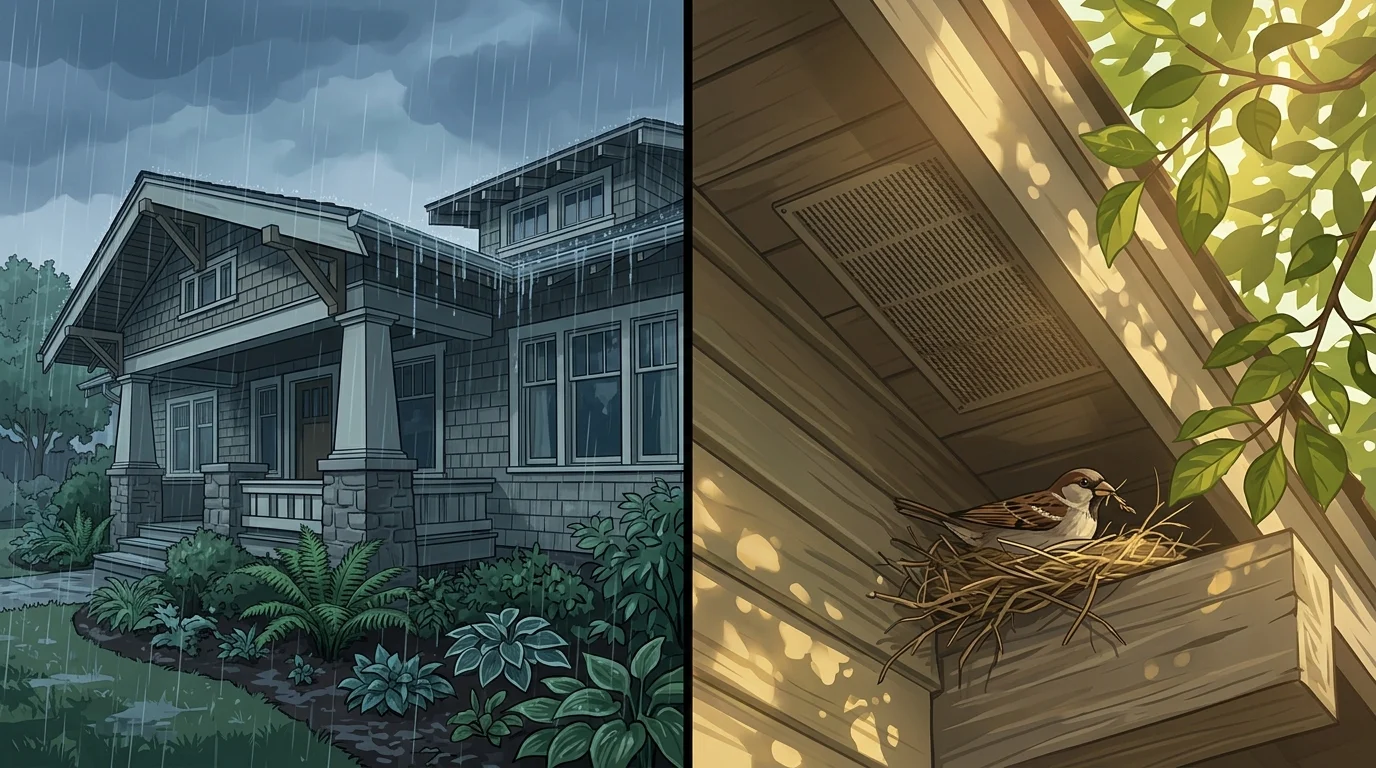
Quick Ans: The eave meaning depends entirely on context, yet unlike many slang terms, this architectural word carries centuries of building history and practical weight. It can point to a roof overhang, a drainage feature, a decorative element, or a bird’s nesting spot. This guide breaks down every major meaning so you can understand the term no matter where you encounter it.
Understanding architectural vocabulary has become a daily necessity for anyone navigating home repair, construction, or property discussions. New slang appears every week; consequently, older words accumulate fresh relevance as they appear in inspection reports and renovation plans. Eave is a perfect example of this evolution. It started as an Old English term for the edge of a roof, became a cornerstone of building science, and now functions as a maintenance checklist item and a design feature. Some usages are structural. Some are aesthetic. One is purely functional. Knowing which one applies can save you from an expensive misunderstanding.
The Core Eave Meaning
In everyday conversation, eave most often carries one primary meaning. It describes the part of a roof that extends beyond the wall.
The most widespread definition is the lower edge of a roof that overhangs the face of a wall. This phrase captures a state of structural projection. You are not merely talking about a roofline. You are completely pointing to the portion that juts out to protect the building below. People use it in construction, home inspection, and architecture discussions. The word says more than “roof edge” ever could.
A secondary definition is the underside of that overhang, including the fascia and soffit. This version expands the term to include the finished surfaces that complete the projection. Builders and homeowners use it when discussing ventilation, drainage, and pest control.
Both meanings share a common thread. They describe a boundary between shelter and exposure. One is the outer edge. The other is the finished underside.
Eave in Architecture and Construction
Eave takes on a precise life in architecture and construction. There, it refers to a functional element with specific dimensions and purposes.
The primary function is water diversion. By extending beyond the wall, the eave directs rainwater away from the foundation. Without adequate overhang, water pools at the base of the structure, causing soil erosion, basement flooding, and foundation cracks.
A second function is sun control. In hot climates, wide eaves shade windows and walls from direct sunlight, reducing cooling costs. In cold climates, shorter eaves allow winter sun to warm the interior.
A third function is ventilation. Soffit vents under the eave allow air to enter the attic, while ridge vents at the peak allow hot air to escape. This passive cooling system prevents moisture buildup and extends roof life.
Eaves also carry aesthetic weight. Craftsman bungalows feature deep, exposed rafter tails. Prairie Style homes use broad, low eaves to emphasize horizontal lines. Victorian homes often add decorative brackets and corbels under the overhang.
Eave in Home Maintenance and Inspection
Eave takes on a practical life in home maintenance. There, it appears frequently on inspection reports and repair checklists.
Common eave problems include rot and water damage. When gutters clog, water backs up under the eave and rots the fascia board. Homeowners often discover this only after seeing stains on the ceiling or peeling paint.
Another issue is pest infestation. Birds, squirrels, and insects nest in the protected space under the eave. Uncapped soffits and gaps in the fascia invite unwanted tenants.
A third problem is ice dams. In cold climates, heat escaping through the roof melts snow, which refreezes at the eave and blocks drainage. Water then backs up under shingles and leaks into the house.
Proper maintenance includes cleaning gutters, repairing fascia, installing soffit vents, and adding drip edges. These tasks protect the eave and, by extension, the entire structure.
How to Tell Which Eave Meaning Is Being Used
Context is everything with this word. The setting and tone reveal the intended meaning before the word does.
If the discussion involves roofing, gutters, or home repair, the structural meaning is likely. Phrases like “eave trough” or “eave inspection” point to the architectural definition. These conversations often appear in contractor estimates, inspection reports, or DIY guides.
When eave appears in a design context, the aesthetic meaning usually applies. References to “deep eaves” or “exposed rafter tails” clearly point to the stylistic definition.
A discussion of ventilation or insulation likely uses the functional meaning. Mentions of soffit vents or attic airflow point in this direction.
If the message sounds poetic and appears in literature, the “sheltering edge” meaning becomes possible. This usage often follows a description of a house, a nest, or a threshold.
When Not to Use Eave Casually
Eave does not belong in every conversation. Its architectural meaning carries technical precision and expresses a specific building component. Using it casually in construction discussions can come across as imprecise or uninformed.
There is also a grammatical sensitivity to consider. Eave is almost always used in the plural form “eaves.” The singular “eave” sounds unusual to many ears, though it is technically correct. Writers should choose the form that matches their audience.
Other professional contexts use the word differently. In meteorology, “eave” rarely appears. In real estate, it appears in listings as a feature. Each field has its own conventions, and the casual version rarely crosses into these spaces.
The safest approach is to match the register of the conversation. Technical words belong in technical discussions. When in doubt, clarity beats casualness.
Eave vs Similar Words
Several other words overlap with eave in meaning. Understanding the differences helps avoid confusion.
Soffit refers to the finished underside of the eave. It is a component of the eave, not a synonym. The eave is the whole overhang. The soffit is the surface you see when you look up.
Fascia refers to the vertical band at the edge of the roof. It covers the ends of the rafters and supports the gutter. The fascia sits at the outer edge of the eave.
Overhang is a broader term for any projection beyond a support. Eaves are one type of overhang, specifically at the roof. Bay windows and balconies also overhang.
Rake refers to the sloped edge of a gable roof. It is distinct from the eave, which runs horizontally along the side of the building.
Why Eave Endures as a Word
The word eave endures because it names something essential. Every building with a pitched roof has some form of eave, whether deep or shallow.
The word also adapts. It works as a technical term, a design feature, and a poetic image. It appears in construction manuals, architectural histories, and literature. Few words carry such practical weight across so many domains.
Its survival also reflects a universal need. People want shelter that lasts. The eave protects the wall, the foundation, and the people inside. The word names that protection.
Regional and Platform Variations
Eave does not mean the same thing everywhere. Climate and culture shape how the word is used.
In rainy climates, deep eaves dominate. Pacific Northwest homes often feature wide overhangs to shed constant moisture.
In sunny climates, wide eaves provide shade. Mediterranean and Southwestern homes use them to cool interiors passively.
In cold climates, shorter eaves prevent ice dams. Northern European and Canadian homes often minimize overhangs.
On social media, eave appears in home improvement content, renovation tours, and inspection tips.
FAQs
What does eave mean?
Eave means the lower edge of a roof that overhangs the wall.
Is eave a bad word?
No, eave is a neutral architectural term.
What does eave mean in construction?
In construction, eave refers to the roof overhang and its underside components.
What does eave mean in home inspection?
In inspection, eave refers to the area checked for rot, pests, and water damage.
Can eave mean something poetic?
Yes, eave can symbolize shelter or threshold in literature.
What is the difference between eave and soffit?
The eave is the whole overhang, while the soffit is its underside.
Does eave have a plural form?
Yes, eaves is the standard plural and often preferred.
Is eave safe to use in professional settings?
Yes, eave is appropriate in construction and real estate contexts.
Why do people say eave on TikTok?
On TikTok, eave appears in home renovation and inspection videos.
How do I know which eave meaning is being used?
Look at the platform, the tone, and the surrounding words to determine the intended meaning.
Conclusion
The eave meaning shifts with every context. In a construction manual, it means roof overhang. In case of a design magazine, it means aesthetic feature. If it is an inspection report, it means maintenance concern. In a poem, it means shelter. The only way to know which meaning applies is to read the setting, the tone, and the relationship between the building and its environment. When in doubt, a simple question clears up any confusion faster than guessing.
Language evolves quickly, and eave may take on new shades of meaning in the coming years. For now, these definitions cover almost every situation you will encounter. Learn them once, and you will never be lost when this word appears in your feed.