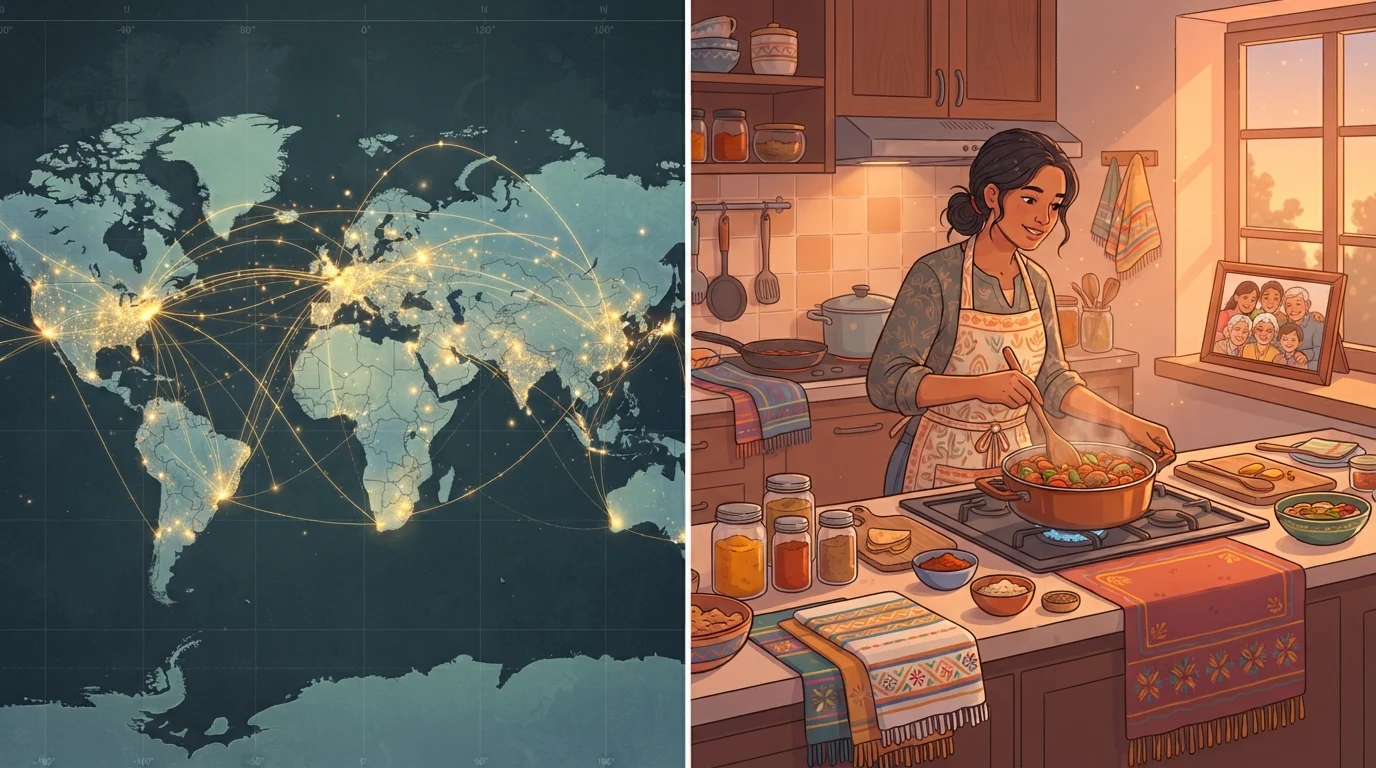
Quick Ans: The diaspora meaning depends entirely on context, yet unlike many slang terms, this ancient Greek word carries centuries of historical, cultural, and emotional weight. It can point to a scattered population, a shared identity across borders, a longing for homeland, or a vibrant community in exile. This guide breaks down every major meaning so you can wield the word with precision.
Understanding layered vocabulary has become a daily necessity for anyone navigating global conversations. New slang appears every week; consequently, older words accumulate fresh meanings as they spread across continents. Diaspora is a perfect example of this evolution. It started as a Greek term for scattering seeds, then became tied to Jewish history, and now describes dozens of communities worldwide. Some usages are academic. Some are personal. One is purely metaphorical. Knowing which one applies can save you from an awkward misunderstanding.
The Core Diaspora Meanings
In everyday conversation, diaspora most often carries one of two meanings. The first is historical and collective. The second is personal and emotional.
The most widespread definition is a scattered population whose origin lies in a separate geographic locale. This phrase captures a state of dispersal. You are not merely talking about migration. You are pointing to a community that maintains ties to a homeland while living elsewhere. People use it to describe Jewish, Armenian, African, Irish, and Indian communities, among many others. The word says more than “immigrants” ever could.
A lighter personal definition is the feeling of belonging to a scattered people. This version expresses longing, memory, and connection, often with a bittersweet tone. If someone describes growing up between two cultures, they might say they are “part of the diaspora.” The word captures a feeling that feels too big to explain simply.
Both usages share a common thread. They describe a relationship between home and elsewhere. One is a collective relationship. The other is a personal one.
Diaspora in History and Culture
Diaspora takes on a rich historical life in academic and cultural discussions. There, it refers to specific communities shaped by displacement, trade, or trauma.
The term originated from the Greek word diaspeirein, meaning “to scatter about” or “to disperse”. It was first used to describe the scattering of Greek colonists across the Mediterranean. Later, it became most closely associated with the Jewish experience of exile, particularly after the Babylonian captivity and the destruction of the Temple in Jerusalem.
Today, scholars identify multiple diasporas. The African diaspora encompasses millions of people descended from Africans taken through the transatlantic slave trade. The Armenian diaspora formed after the genocide of 1915. The Irish diaspora spread across the world during the Great Famine. The Indian diaspora numbers over 30 million people across every continent.
Each diaspora carries its own history, yet they share common features. They maintain cultural practices, languages, and memories of homeland and also build institutions, send remittances, and often influence politics back home. They live between worlds.
Diaspora on Social Media and in Memes
Diaspora takes on a vibrant life on social media. There, it often accompanies images of cultural fusion, family reunions, and identity celebrations. A picture of someone cooking a traditional dish in a foreign kitchen is captioned “diaspora life.” This is the visual equivalent of the word.
The “diaspora meme” has become a cultural phenomenon in its own right. People use it to react to shared experiences of growing up between cultures. The posts are funny, poignant, and deeply relatable. Being part of a diaspora is a shared experience. Seeing someone else’s diaspora reaction validates your own.
In comment sections and forums, diaspora often means “I understand this in two languages.” People use it as a self-aware wink. It signals that the content resonates across borders. The irony of using a Greek word to describe a modern feeling is part of the charm.
Another variation exists in food and music communities. Diaspora can describe a fusion of traditions. This usage appears in recipes, playlists, and art. It signals genuine, unfiltered creativity in a low-pressure way.
How to Tell Which Diaspora Meaning Is Being Used
Context is everything with this word. The setting and tone reveal the intended meaning before the word does.
If the message involves history, politics, or sociology, the collective meaning is likely. Phrases like “the Jewish diaspora” or “diaspora communities” point to the academic definition. These references often appear in articles, lectures, or policy discussions. The tone is usually analytical or respectful.
When diaspora appears in a personal post or a meme, the emotional meaning usually applies. Captions like “diaspora problems” or “diaspora kid things” clearly refer to the lived experience definition. The presence of cultural references or family stories distinguishes this usage.
A wellness post that mentions “diaspora healing” likely uses the identity meaning. The placement within mental health, ancestry, or community content is the giveaway.
If the message sounds playful and appears after a cultural joke, the “between worlds” meaning becomes possible. This usage often follows a story about language mix-ups or food nostalgia. The tone is warmer and more humorous than the other definitions.
When Not to Use Diaspora Casually
Diaspora does not belong in every conversation. Its historical meaning carries deep trauma and expresses profound loss. Using it casually, in jest, or in inappropriate contexts can come across as dismissive or ignorant of its significance.
There is also a specificity to consider. Not every scattered group is a diaspora. The term implies a homeland, a collective memory, and a ongoing connection. Using it loosely for any immigrant group can seem imprecise or disrespectful.
Other professional contexts use diaspora differently. In business, diaspora can refer to diaspora networks and remittances. In politics, it can refer to diaspora voting blocs. Each field has its own vocabulary, and the casual version rarely crosses into these spaces.
The safest approach is to match the register of the conversation. Historical words belong in historical discussions. When in doubt, clarity beats casualness.
Diaspora vs Similar Words
Several other words overlap with diaspora in meaning. Understanding the differences helps avoid confusion.
Migration means “movement from one place to another.” It is more general and less collective. Diaspora implies a lasting community, not just a journey.
Exile means “forced absence from one’s homeland.” It is more individual and more political. Diaspora is broader and more communal.
Refugee means “a person fleeing conflict or persecution.” It is a legal status. Diaspora is a cultural identity.
Immigrant means “a person who moves to another country.” It is more individual and more legal. Diaspora is about the group, not the person.
Why Diaspora Became Popular
The word diaspora grew alongside a broader cultural interest in identity and roots. Social media rewarded strong connections. A comment that said “I’m from two places” got ignored. A comment that said “diaspora kid” got likes. The word captured a feeling that felt too big to explain simply.
Globalization and migration trends have made descriptive vocabulary more common on social platforms. People share their family histories, their cultural mixes, and their everyday longings in ways previous generations kept private. Diaspora gave this generation a quick label for a specific kind of belonging. It was not quite immigrant nor simple citizen. It was something in between, and the word fit perfectly.
The word also spread through literature and activism. It appeared in novels, documentaries, and political speeches. Four syllables did the job better than a paragraph of explanation. It also created an in-group signal. Those who understood the word felt a small connection with the person using it.
Regional and Platform Variations
Diaspora does not mean the same thing everywhere. Culture and platform shape how the word is used.
On Instagram, the visual meaning dominates. Users talk about diaspora food, diaspora weddings, and diaspora memes. The word has become inseparable from the platform’s identity culture.
On Reddit, the analytical meaning dominates. It appears in comments as a quick summary of a shared experience. Some users pair it with other expressive words like “roots” or “heritage.”
On Twitter and X, the political meaning dominates. Tweets often fill with “diaspora” under posts about homeland politics, remittances, or identity debates.
In group chats among close friends, any of the meanings can appear. The shared context makes the intended definition obvious. Outsiders reading the conversation later might struggle, but the participants never pause to clarify.
FAQs
What does diaspora mean?
Diaspora means a scattered population with a shared origin living outside their homeland.
Is diaspora a bad word?
No, diaspora is not profane and carries historical and cultural weight.
What does diaspora mean on Instagram?
On Instagram, diaspora refers to cultural fusion, identity posts, and shared experiences.
What does diaspora mean in texting?
In texting, diaspora usually means belonging to a scattered community or living between cultures.
Can diaspora mean something personal?
Yes, diaspora can describe a personal feeling of longing and belonging.
What is the difference between diaspora and migration?
Migration is movement, while diaspora is a lasting community formed by that movement.
Does diaspora have a medical meaning?
No, diaspora is not a medical term and describes cultural identity.
Is diaspora safe to use in professional settings?
Yes, diaspora is appropriate in academic and cultural discussions.
Why do people say diaspora on TikTok?
On TikTok, diaspora appears in videos about cultural mix-ups, food nostalgia, and identity.
How do I know which diaspora meaning is being used?
Look at the platform, the tone, and the surrounding words to determine the intended meaning.
Conclusion
The diaspora meaning shifts with every context. In a history book, it means scattered communities. If it is a meme, it means growing up between cultures. In case of a personal post, it means longing for home. In a political speech, it means transnational influence. The only way to know which meaning applies is to read the setting, the tone, and the relationship between the people involved. When in doubt, a simple question clears up any confusion faster than guessing.
Language evolves quickly, and diaspora may take on new shades of meaning in the coming years. For now, these definitions cover almost every situation you will encounter. Learn them once, and you will never be lost when this word appears in your feed.