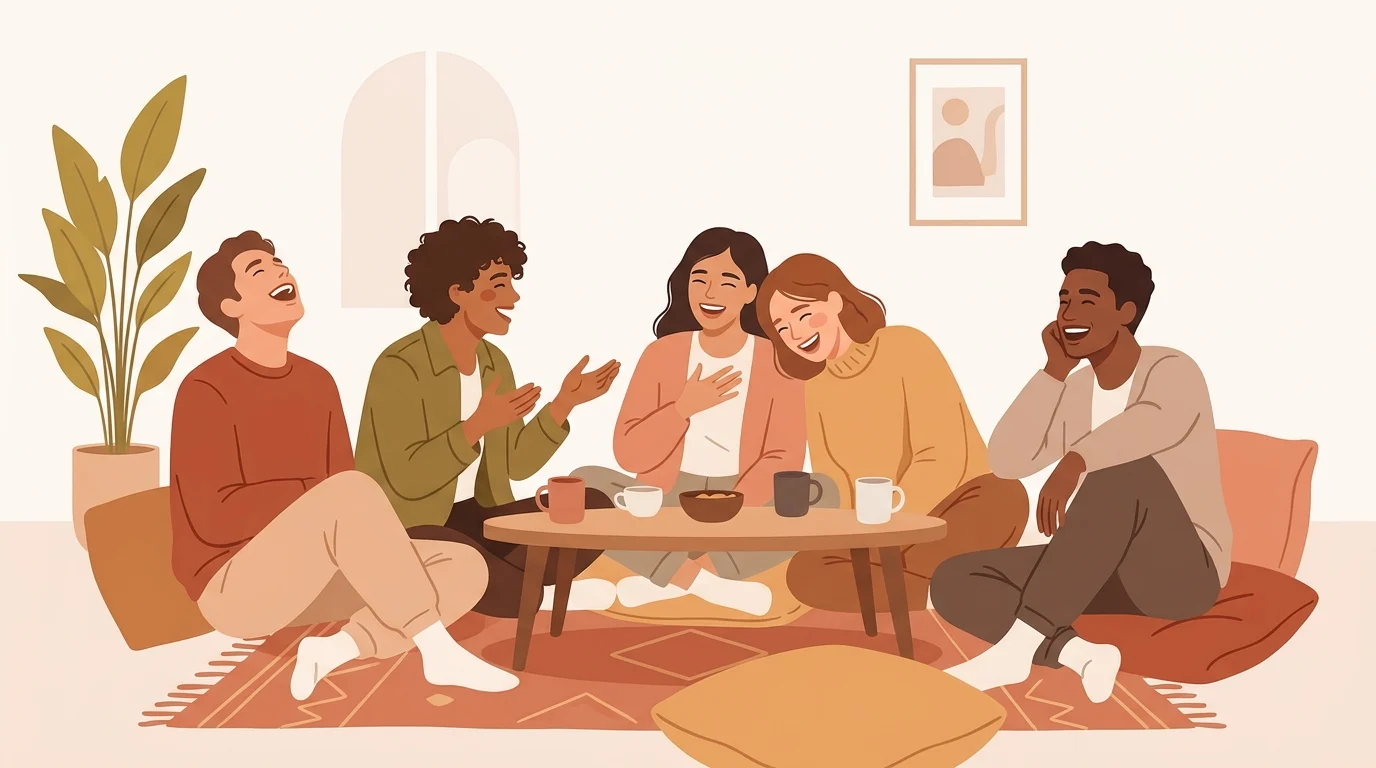
Quick Answer: Camaraderie means a warm spirit of friendship, trust, and loyalty among people who share an activity, a workplace, a team, or a difficult experience together.
Some workplaces feel merely polite. Others feel like a team in the truest sense, where people look out for each other, laugh together under pressure, and keep going because they do not want to let each other down. That second feeling has a name, and it is camaraderie meaning in action.
It is a word people often use when they miss a job, a team, or a time in their lives, even if they did not love every part of the work itself. “I did not love the job, but I loved the camaraderie,” is a sentence many people have said, or heard, and it captures the word perfectly. Camaraderie meaning is not about the task. It is about the people you do the task with.
Camaraderie Meaning in Simple Words
Camaraderie meaning is a feeling of easy friendship and mutual trust within a group. It is uncountable, so we say “a lot of camaraderie” or “a sense of camaraderie,” not “a camaraderie” or “camaraderies” in normal speech, although a plural form exists in dictionaries.
It grows when people spend a lot of time together, rely on each other, and share experiences, especially challenging ones. A sports team that trains together, a military unit that serves together, a hospital team that works night shifts together, or a group of friends who travel together can all develop camaraderie. The shared experience matters more than the setting.
Unlike simple friendliness, camaraderie meaning implies loyalty. Friendly strangers can be polite and kind. People with camaraderie will stand up for each other, cover for each other when needed, and feel a sense of belonging to the group, not just to individual friends within it.
Origin and History: From Shared Rooms to Shared Spirit
Camaraderie comes from French camarade, meaning comrade, plus the suffix -erie, similar to English -ery, which forms a noun for a quality. Camarade itself comes from Spanish camarada, meaning a chamber mate or barrack mate, from Latin camera, meaning chamber or room.
That history tells the story of the word. Originally, it described the bond between people who shared the same room or quarters, especially soldiers. Living, eating, and facing danger together created a closeness that went beyond ordinary friendship. Over time, the word expanded from military life into civilian life, but it kept that sense of closeness forged by shared conditions.
Camaraderie entered English in the 19th century, around the 1830s to 1840s, keeping its French spelling and a French-like pronunciation. The rarer spelling “comradery” also exists, but “camaraderie” is the standard form in modern English.
How to Pronounce Camaraderie
In American English, camaraderie is usually pronounced kam-uh-RAH-duh-ree, with the stress on the third syllable. In British English, you will hear kam-uh-RAH-duh-ree as well, sometimes with a slightly softer ending, kam-uh-RAH-duh-ri. The key is the “rah” in the middle, which reflects its French origin.
Many learners stress the wrong syllable at first, saying KAM-uh-rad-uh-ree or kam-uh-RAD-uh-ree. Practising the phrase “the camaraderie of the team” aloud, with the stress on “rah,” helps it sound natural quickly.
Camaraderie in Different Settings
At work: Workplace camaraderie often comes from shared projects, deadlines, and small daily rituals: coffee breaks, inside jokes, helping a colleague meet a deadline. Research and management writing often link it to higher morale, better retention, and stronger teamwork, although camaraderie alone cannot fix poor pay, unsafe conditions, or unfair management.
In sports: Teams talk about camaraderie as a performance factor, not just a nice feeling. Players who trust each other communicate better, cover each other’s mistakes, and stay motivated when losing. Coaches often build it deliberately through training camps, shared meals, and team traditions.
In the military: This is the original home of camaraderie. Shared risk, discipline, and dependence on each other for safety create a bond that veterans often describe as unlike any other. That bond can last for decades after service ends, which is why reunions and veterans’ groups matter so much.
In volunteering and community groups: Volunteers who share a mission, whether serving meals, cleaning a park, or organising a festival, often develop camaraderie quickly, because the work is meaningful and the group depends on everyone showing up.
In schools and camps: Students on a field trip, a summer camp, or a group project can develop camaraderie through shared novelty, mild hardship, and fun. Teachers sometimes design group tasks specifically to encourage it.
Online: Remote teams and online communities can develop camaraderie too, but it takes more deliberate effort: regular video calls, shared channels for non-work chat, online games, and moments to celebrate wins together. Without those, a remote group can be efficient but feel lonely.
Camaraderie vs Friendship, Fellowship, and Team Spirit
These words overlap, but they are not identical, and choosing the right one sharpens your writing.
- Friendship: a personal bond between individuals. You can have friendship without a group. Camaraderie is group friendship, a spirit shared by the whole team.
- Fellowship: similar to camaraderie, but often more formal or institutional, such as fellowship in a church, university, or professional body. It can also mean a grant for study.
- Team spirit: the enthusiasm and loyalty a team feels, often focused on winning or succeeding. Camaraderie is warmer and more personal than team spirit alone.
- Brotherhood or sisterhood: suggests a family-like bond, often used for military, fraternal, or close-knit groups. Camaraderie is broader and less gendered.
- Conviviality: cheerful sociability, especially around food and drink. A convivial dinner can be fun without creating lasting camaraderie.
A useful test: if the feeling disappears when the group breaks up, it was probably camaraderie tied to that shared experience. If it survives as individual friendships, those friendships grew out of camaraderie but are now something more personal.
Examples of Camaraderie in Sentences
- “The camaraderie among the nurses on the night shift kept everyone going through a difficult winter.”
- “He missed the camaraderie of his old regiment more than he missed the army itself.”
- “There was a real sense of camaraderie in the office during the charity challenge.”
- “The team’s camaraderie was obvious from the way they celebrated together, win or lose.”
- “Summer camp gave her instant friends and instant camaraderie.”
- “Despite the pressure, the camaraderie in the kitchen never broke.”
How Camaraderie Forms, and How It Fails
Psychologists and team researchers often note that camaraderie does not come from fun alone. It comes from repeated reliance under meaningful conditions. People become close when they see, again and again, that others will show up, do their share, and support them when things go wrong.
That is why surface-level positivity is not enough. An office can have birthday cakes, jokes, and friendly greetings, yet still lack camaraderie if people do not trust each other when work gets hard, if credit is stolen, or if some members are excluded. Genuine camaraderie requires vulnerability, accountability, and evidence of support under pressure.
It can also fail in the opposite direction: a tight group can become a clique. Strong camaraderie inside a team can, if unmanaged, turn into exclusion of newcomers, resistance to change, or covering up mistakes to protect the group. Good leaders watch for that balance: warmth inside the group, openness to outsiders, and honesty when things go wrong.
Building camaraderie, then, is less about forced fun and more about shared work done fairly, shared credit, small kindnesses repeated daily, and leaders who model trust. A team lunch helps, but only if the daily work already feels fair and supportive.
Synonyms and Antonyms
Synonyms for camaraderie include fellowship, companionship, comradeship, brotherhood, goodwill, rapport, and team spirit, each with a slightly different shade as discussed above. In informal speech, people might say “good vibes in the team” or “we just clicked as a group,” but camaraderie meaning is the precise, warm, and slightly formal word for that group bond.
Antonyms are less direct, because camaraderie is a positive group feeling. Opposites in spirit include hostility, distrust, alienation, isolation, and rivalry, although rivalry can exist alongside camaraderie in sport, where teams compete hard but respect each other.
When (Not) to Use Camaraderie
Use camaraderie when you mean a group bond built on shared experience and trust. It is ideal for writing about teams, workplaces, military service, sports, volunteering, and close communities. It sounds warm but not overly casual, and it works in both formal and informal writing.
Do not use it for a single friendship between two people. Say “friendship” for that. Do not use it for polite acquaintance or a single pleasant evening. Camaraderie implies time, shared experience, and loyalty, not just a good chat.
Be careful in formal reports not to overclaim. Saying a team has “great camaraderie” without evidence can sound like empty praise. Give an example: people covering shifts, celebrating together, or supporting a colleague through a hard week. That evidence makes the word believable.
Common Mistakes With Camaraderie
One mistake is spelling it “camaraderie” with the wrong vowels, or confusing it with “camaraderie” vs “comradery.” Remember the French root: camarade plus -erie gives camaraderie. Comradery is a recognised variant, but it is much rarer and can look like a mistake to many readers.
Another mistake is using it as a countable noun: “a camaraderie” or “many camaraderies.” In normal use, it is uncountable. Say “a sense of camaraderie” or “strong camaraderie.”
A third mistake is using it for any happy group, even if the group has no shared work or challenge. A crowd at a concert can be joyful and united for an evening, but camaraderie usually implies a longer, shared story.
Frequently Asked Questions About Camaraderie Meaning
What does camaraderie mean in simple terms?
A warm feeling of friendship, trust, and loyalty among people in a group who share work, sport, service, or an experience together.
Is camaraderie the same as friendship?
Not exactly. Friendship is between individuals. Camaraderie meaning is a group spirit, although it often leads to individual friendships.
What is an example of camaraderie at work?
Colleagues who cover for each other, celebrate wins together, and support each other during deadlines show workplace camaraderie.
How do you build camaraderie in a team?
Through fair shared work, repeated reliability, shared rituals, honest communication, and leaders who model trust, not just through social events alone.
What is the opposite of camaraderie?
Distrust, hostility, or alienation within a group, where people feel isolated rather than belonging.
Conclusion
Camaraderie meaning is, at its simplest, the feeling that you are not alone in what you are doing. It began with soldiers sharing a room, and it now describes any group that has learned to trust each other through shared effort. It is why people remember a team long after they forget the score, a job long after they forget the salary, and a difficult season as a good time because of who they shared it with. If you want to describe that feeling accurately, camaraderie meaning is the word: not just friendliness, not just teamwork, but the warm, loyal spirit that turns a group of individuals into a group that belongs together.