Quick Answer: Antebellum means “before a war,” but in American history, it specifically refers to the period before the Civil War (roughly 1815–1861) . The term comes from the Latin phrase ante bellum, meaning literally “before the war” . In the American South, this era is defined by an agricultural economy built on slave labor, vast cotton plantations, and deep social divisions that ultimately led to the nation’s bloodiest conflict . The word carries heavy historical weight so much so that in 2020, the country band Lady Antebellum dropped the term from their name due to its painful associations with slavery .
You’ve probably heard “antebellum” used to describe grand Southern mansions or period dramas. Maybe you remember when Lady Antebellum became just “Lady A” in 2020. But what does the word really mean, and why does it carry so much baggage?
At its simplest, antebellum means “before the war.” But in American English, it almost always points to one specific war: the Civil War (1861–1865) . The term describes a roughly 50-year stretch when America was growing, dividing, and heading toward a catastrophic confrontation over slavery and states’ rights.
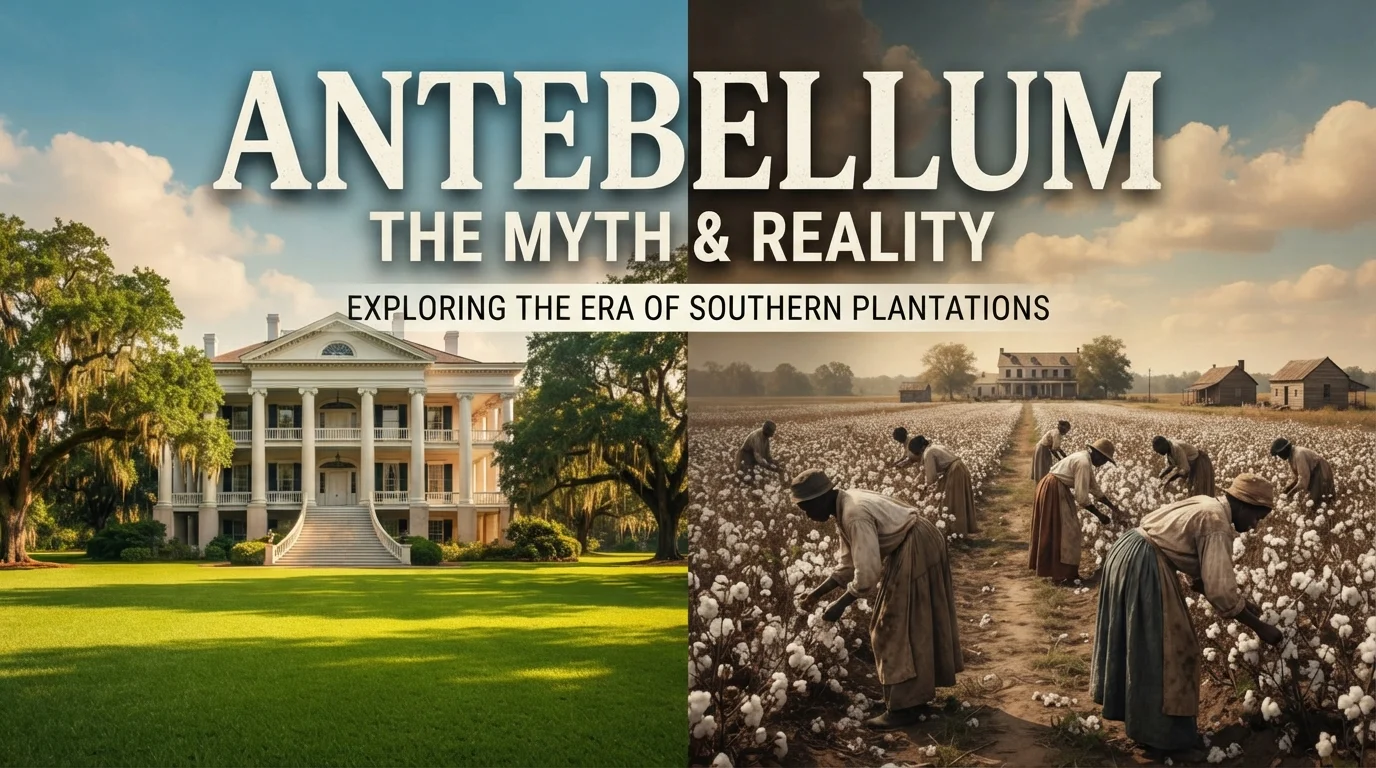
But here’s the thing: “antebellum” isn’t just a neutral historical label. It conjures images of sprawling plantations, hoop skirts, and mint juleps a romanticized version of the Old South that conveniently ignores the brutal reality of slavery that made that lifestyle possible. Understanding the antebellum meaning means understanding both the surface glamour and the painful truth beneath.
Antebellum Meaning: What Does It Actually Mean?
The Basic Definition
Antebellum is an adjective that means “existing before a war” . The word comes from Latin: ante (before) and bellum (war). In everyday American usage, it’s almost always a shorthand for the pre-Civil War era .
The earliest known print appearance in English dates back to the 1840s, but the term’s specific association with the Civil War appears in an 1862 diary entry: “Her face was as placid and unmoved as in antebellum days” . That diarist was Mary Boykin Miller Chesnut, who observed life during the Civil War while accompanying her Confederate officer husband.
When Exactly Was the Antebellum Period?
Historians generally place the Antebellum Era between 1815 and 1861 . Some scholars stretch it from the first Fugitive Slave Act of 1793 to the outbreak of the Civil War . Either way, it covers the decades when America expanded westward, grew economically, and became deeply divided over slavery.
The era effectively ends with Abraham Lincoln’s election in November 1860, which triggered Southern secession and the formation of the Confederate States of America in 1861 .
The Antebellum South
When Americans say “antebellum,” they’re usually talking about the South the region below the Mason-Dixon Line. This included Virginia, North Carolina, South Carolina, Tennessee, Georgia, Florida, Alabama, Arkansas, Mississippi, Louisiana, and Texas .
| Aspect | Antebellum South Characteristics |
|---|---|
| Economy | Agricultural, dependent on slave labor |
| Main Crops | Cotton, tobacco, indigo, rice |
| Social Elite | Plantation owners (about 4% of population) |
| Middle Class | Small-scale farmers with few or no slaves |
| Enslaved Population | Grew from 700,000 to 3.2 million during this period |
| Key Invention | Cotton gin (around 1810) made cotton hugely profitable |
The Antebellum Economy: King Cotton Takes Over
The Cotton Gin’s Impact
Before 1810, cotton wasn’t particularly profitable. The seeds were too difficult to remove from the fibers. Then Eli Whitney invented the cotton gin, and everything changed. Suddenly, cotton could be processed quickly and cheaply .
Planters pushed inland to grow short-staple cotton, and the demand for slave labor exploded. Between 1810 and 1860, the enslaved population soared from 700,000 to 3.2 million . Cotton became “King,” driving the Southern economy and entrenching slavery deeper into the region’s culture and identity.
Plantation Self-Sufficiency
Cotton plantations operated with remarkable independence. Kitchen gardens provided vegetables. Families planted corn and grains for home use. This self-sufficiency had a dark side, though it discouraged trade among Southern states and impeded infrastructure development .
When the Civil War came, the South’s deficient roads and railroads would prove disastrous for moving troops and supplies. The very independence that seemed like strength turned into a strategic weakness.
Social Hierarchies: Who Was Who in the Antebellum South
The Plantation Elite
At the top sat a small aristocracy of wealthy plantation owners only about 4 percent of the population in 1860 . These men, largely of English origin, built grand manor houses and controlled vast political power. Their culture was deeply patriarchal, and a man’s honor depended on his success as master of family, business, and property.
The “Plain Folk”
The majority of whites roughly 75 percent worked small subsistence farms without slaves . Many came from Celtic or upland stock and held a traditional dislike of the aristocracy. Dubbed “plain folk,” these unpretentious farmers often appeared poor even when they were fairly prosperous.
Despite not owning slaves, most supported slavery. Some hoped to become wealthy enough to buy slaves themselves. Others found comfort in knowing that enslaved Black people occupied the lowest rung of the social ladder.
Enslaved People
For the 3.2 million enslaved individuals, antebellum life was brutal. They were treated as property with no legal rights . Laws strictly regulated their lives and movements. Families were routinely broken apart when owners sold off members. The enslaved population endured harsh conditions while building the wealth that made the Southern elite so powerful.
Culture and Innovation in the Antebellum Era
A Complex Time
The Antebellum Era was culturally rich and contradictory. Suitors called on young ladies according to elaborate rituals. Men often settled quarrels by dueling. “Mill girls” worked grueling 16-hour days to support their families .
At the same time, a new America was emerging. Frederick Law Olmstead led the movement for public parks. Stephen Foster forged a catalog of American popular music. Writers like Washington Irving and Ralph Waldo Emerson elevated American literature. Artists like Thomas Cole and Thomas Doughty defined new painting styles .
Women’s Roles
Nineteenth-century law gave men control of all their wives’ assets after marriage. But Southern culture offered women slightly more property rights than other regions through marriage settlements . Women were integral to managing households and plantations, even as they remained legally subordinate.
The Schism Between North and South
All this cultural flowering happened against a backdrop of deepening division. The North industrialized. The South remained agricultural and slave-dependent. As the nation expanded westward, the question of whether new territories would allow slavery became increasingly explosive .
Key Events That Shaped the Antebellum Era
The Antebellum Period featured several watershed moments that exposed the nation’s fault lines:
Nat Turner’s Rebellion (1831) – An enslaved preacher led a slave revolt in Virginia that killed about sixty whites within twenty-four hours . The rebellion terrified Southern whites and led to harsher slave codes.
The Trail of Tears (1838) – The forced removal of Cherokee and other Native American tribes from their ancestral lands to Indian Territory, representing the dark side of Manifest Destiny .
John Brown’s Raid (1859) – Militant abolitionist John Brown led a failed raid on the federal arsenal at Harpers Ferry, Virginia, hoping to spark a slave rebellion. He was captured and hanged, but his actions electrified both North and South .
Harriet Beecher Stowe’s Uncle Tom’s Cabin (1852) – This novel sold 300,000 copies in its first year and reinvigorated the abolitionist movement, giving Northern readers a visceral sense of slavery’s horrors .
Antebellum in Modern Context
Why Lady Antebellum Changed Its Name
In June 2020, country trio Lady Antebellum announced they would drop “Antebellum” from their name, shortening it to “Lady A” . The reason: the word’s deep associations with slavery and a time when Black Americans were denied basic humanity.
The band’s statement reflected a growing awareness that “antebellum” isn’t just a neutral historical marker. It represents an era built on oppression, and using it casually glosses over that painful reality.
Modern Usage
Today, “antebellum” appears most often in historical discussions, architecture descriptions, and cultural analysis. It’s used with nouns like “era,” “slavery,” and “South” . The word can also apply to pre-war periods in other countries, but in American English, the Civil War association remains dominant.
Frequently Asked Questions
What does antebellum mean? Antebellum means “before a war.” In American English, it almost always refers to the period before the Civil War (roughly 1815–1861) .
Where does the word antebellum come from? It comes from the Latin phrase ante bellum, meaning literally “before the war” .
What states were considered the Antebellum South? Virginia, North Carolina, South Carolina, Tennessee, Georgia, Florida, Alabama, Arkansas, Mississippi, Louisiana, and Texas .
When did the Antebellum Era start and end? Historians generally place it between 1815 and 1861, ending with Lincoln’s election and Southern secession .
Why is the term “antebellum” controversial? It romanticizes a period when the Southern economy and society were built on brutal slave labor. The term itself doesn’t acknowledge that reality, which is why Lady Antebellum changed their name in 2020 .
What was the economy of the Antebellum South? Primarily agricultural, centered on cotton production fueled by slave labor. The cotton gin made cotton vastly more profitable, causing the enslaved population to grow from 700,000 to 3.2 million .
Key Takeaways
| Aspect | Key Point |
|---|---|
| Meaning | “Before a war,” specifically the American Civil War |
| Origins | Latin phrase ante bellum (before the war) |
| Time Period | Approximately 1815–1861 |
| Geography | Southern states below the Mason-Dixon Line |
| Economy | Agricultural, slave labor-dependent, centered on cotton |
| Social Structure | Small planter elite, majority of poor whites, 3.2 million enslaved people |
| Key Events | Cotton gin invention, Nat Turner’s Rebellion, Trail of Tears, John Brown’s Raid |
| Modern Context | Controversial term, dropped by Lady Antebellum in 2020 |
Conclusion: The Weight of a Word
“Antebellum” is more than a historical label. It’s a word that carries the weight of millions of lives, both free and enslaved, in a period that defined America’s deepest divisions. The grand plantations and elegant mansions that tourists visit today were built on the backs of people denied their freedom, their families, and their humanity.
Understanding the antebellum meaning requires looking past the romanticized images of the Old South to confront the brutal reality beneath. This was a period when the cotton gin made slavery more profitable than ever. When the enslaved population grew from hundreds of thousands to over three million. When the nation’s economic and moral fault lines deepened until they shattered into civil war.
Today, the word “antebellum” serves as a reminder that history isn’t just about dates and events it’s about people, power, and the choices that shape nations. When Lady Antebellum changed their name in 2020, they acknowledged what many had long recognized: some words carry too much history to be used casually.
The Antebellum Era produced American literature, music, and art that still resonate today. It also produced the conditions for the deadliest war in American history. Understanding both sides of that story is what makes the word so powerful and so necessary to examine with care.