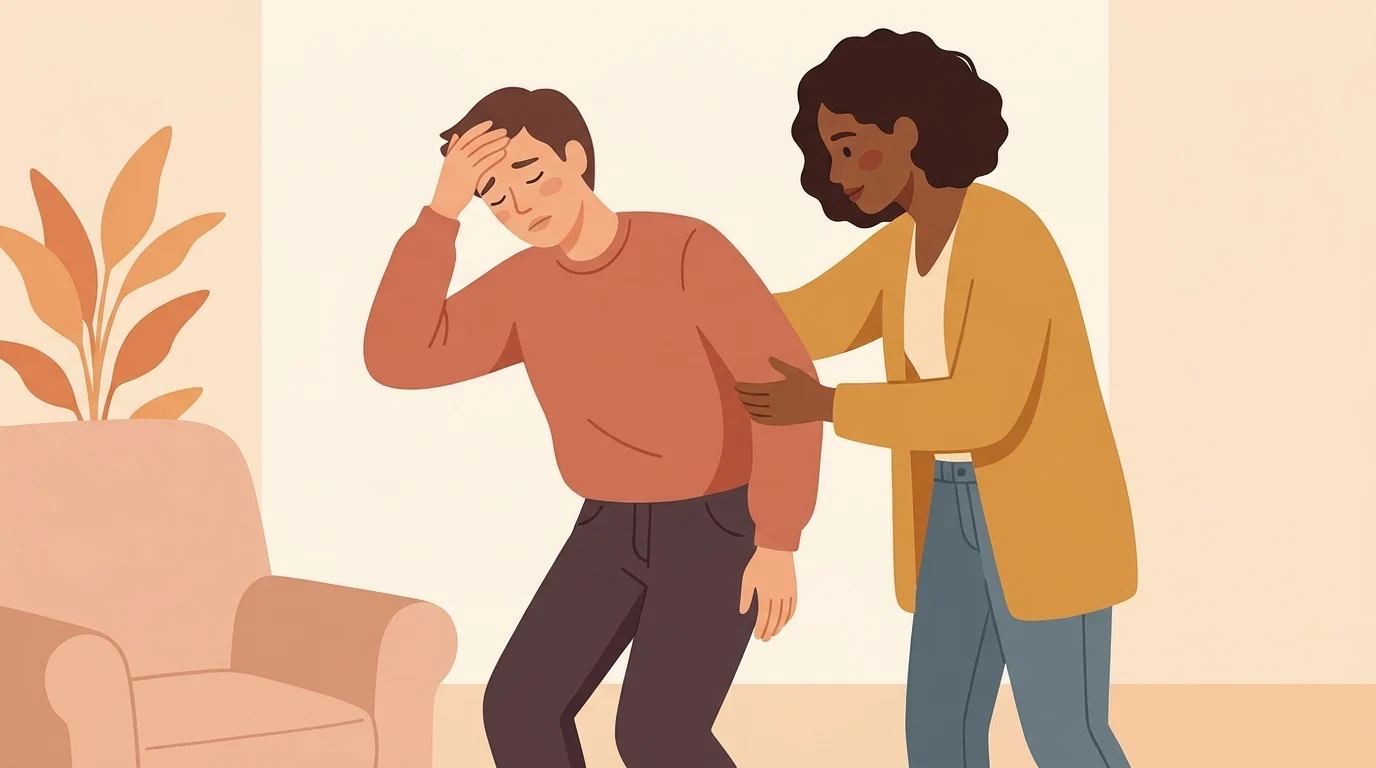
Quick Answer: Syncope is the medical term for fainting: a sudden, brief loss of consciousness and muscle strength caused by a temporary drop in blood flow to the brain, followed by a quick and complete recovery. In grammar, syncope also means the loss of a sound or letter from the middle of a word.
Most people know the experience even if they do not know the word. The room spins, vision narrows, ears seem far away, and then everything goes blank for a few seconds. When the person wakes up, they are usually confused, sweaty, and lying on the floor. Doctors call that event syncope. Everyone else calls it fainting or passing out.
Syncope sounds alarming, and it can be, but most episodes are brief and harmless. Understanding what it means, what causes it, and when it needs urgent attention helps you stay calm and know what to do next.
What Does Syncope Mean?
Syncope is defined as a sudden, temporary loss of consciousness associated with loss of postural tone. In plain language, that means you black out and fall because your brain briefly does not get enough blood and oxygen. The episode is short, often lasting only seconds, and recovery is usually spontaneous and complete.
Three features separate syncope from other causes of collapse. The onset is fast, the duration is short, and recovery happens on its own without medical intervention. If someone stays unconscious for a long time, has a prolonged period of confusion afterwards, or needs help to wake up, doctors will consider other causes first.
When consciousness is not completely lost, but a person feels as if they are about to faint, doctors call that presyncope. It includes lightheadedness, tunnel vision, nausea, and weakness, but the person stays awake. Presyncope is treated seriously because it often has the same causes as syncope.
Types of Syncope
Doctors group syncope into three main types. Reflex syncope, also called vasovagal syncope or neurocardiogenic syncope, is the most common. It happens when the nervous system overreacts to a trigger such as pain, fear, emotional distress, standing for a long time, or the sight of blood. Blood pressure and heart rate drop suddenly, blood pools in the legs, and the brain briefly loses supply.
Orthostatic syncope happens when blood pressure falls sharply on standing up. Blood that should return to the heart stays in the lower body, so the brain receives less for a few moments. Dehydration, heat, certain medicines, and standing still for a long time can all contribute.
Cardiac syncope is caused by a heart problem, such as a very fast or very slow heart rhythm, a blocked heart valve, or structural heart disease. This type is less common but more dangerous, because the heart itself is not pumping effectively. Fainting during exercise, fainting without warning, or fainting with chest pain or palpitations raises concern for cardiac syncope.
Symptoms and Warning Signs
Many people get warning signs seconds or minutes before they faint. Common warnings include lightheadedness, dizziness, blurred or tunnel vision, hearing that sounds distant, nausea, sweating, pale skin, warmth or cold clammy skin, and a feeling of weakness. Some people describe the room spinning or going dark at the edges.
During the episode itself, the person loses consciousness and falls. Brief muscle twitching can occur, which sometimes looks like a seizure, but it is usually short and stops quickly. Tongue biting and loss of bladder control are uncommon in syncope and more typical of seizures.
Afterwards, most people recover quickly, though they may feel tired, nauseous, or confused for a short time. Lying flat helps blood return to the brain, which is why people often feel better within a minute or two of fainting.
Syncope vs Seizure, Dizziness, and Coma
Syncope is often confused with other conditions, so the differences matter. A seizure usually involves convulsions, a longer period of confusion afterwards, and sometimes tongue biting or incontinence. Syncope recovery is faster and clearer.
Dizziness and vertigo are feelings of spinning or imbalance without loss of consciousness. They can be warning signs, but they are not syncope on their own. A coma is a prolonged, deep unconsciousness that does not resolve on its own. Cardiac arrest is a sudden loss of consciousness without spontaneous recovery that requires emergency treatment. Syncope, by contrast, resolves by itself.
What Causes Syncope?
Common triggers for reflex syncope include standing for a long time in heat or a crowded room, sudden pain, fear, emotional shock, dehydration, low blood sugar, coughing, laughing hard, and urinating. Teenagers and young adults often faint for these reasons, and most such episodes are benign.
Other causes include medicines that lower blood pressure, heart rhythm problems, anaemia, and conditions that affect blood volume. That is why doctors always take a history after a faint: what the person was doing, whether there were warnings, how long they were out, and how they recovered all point towards a cause.
It is worth noting that syncope itself is a symptom, not a disease. Saying someone had syncope is like saying they had a cough. The important question is always what caused it.
When to Seek Urgent Medical Help
Most single fainting episodes in otherwise healthy young people turn out to be harmless, but some situations need urgent evaluation. Seek emergency care if fainting happens during exercise, happens without any warning, is accompanied by chest pain, shortness of breath, or palpitations, follows a head injury, or happens repeatedly. Also seek help if the person does not recover quickly, has a seizure-like episode, or has a known heart condition.
Children who faint should always be seen by a doctor, even if they seem fine afterwards, because doctors need to rule out a cardiac cause. The same applies to older adults, people on heart or blood pressure medicines, and anyone who faints while driving or in a dangerous place.
This article is for general information only and is not medical advice. If you or someone near you faints, follow local emergency guidance and get medical advice promptly.
How Syncope Is Diagnosed and Treated
Diagnosis usually starts with a detailed history and physical examination, including blood pressure lying down and standing up. Doctors may order an electrocardiogram to check heart rhythm, blood tests, and sometimes a heart monitor or tilt-table test, where the patient is tilted upright while heart rate and blood pressure are watched.
Treatment depends on the cause. For vasovagal syncope, treatment often means avoiding triggers, staying hydrated, not standing still for long periods, and learning physical counter-pressure moves such as tensing leg muscles when warning signs appear. For orthostatic syncope, doctors may review medicines, advise more fluids and salt where appropriate, and suggest rising slowly.
Cardiac syncope needs treatment of the underlying heart problem, which may involve medicines, a pacemaker, or other cardiac care. That is why distinguishing the type matters so much.
The Second Meaning: Syncope in Grammar
Syncope has a completely different meaning in linguistics. There, it means the loss of one or more sounds or letters from the middle of a word. A classic example is “forecastle” becoming “fo’c’sle” in nautical speech, or “never” becoming “ne’er” in poetry.
This grammatical sense comes from the same Greek root idea of cutting short. Just as medical syncope cuts short consciousness, grammatical syncope cuts short a word. If you see syncope in a language or poetry context, this is almost certainly the meaning intended.
Origin and Pronunciation of Syncope
Syncope comes from Greek synkopē, meaning a cutting short, from syn, meaning together, and kopē, meaning a cutting. It entered English in the fourteenth century. The medical sense and the grammatical sense both preserve that idea of something being cut short.
It is pronounced SING-kuh-pee in American English, with the stress on the first syllable. The related adjective is syncopal, describing something related to syncope.
Syncope in Sentences: Real Examples
- She experienced syncope after standing in the heat for over an hour.
- The doctor explained that vasovagal syncope is the most common cause of fainting in teenagers.
- His syncope during exercise led doctors to check his heart rhythm carefully.
- In poetry, syncope shortens “over” to “o’er” by dropping a sound from the middle of the word.
- Warning signs such as tunnel vision often appear just before syncope.
Synonyms and Related Terms
Common synonyms for medical syncope include fainting, passing out, blacking out, and swooning, though swooning is now mostly literary. Presyncope means near-fainting. Vasovagal syncope, reflex syncope, and neurocardiogenic syncope are closely related terms for the most common type.
Do not confuse syncope with dizziness alone, vertigo, or a seizure. Each describes a different experience, even though they can feel similar in the moment.
Common Mistakes With Syncope
A common mistake is using syncope to mean feeling dizzy. Dizziness without loss of consciousness is not syncope. Another mistake is assuming every faint is caused by low blood sugar or dehydration. Those are possible causes, but heart problems must also be ruled out, especially when fainting is sudden or happens during activity.
Another mistake is spelling it as “syncopy” or “sincopy.” The correct spelling is s-y-n-c-o-p-e.
FAQs About Syncope Meaning
What is syncope in simple terms?
Syncope is fainting: a brief loss of consciousness caused by a temporary drop in blood flow to the brain, with quick recovery.
Is syncope dangerous?
Most episodes are harmless, especially vasovagal fainting, but cardiac syncope can be serious. Fainting during exercise, without warning, or with chest pain needs urgent medical evaluation.
What is the difference between syncope and presyncope?
In syncope, consciousness is lost. In presyncope, the person feels faint but stays conscious.
What does syncope mean in grammar?
It means dropping a sound or letter from the middle of a word, as in “fo’c’sle” for “forecastle.”
Should I see a doctor after fainting once?
Yes, especially for children, older adults, people with heart conditions, or anyone whose faint was sudden, during exercise, or accompanied by chest symptoms.
Conclusion
Syncope means fainting in medicine and cutting a sound from the middle of a word in grammar. In its medical sense, it is a brief, self-resolving blackout caused by reduced blood flow to the brain. Most cases are benign, but the cause always deserves attention, because the rare cardiac cases are the ones that need treatment most urgently.