Quick Ans: The prodigy meaning depends entirely on context, yet unlike many slang terms, this classical word carries centuries of admiration, curiosity, and debate. It can point to a child genius, a miraculous sign, an electronic music duo, or a rare talent in any field. This guide breaks down every major meaning so you can wield the word with precision.
Understanding layered vocabulary has become a daily necessity for anyone navigating modern communication. New slang appears every week; consequently, older words accumulate fresh meanings as they spread across platforms. Prodigy is a perfect example of this evolution. It started as a Latin term for a prophetic sign, shifted into descriptions of extraordinary children, and now doubles as the name of a legendary British band. Some usages are admiring. Some are cautionary. One is purely musical. Knowing which one applies can save you from an awkward misunderstanding.
The Core Prodigy Meanings
In everyday conversation, prodigy most often carries one of two meanings. The first is human and exceptional. The second is symbolic and supernatural.

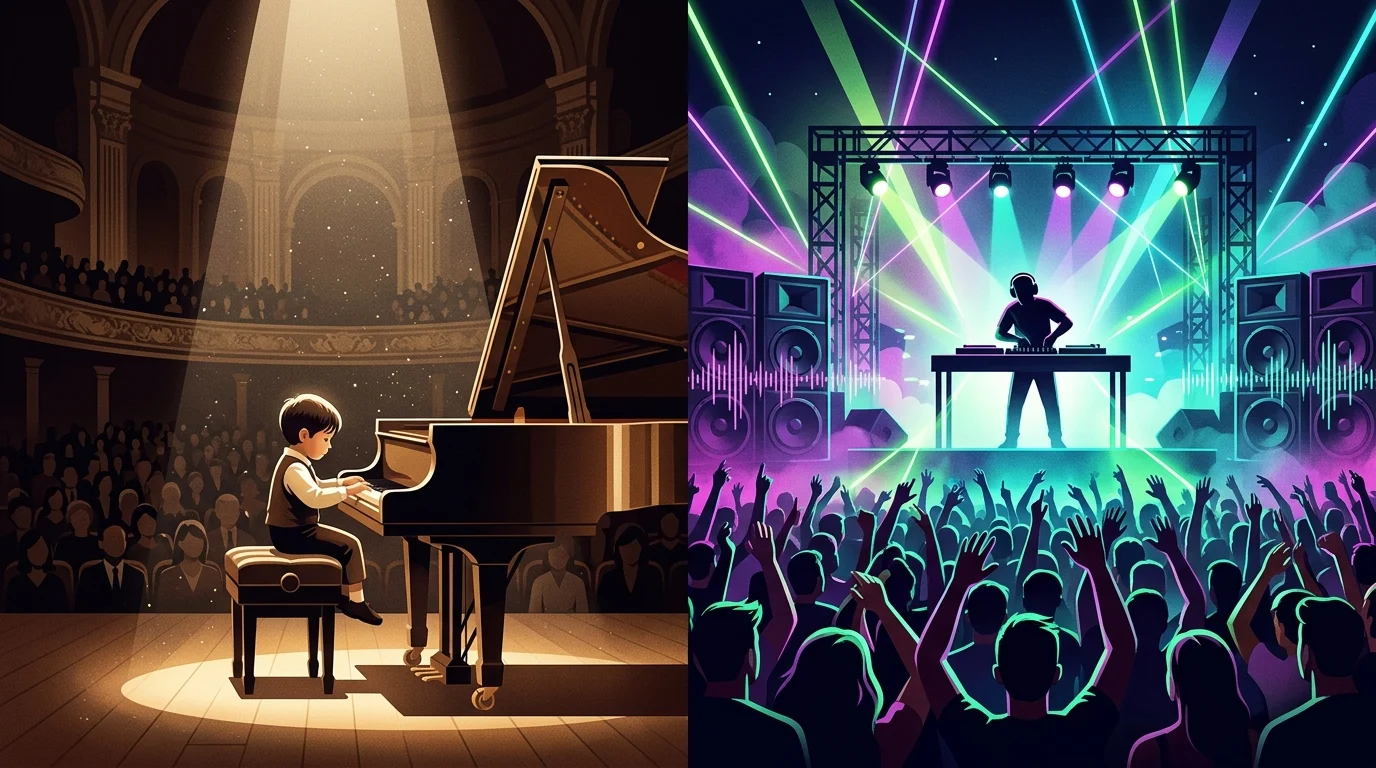
The most widespread definition is a young person with exceptional talents or abilities. This phrase captures a state of precocious mastery. You are not merely talking about a smart child. You are completely describing someone who performs at an adult level before reaching adulthood. People use it for musicians, mathematicians, athletes, and artists who astonish experts. The word says more than “gifted” ever could.
A secondary definition is something extraordinary that inspires wonder or signals divine favor. This version appears in religious and literary texts. A sudden victory, an unexpected healing, or a miraculous event might be called a prodigy. The tone is reverent or awe-struck.
Both usages share a common thread. They describe something beyond ordinary expectation. One is beyond ordinary human development. The other is beyond ordinary natural law.
Prodigy in Music and Pop Culture
Prodigy takes on a specific life in music culture. There, it most often refers to The Prodigy, the influential British electronic band formed in 1990.
The group emerged from the rave scene and became pioneers of big beat, techno, and electronic punk. Albums like “Music for the Jilted Generation” and “The Fat of the Land” defined a generation of electronic music. Their aggressive sound and anarchic energy made them icons. When someone says “Prodigy” without context in a music discussion, they usually mean the band.
In classical music, prodigy refers to composers and performers who showed genius as children. Mozart composed at five. Mendelssohn wrote masterpieces as a teenager. These figures shaped the very concept of musical prodigy.
In pop culture broadly, prodigy describes young actors, directors, and creators who achieve early fame. The word carries both admiration and caution, because early success can bring pressure and burnout.
Prodigy in Psychology and Education

Prodigy takes on a technical life in psychology and education. There, it describes a specific developmental pattern.
Psychologists define a prodigy as a child who performs at the level of an adult professional in a demanding field before age ten or twelve. This differs from a gifted child, who may learn faster but does not necessarily produce adult-level work. A gifted child solves problems quickly. A prodigy creates work that experts respect.
Researchers study prodigies to understand talent development. They examine how practice, family support, and innate ability interact. Some studies suggest that prodigies often show intense intrinsic motivation. Others note that many prodigies do not become adult innovators. The transition from childhood mastery to adult creativity remains poorly understood.
Educators debate how to support prodigies. Some advocate acceleration and specialized programs. Others warn that pushing too hard can damage emotional health. The word therefore carries both promise and risk.
How to Tell Which Prodigy Meaning Is Being Used
Context is everything with this word. The setting and tone reveal the intended meaning before the word does.
If the message involves a child with extraordinary skill, the human definition is likely. Phrases like “child prodigy” or “prodigy at piano” point to the exceptional talent meaning. These messages often appear in biographies, news stories, or proud family updates. The tone is usually admiring.
When prodigy appears in a religious or literary context, the symbolic meaning usually applies. References to “a prodigy of nature” or “signs and prodigies” clearly point to the wonder definition. The tone is often reverent or ominous.
A music discussion that mentions Prodigy likely refers to the band. References to rave, electronic, or “Firestarter” point to the group. The capitalization often distinguishes this usage.
If the message sounds analytical and appears in an education context, the psychological meaning becomes possible. This usage often follows discussions of testing, gifted programs, or talent development. The tone is measured and academic.
When Not to Use Prodigy Casually
Prodigy does not belong in every conversation. Its human meaning carries immense expectation and expresses a strong value judgment. Calling a child a prodigy can burden them with pressure they did not ask for.
There is also a cultural sensitivity to consider. In some religious traditions, prodigy carries supernatural weight. Treating it as casual slang can seem dismissive of a profound belief.
Other professional contexts use the word differently. In education, it is a technical category. In psychology, it is a research subject. Each field has its own vocabulary, and the casual version rarely crosses into these spaces.
The safest approach is to match the register of the conversation. Admiring words belong in admiring discussions. When in doubt, clarity beats casualness.
Prodigy vs Similar Words
Several other words overlap with prodigy in meaning. Understanding the differences helps avoid confusion.
Gifted means “having unusually high intelligence or ability.” It is broader and less extreme. A gifted child learns quickly. A prodigy produces adult-level work.
Genius means “exceptional intellectual or creative power.” It applies to adults as well as children. Prodigy specifically describes early mastery. Genius is what a prodigy may become.
Savant means “a person with exceptional skill in one area, often alongside a developmental disorder.” It is more clinical and more specific. Prodigy implies broad excellence. Savant implies narrow brilliance.
Phenom means “a phenomenal person or thing.” It is more casual and more sports-focused. Prodigy carries classical weight. Phenom is what commentators say.
Why Prodigy Endures as a Word
The word prodigy endures because it names something everyone recognizes. Every culture tells stories of children who astonish adults.
Its survival also reflects a universal tension. People admire prodigies but worry about them. The word captures both the wonder and the risk of extraordinary early talent.
The band Prodigy added a second life to the term. For millions of fans, the word now triggers memories of basslines and festivals rather than child geniuses.
Regional and Platform Variations
Prodigy does not mean the same thing everywhere. Platform culture shapes how the word is used.
On YouTube, the human meaning dominates. Documentaries and viral clips celebrate child prodigies in music, math, and chess.
On Spotify and music forums, the band meaning dominates. Playlists, reviews, and fan discussions treat Prodigy as a proper noun.
On Reddit, multiple meanings coexist. Education forums debate prodigy research. Music forums debate the band’s legacy.
In academic settings, the psychological meaning dominates. Journals, conferences, and gifted programs use the term precisely.
FAQs
What does prodigy mean?
Prodigy means a young person with exceptional talent or something extraordinary that inspires wonder.
Is prodigy a bad word?
No, prodigy is not profane, though it can place pressure on a child.
What does prodigy mean in music?
In music, Prodigy usually refers to the British electronic band.
What does prodigy mean in education?
In education, prodigy describes a child performing at an adult professional level.
Can prodigy mean something religious?
Yes, prodigy can mean a miraculous sign or wonder in religious texts.
What is the difference between prodigy and gifted?
Gifted means advanced learning, while prodigy means adult-level production.
Does prodigy have a medical meaning?
No, prodigy is not a medical term, though psychology studies it.
Is prodigy safe to use in professional settings?
Yes, prodigy is appropriate in educational and academic communication.
Why do people say prodigy on YouTube?
On YouTube, prodigy appears in documentaries and viral clips about extraordinary children.
How do I know which prodigy meaning is being used?
Look at the platform, the tone, and the surrounding words to determine the intended meaning.
Conclusion
The prodigy meaning shifts with every context. In a biography, it means a child of extraordinary talent. In case of a religious text, it means a miraculous sign. If it is a music forum, it means a British electronic band and in a psychology paper, it means a specific developmental pattern. The only way to know which meaning applies is to read the setting, the tone, and the relationship between the people involved. When in doubt, a simple question clears up any confusion faster than guessing.
Language evolves quickly, and prodigy may take on new shades of meaning in the coming years. For now, these definitions cover almost every situation you will encounter. Learn them once, and you will never be lost when this word appears in your feed.