Quick Ans: The noir meaning depends entirely on context, yet unlike many slang terms, this French word carries decades of cinematic, literary, and aesthetic weight. It can point to a film genre, a color, a mood, or a style of storytelling defined by moral ambiguity. This guide breaks down every major meaning so you can wield the term with precision.
Understanding artistic vocabulary has become a daily necessity for anyone engaging with film, literature, or visual culture. New slang appears every week; consequently, older words accumulate fresh meanings as they spread across platforms. Noir is a perfect example of this evolution. It started as the French word for black, then became a Hollywood genre label, and now describes everything from photography to fashion. Some usages are cinematic. Some are literary. One is purely chromatic. Knowing which one applies can save you from an awkward misunderstanding.
The Core Noir Meanings
In everyday conversation, noir most often carries one of two meanings. The first is cinematic and historical. The second is aesthetic and atmospheric.
The most widespread definition is a genre of crime film or fiction characterized by cynicism, fatalism, and moral ambiguity. This phrase captures a state of dark storytelling. You are not merely talking about crime. You are pointing to a specific mood and worldview. People use it to describe films like The Maltese Falcon, books like The Big Sleep, and any story where heroes are flawed and endings are bittersweet. The word says more than “mystery” ever could.
A lighter visual definition is the color black or a dark, moody aesthetic. This version expresses a style, often with an artistic tone. If a photograph uses deep shadows and stark contrast, people might call it “noir.” The word captures a feeling that feels too big to explain simply.
Both usages share a common thread. They describe darkness. One is darkness in narrative. The other is darkness in appearance.
Noir in Film and Literature
Noir takes on a rich historical life in cinema. There, it refers to a cycle of American crime films from the 1940s and 1950s, often called “film noir.” These films featured hard-boiled detectives, femme fatales, and a pervasive sense of dread. The term was coined by French critics who noticed the dark, pessimistic tone of these Hollywood imports.
The genre has evolved over decades. Neo-noir emerged in the 1960s and 1970s, updating classic themes with modern settings and sensibilities. Films like Chinatown and Blade Runner carry the noir torch into new territory. More recently, works like Nightcrawler and Gone Girl continue the tradition of morally complex protagonists and bleak outcomes.
In literature, noir describes a style of crime writing that prioritizes atmosphere over puzzle-solving. Authors like Dashiell Hammett, Raymond Chandler, and James Ellroy built careers on this approach. Their stories feature flawed heroes, corrupt systems, and women who are as dangerous as they are alluring.
Noir in Photography and Visual Arts
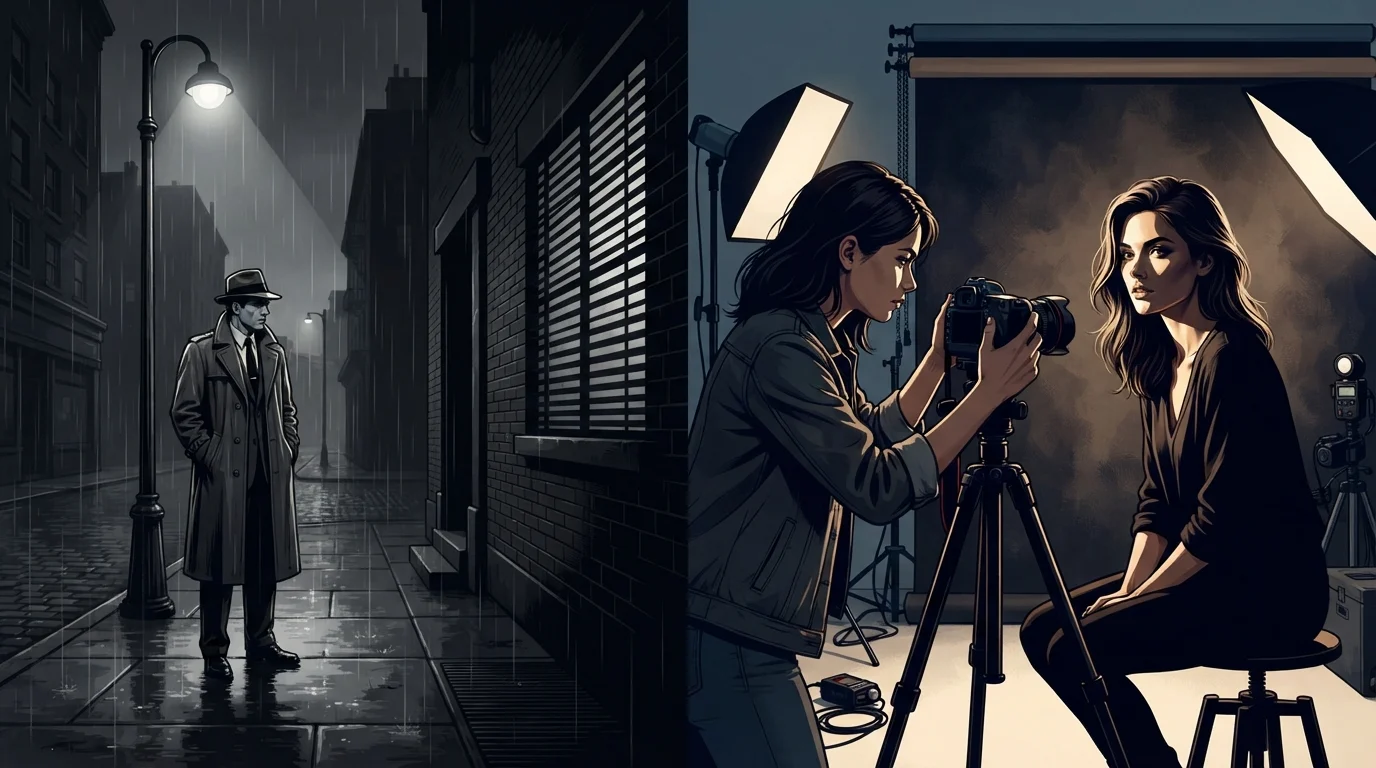
Noir takes on a visual life in photography. There, it refers to a style characterized by high contrast, deep shadows, and dramatic lighting. A portrait with half the face in darkness is a noir portrait. A cityscape with wet streets and flickering neon is a noir scene.
The “noir aesthetic” has become a cultural phenomenon in its own right. Photographers use it to evoke mystery, danger, and urban loneliness. The style appears in fashion editorials, album covers, and Instagram feeds. Being described as noir is a sign of atmospheric depth.
In graphic design and illustration, noir influences everything from comic books to video games. The Batman franchise owes much of its visual identity to noir. Games like Max Payne and L.A. Noire translate the genre into interactive form.
How to Tell Which Noir Meaning Is Being Used
Context is everything with this word. The setting and tone reveal the intended meaning before the word does.
If the discussion involves film, crime stories, or detectives, the cinematic meaning is likely. Phrases like “film noir” or “noir thriller” point to the genre definition. These references often appear in reviews, academic essays, or movie forums. The tone is usually analytical or appreciative.
When noir appears in a photography or fashion context, the visual meaning usually applies. Captions like “noir aesthetic” or “noir lighting” clearly refer to the dark style definition. The presence of an image or a reference to shadows distinguishes this usage.
A French conversation that mentions “noir” likely uses the literal color meaning. The placement within everyday speech, rather than artistic discussion, is the giveaway. Look for other color words like “blanc” or “rouge.”
If the message sounds moody and appears after a description of atmosphere, the “dark tone” meaning becomes possible. This usage often follows a description of rain, neon, or moral ambiguity.
When Not to Use Noir Casually
Noir does not belong in every conversation. Its cinematic meaning carries historical weight and expresses a specific artistic tradition. Using it casually to describe anything dark or sad can come across as imprecise or dismissive of a rich genre.
There is also a cultural sensitivity to consider. Film noir emerged from specific historical conditions, including postwar disillusionment and censorship constraints. Treating it as mere aesthetic can seem dismissive of its cultural context.
Other professional contexts use noir differently. In fashion, noir refers to a color palette. In photography, it refers to a lighting technique. Each field has its own vocabulary, and the casual version rarely crosses into these spaces.
The safest approach is to match the register of the conversation. Artistic terms belong in artistic discussions. When in doubt, clarity beats casualness.
Noir vs Similar Words
Several other words overlap with noir in meaning. Understanding the differences helps avoid confusion.
Dark means “with little or no light.” It is literal and general. Noir is stylistic and atmospheric. Dark is what you see. Noir is what you feel.
Gothic means “characterized by mystery, horror, and the supernatural.” It is more ornate and more historical. Noir is more urban and more cynical. Gothic is castles and ghosts. Noir is city streets and cigarettes.
Hard-boiled means “tough and unsentimental.” It describes a tone within crime fiction. Noir is broader and more visual. Hard-boiled is what the detective is. Noir is what the world looks like.
Neo-noir means “new noir.” It describes modern works that update classic noir themes. Noir is the original. Neo-noir is the revival.
Why Noir Became Popular
The word noir grew alongside a broader cultural love of dark storytelling. Social media rewarded strong aesthetics. A photo that was merely dark got ignored. A photo labeled “noir” got likes. The word captured a feeling that felt too big to explain simply.
Film culture and streaming platforms have made descriptive vocabulary more common on social platforms. People share their favorite noir films, their moody photography, and their aesthetic inspirations in ways previous generations kept private. Noir gave this generation a quick label for a specific kind of darkness. It was not quite horror nor simple sadness. It was something in between, and the word fit perfectly.
The word also spread through literature and journalism. It appeared in reviews, essays, and academic texts. One syllable did the job better than a paragraph of explanation. It also created an in-group signal. Those who understood the word felt a small connection with the person using it.
Regional and Platform Variations
Noir does not mean the same thing everywhere. Platform culture shapes how the word is used.
On Instagram, the visual meaning dominates. Users post noir photography, noir fashion, and noir aesthetic edits. The word has become inseparable from the platform’s moody culture.
On Reddit, the analytical meaning dominates. Film forums discuss noir classics, neo-noir revivals, and the genre’s evolution.
On Twitter and X, the dramatic meaning dominates. Tweets often fill with “noir vibes” under posts about rain, neon, or morally complex stories.
In French-speaking contexts, noir simply means black. The artistic meanings exist but require context to distinguish them from the color.
FAQs
What does noir mean?
Noir means a genre of dark crime fiction or film, or the color black and a moody aesthetic.
Is noir a bad word?
No, noir is not profane and works fine in artistic discussions.
What does noir mean in film?
In film, noir refers to a genre of crime cinema characterized by cynicism and moral ambiguity.
What does noir mean in photography?
In photography, noir refers to a high-contrast, shadow-heavy visual style.
Can noir mean something romantic?
Yes, noir can describe a darkly romantic aesthetic or doomed love story.
What is the difference between noir and neo-noir?
Noir is the classic genre, while neo-noir updates its themes for modern settings.
Does noir have a literal meaning?
Yes, noir is the French word for black.
Is noir safe to use in professional settings?
Yes, noir is appropriate in film, art, and academic discussions.
Why do people say noir on TikTok?
On TikTok, noir appears in aesthetic edits, film recommendations, and moody photography.
How do I know which noir meaning is being used?
Look at the platform, the tone, and the surrounding words to determine the intended meaning.
Conclusion
The noir meaning shifts with every context. In case of a film discussion, it means a genre of dark crime cinema.If it is a photography post, it means high-contrast shadows. In a French conversation, it simply means black and in a fashion editorial, it signals a moody palette. The only way to know which meaning applies is to read the setting, the tone, and the relationship between the people involved. When in doubt, a simple question clears up any confusion faster than guessing.
Language evolves quickly, and noir may take on new shades of meaning in the coming years. For now, these definitions cover almost every situation you will encounter. Learn them once, and you will never be lost when this word appears in your feed.