Quick Ans: The Holocaust meaning depends entirely on context, yet unlike many slang terms, this weighty word carries centuries of linguistic and historical evolution. It can point to a burnt offering, a catastrophic fire, a genocide, or a mass destruction of any kind. This guide breaks down every major meaning so you can understand the term with the gravity it demands.
Understanding words with layered histories has become a daily necessity for anyone navigating modern communication. New slang appears every week; consequently, older words accumulate meanings across languages, religions, and tragedies. Holocaust is a perfect example of this evolution. It started as a Greek translation of a Hebrew sacrificial term, entered English as a word for fire, and became permanently attached to the Nazi genocide of European Jews. Some meanings are ancient. Some are devastating. One is purely semantic. Knowing which one applies can prevent grave misunderstanding.
The Core Holocaust Meanings
In historical and religious discussions, Holocaust most often carries one of two meanings. The first is ancient and sacrificial. The second is modern and genocidal.
The most widespread contemporary definition is the systematic, state-sponsored persecution and murder of approximately six million European Jews by Nazi Germany and its collaborators between 1941 and 1945. This phrase captures an unparalleled atrocity. You are not merely talking about violence. You are completely describing an industrialized genocide that targeted Jews, Roma, disabled people, LGBTQ+ individuals, and political prisoners. People use it in history, education, and memorial contexts. The word demands reverence.
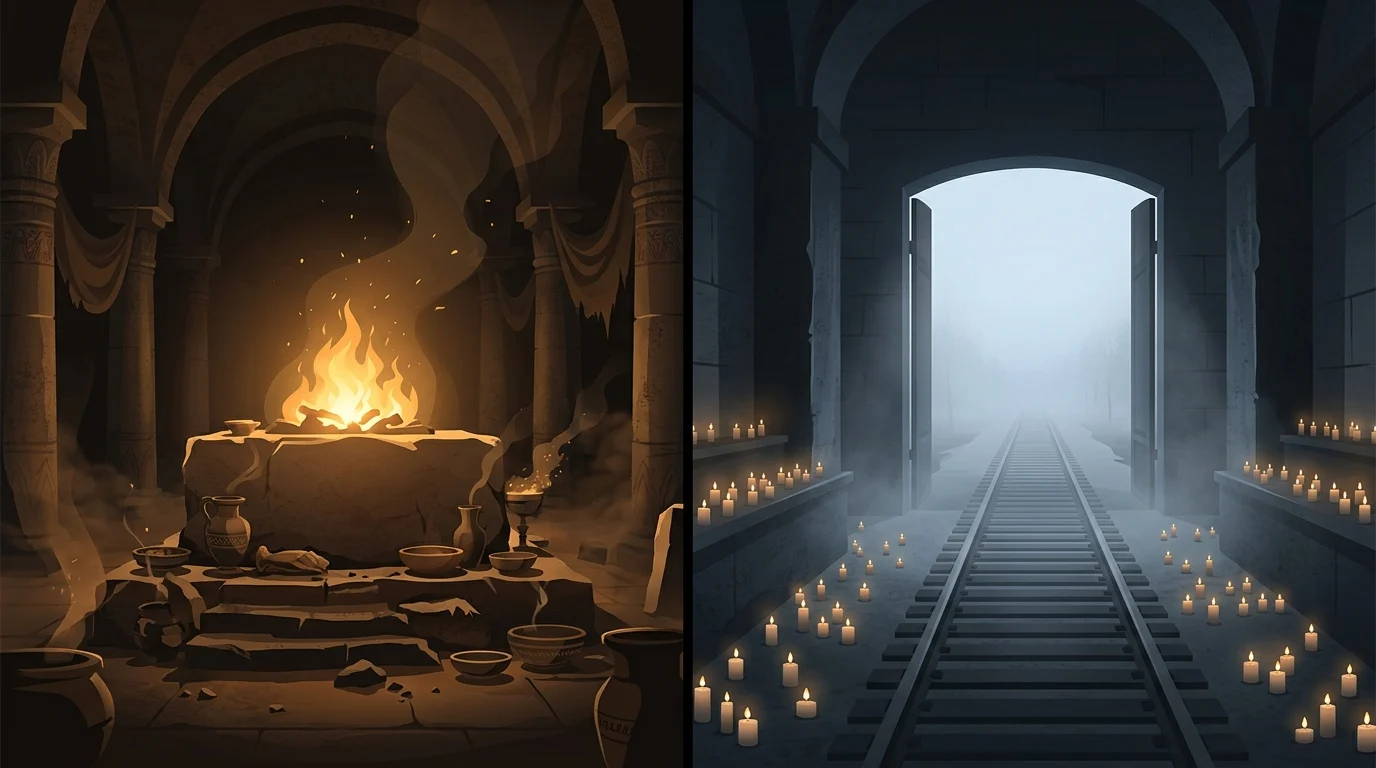
An older religious definition is a burnt offering consumed entirely by fire. This usage comes from the Greek word holokaustos, meaning “completely burnt,” which appears in the Septuagint as a translation of the Hebrew olah. The term described sacrifices in the Temple of Jerusalem that were wholly consumed. People use it in biblical studies, theology, and ancient history.
Both meanings share a common thread. They describe total destruction. One is destruction through sacred fire. The other is destruction through industrialized hatred.
Holocaust as a Historical Event
Holocaust takes on profound weight in historical discussions. There, it refers to the genocide perpetrated by Nazi Germany across occupied Europe.
The persecution unfolded in stages. It began with boycotts and discriminatory laws in the 1930s, escalated through pogroms and ghettoization, and culminated in mass shootings and extermination camps. By 1945, two-thirds of Europe’s Jewish population had been murdered. The word Shoah, meaning “catastrophe” in Hebrew, has become the preferred term in many Jewish communities because it avoids the sacrificial connotations of the Greek-derived Holocaust.
The event reshaped international law, giving rise to the term genocide and the Universal Declaration of Human Rights. It also transformed language itself. Words like Auschwitz, Kristallnacht, and Final Solution carry permanent historical weight.
Holocaust in Broader English Usage
Holocaust takes on a wider life in English. There, it can describe any mass destruction, especially by fire.
In general usage, holocaust refers to a catastrophe involving extensive loss of life. A massive wildfire might be called a holocaust. A nuclear war could be described as a nuclear holocaust. The 1983 film Testament depicted the aftermath of a nuclear holocaust. This usage predates the Nazi era and remains valid in secular contexts.
The word also appears in phrases like “animal holocaust” or “environmental holocaust,” though these usages often draw criticism for minimizing the specific horror of the Nazi genocide. The comparison must be handled with extreme care.
In translation, holocaust corresponds to words like holocauste in French, Holocausto in Spanish, and Holocausto in Portuguese. Each language carries both the ancient and modern meanings.
How to Tell Which Holocaust Meaning Is Being Used
Context is everything with this word. The setting and tone reveal the intended meaning before the word does.
If the discussion involves Nazi Germany, World War II, or Jewish history, the genocide meaning is almost certainly intended. References to concentration camps, Anne Frank, or the Final Solution point unmistakably in this direction. The tone is solemn and respectful.
When the context involves ancient Israel, sacrifice, or the Bible, the burnt offering meaning applies. Mentions of the Temple, Leviticus, or olah point to this usage. The tone is academic or theological.
A conversation about fire, disasters, or nuclear war likely uses the broader destruction meaning. References to wildfires or nuclear conflict distinguish this usage.
If the word appears in academic discourse, the capitalization matters. “The Holocaust” with a capital H typically refers to the Nazi genocide. “A holocaust” with a lowercase h refers to a general catastrophe.
When Not to Use Holocaust Casually
Holocaust does not belong in casual conversation. Its primary modern meaning carries the weight of genocide and expresses profound human suffering. Using it lightly, comparatively, or as hyperbole can come across as deeply offensive and historically ignorant.
There is also a semantic sensitivity to consider. Comparing any modern grievance to the Holocaust diminishes the specific horror of six million murders. Debates over mask mandates or political inconveniences have sometimes drawn such comparisons, and they have rightly provoked outrage.
Other professional contexts use the word with precision. In theology, it describes an ancient ritual. In history, it names a genocide and in general writing, it describes fire and ruin. Each field maintains its own boundaries, and casual usage rarely respects them.
The safest approach is to treat the word with the gravity it demands. When in doubt, choose a different word. Holocaust is not a synonym for inconvenience or difficulty.
Holocaust vs Similar Words
Several other words overlap with Holocaust in meaning. Understanding the differences helps avoid confusion.
Genocide means “the deliberate killing of a large group of people, especially those of a particular nation or ethnic group.” It is a legal term coined in 1944. Holocaust is more specific and more historical. Genocide is what the law names. Holocaust is what history remembers.
Shoah means “catastrophe” in Hebrew and serves as the preferred Jewish term for the Nazi genocide. It carries no sacrificial connotations. Shoah is the Jewish voice. Holocaust is the Greek-derived English term.
Massacre means “an indiscriminate and brutal slaughter of people.” It is smaller in scale and less systematic. Holocaust implies industrial organization. Massacre implies a single event.
Pogrom means “an organized massacre of a particular ethnic group, especially Jews in Russia.” It is more localized and less total. Holocaust is the culmination. Pogrom is a precursor.
Why Holocaust Endures as a Word
The word Holocaust endures because it names something that must never be forgotten. Every generation must confront the fact that industrialized genocide happened in modern Europe. The word forces that confrontation.
Its survival also reflects a linguistic paradox. The same term that once described sacred fire now describes the ultimate profanation. The word has traveled from temple to death camp, from ritual to atrocity. Few words carry such a journey.
Memorial institutions, educational curricula, and survivor testimonies keep the word alive. Yom HaShoah, Holocaust Remembrance Day, ensures annual reflection. The word serves as a warning as much as a label.
Regional and Platform Variations
Holocaust does not mean the same thing everywhere. Language and culture shape how the word is understood.
In Israel and Jewish communities worldwide, Shoah dominates. The Hebrew term carries the emotional and religious weight that Holocaust cannot.
In English-speaking countries, “the Holocaust” with a capital H refers to the Nazi genocide. Lowercase “holocaust” refers to general destruction.
In academic history, the word is used with precision. Scholars debate its boundaries, its uniqueness, and its relationship to other genocides.
On social media, the word often appears in educational content, memorial posts, and unfortunately in inappropriate comparisons. Moderation teams treat it with sensitivity.
FAQs
What does Holocaust mean?
The Holocaust refers to the Nazi genocide of six million European Jews, though the word also means a burnt offering or a general catastrophe.
Is Holocaust a bad word?
Holocaust is not profane, but it carries profound historical weight and demands solemn usage.
What does Holocaust mean in the Bible?
In the Bible, Holocaust refers to a burnt offering wholly consumed by fire.
What does Holocaust mean in texting?
In texting, Holocaust almost always refers to the Nazi genocide and should not be used casually.
Can Holocaust mean something else?
Yes, Holocaust can mean any mass destruction, especially by fire.
What is the difference between Holocaust and Shoah?
Shoah is the Hebrew term preferred by many Jewish communities, while Holocaust is the Greek-derived English term.
Does Holocaust have a formal definition?
Yes, the United States Holocaust Memorial Museum defines it as the systematic persecution and murder of six million Jews by Nazi Germany.
Is Holocaust safe to use in professional settings?
Holocaust is appropriate in historical, educational, and memorial contexts but never as slang.
Why do people say Holocaust on TikTok?
On TikTok, Holocaust appears in educational content and memorial videos, though inappropriate comparisons also occur.
How do I know which Holocaust meaning is being used?
Look at the context, the capitalization, and the surrounding words to determine the intended meaning.
Conclusion
The Holocaust meaning shifts with every context. In a theology classroom, it means burnt offering. Inf it is history lecture, it means genocide. In case of a discussion of fire, it means mass destruction. In a memorial, it means never again. The only way to know which meaning applies is to read the setting, the tone, and the relationship between the people involved. When in doubt, treat the word with the reverence it demands.
Language evolves, yet some words carry permanent weight. Holocaust is one of them. Learn its meanings with care, and you will never misuse it.