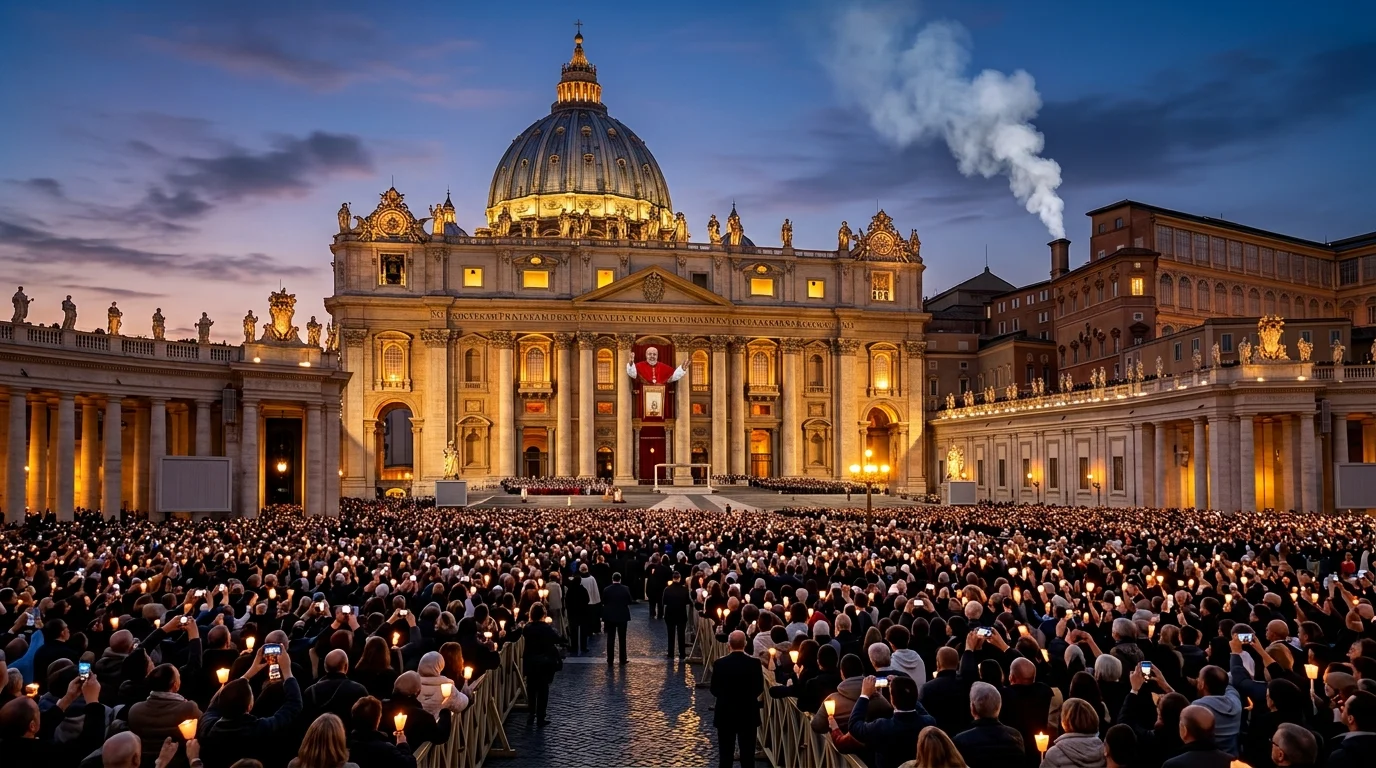
Quick Ans: When a new pope is elected, the world watches St. Peter’s Square for two signs. The first is white smoke rising from the Sistine Chapel chimney. The second is the ancient Latin phrase habemus papam meaning “we have a pope.” This declaration has echoed from the central balcony of St. Peter’s Basilica for centuries. It marks one of the most dramatic moments in the Catholic Church. Understanding this phrase means understanding the ritual, the history, and the grammar behind the words that introduce a new leader to the world.
What Does Habemus Papam Mean?
The habemus papam meaning is simple to translate. In Latin, the phrase means “we have a pope.” The word “habemus” is the first person plural of the verb “habere,” which means “to have.” The word “papam” is the accusative form of “papa,” which means “pope” or “bishop” in Church Latin. Together, the two words announce that the College of Cardinals has successfully elected a new Bishop of Rome.
The phrase is not used in isolation. It forms the heart of a longer announcement delivered in Latin. The complete formula begins with “Annuntio vobis gaudium magnum,” which means “I announce to you a great joy.” Then comes the famous phrase: “Habemus Papam!” The announcement continues with the new pope’s birth name and surname, followed by the papal name he has chosen.
The Full Announcement Formula
The habemus papam meaning becomes clearer when you see the entire formula. The cardinal protodeacon, the senior cardinal deacon, delivers the announcement from the Loggia of Blessings. He speaks in Latin, the traditional language of the Church.
The complete text is:
“Annuntio vobis gaudium magnum;
Habemus Papam:
Eminentissimum ac Reverendissimum Dominum,
Dominum [first name],
Sanctae Romanae Ecclesiae Cardinalem [surname],
qui sibi nomen imposuit [papal name].”
This translates to:
“I announce to you a great joy;
We have a pope:
The Most Eminent and Most Reverend Lord,
Lord [first name],
Cardinal of the Holy Roman Church [surname],
who has taken upon himself the name [papal name].”
The announcement follows a strict format. The cardinal first announces the joy. Then he declares that a pope has been elected. After that, he gives the new pope’s baptismal first name in Latin. The surname remains undeclined. Finally, he announces the papal name chosen by the new pontiff.
The History Behind the Phrase
The habemus papam meaning has deep historical roots. The formula is dated to the election of Pope Martin V in 1417. This election took place at the Council of Constance, during a period known as the Western Schism. At that time, three men claimed to be pope. The Council deposed two of them and accepted the resignation of the third. When Martin V was elected, the announcement “Habemus Papam” carried special weight. It meant “we finally have a pope, and only one”.
The formula was used again in 1484 for the election of Pope Innocent VIII. From that point, it became the standard way to announce a new pope. The text draws inspiration from the Gospel of Luke. In Luke 2:10, the angel tells the shepherds, “I bring you good tidings of great joy.” The Latin Vulgate uses the words “Evangelizo vobis gaudium magnum.” The papal announcement echoes this biblical language, linking the election of a pope to the joy of the Nativity.
Who Delivers the Announcement?
The habemus papam meaning is tied to a specific role in the College of Cardinals. The announcement is traditionally made by the cardinal protodeacon. This is the senior cardinal deacon among the cardinal electors. If the protodeacon is the one elected pope, the next senior cardinal deacon delivers the announcement.
The cardinal protodeacon steps onto the central balcony of St. Peter’s Basilica. A vast crowd fills the square below. The bells of the basilica ring out. The cardinal speaks the Latin words that the world has waited for. After the announcement, the new pope himself appears on the balcony. He delivers his first apostolic blessing, known as Urbi et Orbi, which means “to the city and to the world”.
The Role of White Smoke
The habemus papam meaning cannot be separated from the white smoke that precedes it. The smoke signals that the election has concluded. Black smoke means the cardinals have not yet reached a decision. White smoke means a new pope has been chosen.
The tradition of burning ballots dates back to at least 1417. The white smoke signal is more recent. Historians trace it to 1914, with the election of Pope Benedict XV. The smoke rises from a chimney installed in the Sistine Chapel. Crowds in St. Peter’s Square watch the chimney closely. When the smoke turns white, the waiting ends. The bells ring. The announcement is imminent.
The Room of Tears and the Rite of Acceptance
Before the habemus papam meaning is proclaimed to the world, a private ritual takes place inside the Vatican. The newly elected cardinal is asked a solemn question: “Do you accept your canonical election as Supreme Pontiff?” The cardinal must give his consent. Then he is asked: “By what name do you wish to be called?”.
After accepting, the new pope is led to a small room adjacent to the Sistine Chapel. This room is called the “Room of Tears.” Here, he removes his cardinal’s vestments and puts on the white papal garments. The name reflects the emotional weight of the moment. Many new popes have wept in this room as they contemplate the burden they have accepted.
Grammatical Variations in the Announcement
The habemus papam meaning remains constant, but the grammar of the announcement has varied over time. The new pope’s first name is usually announced in the accusative case. For example, “Carolum” for Karol Wojtyła (John Paul II) and “Georgium Marium” for Jorge Mario Bergoglio (Francis).
The papal name has been announced in two different cases. Sometimes it appears in the genitive case, meaning “who takes the name of…” For example, “Ioannis Pauli” for John Paul II. Other times it appears in the accusative case, meaning “who takes the name…” For example, “Franciscum” for Francis. Both forms are grammatically correct, though some Latin scholars prefer the accusative.
The numeral in a papal name may be omitted in certain situations. If the new pope chooses the same name as his immediate predecessor, the numeral is not spoken. This happened in 1978 when John Paul II was announced simply as “Ioannis Pauli” because his predecessor was John Paul I.
Habemus Papam in Modern Culture
The phrase has moved beyond Vatican walls. The habemus papam meaning now appears in news headlines around the world whenever a conclave occurs. It has also entered popular culture. A 2011 Italian film titled “Habemus Papam” tells the fictional story of a cardinal who is elected pope but struggles with the role. The phrase has become shorthand for any moment when a long-awaited decision is finally announced.
In Spanish, the word “habemus” has become a playful colloquial expression. People use it to mean “we have” in humorous contexts. Examples include “Habemus entrenador” (we have a coach) or “Polémica habemus” (we have controversy). This usage shows how the papal phrase has seeped into everyday language.
Frequently Asked Questions
What does habemus papam literally mean?
The phrase literally means “we have a pope.” “Habemus” is the Latin verb for “we have.” “Papam” is the accusative form of “papa,” meaning pope.
Who says habemus papam?
The cardinal protodeacon delivers the announcement. This is the senior cardinal deacon among the cardinal electors. The announcement is made from the central balcony of St. Peter’s Basilica.
When was habemus papam first used?
The formula dates to 1417, during the election of Pope Martin V at the Council of Constance. It was used again in 1484 and became standard thereafter.
What happens before habemus papam is announced?
White smoke rises from the Sistine Chapel chimney. The newly elected cardinal accepts his election and chooses a papal name. He then vests in the Room of Tears before the announcement is made.
What happens after habemus papam is announced?
The new pope appears on the balcony of St. Peter’s Basilica. He delivers his first blessing, known as Urbi et Orbi, to the city of Rome and the world.
Why is the announcement in Latin?
Latin is the traditional language of the Catholic Church. The use of Latin preserves the solemnity and universality of the moment. The announcement is understood by Catholics worldwide regardless of their native language.
What does “Annuntio vobis gaudium magnum” mean?
This phrase means “I announce to you a great joy.” It opens the full announcement and is inspired by the angel’s words to the shepherds in the Gospel of Luke.
Can the numeral in a papal name be omitted?
Yes. If the new pope chooses the same name as his immediate predecessor, the numeral is omitted. This happened with John Paul II and Pius XII.
What is the Room of Tears?
The Room of Tears is a small room near the Sistine Chapel. The newly elected pope goes there to change into papal vestments and pray before facing the world. The name reflects the emotional intensity of the moment.
Is habemus papam used outside the Vatican?
Yes. The phrase appears in news headlines, film titles, and everyday language. In Spanish, “habemus” is used humorously to mean “we have” in various contexts.
Conclusion
The habemus papam meaning is more than a translation. It is a declaration that has marked the transition of papal power for over six centuries. The phrase announces not just a new leader but a new chapter in the history of the Catholic Church. From the white smoke to the Room of Tears, from the Latin grammar to the Urbi et Orbi blessing, every element of the ritual carries meaning. Understanding this phrase means understanding a tradition that connects the ancient Church to the modern world.