Quick Answer: Confusing riddles are tricky brain teasers that twist logic and play with words to stump even the sharpest thinkers. They are perfect for kids, families, teachers, and puzzle lovers of all ages. Below you will find 100 original confusing riddles with clear answers, sorted into easy, funny, tricky, and hard sections.
The world of confusing riddles is full of twists, traps, and surprises. From wordplay that tricks the ear to logic puzzles that bend the mind, every riddle holds a solution waiting to be uncovered. Therefore, this makes confusing riddles the perfect challenge for friends, classmates, and family members who love to think outside the box. Our collection of confusing riddles celebrates everything fun about getting stumped and then laughing at the answer.
Inside this article you will find easy confusing riddles for kids, funny confusing riddles, tricky brain teasers, themed riddles about words and numbers, and hard confusing riddles for adults. Every single riddle comes with a clear answer, so you can play along without getting stuck. Grab your thinking cap, gather your friends, and let the guessing begin.
Easy Confusing Riddles for Kids
These simple confusing riddles are perfect for young thinkers, early readers, and family game time. The words are easy, but the clues still twist your brain.
- What gets wetter the more it dries?
Answer: A towel. - What has to be broken before you can use it?
Answer: An egg. - What has a head and a tail but no body?
Answer: A coin. - What goes up but never comes down?
Answer: Your age. - What can you catch but never throw?
Answer: A cold. - What has many keys but cannot open a single lock?
Answer: A piano. - What has hands but cannot clap?
Answer: A clock. - What has a face but no eyes, nose, or mouth?
Answer: A clock. - What has legs but cannot walk?
Answer: A table. - What is full of holes but still holds water?
Answer: A sponge.
Funny Confusing Riddles
This section is full of jokes and wordplay that will make kids and adults giggle. Share these funny confusing riddles at home or in class.
- What do you call a fake noodle?
Answer: An impasta. - Why did the scarecrow win an award?
Answer: He was outstanding in his field. - What do you call a bear with no teeth?
Answer: A gummy bear. - Why did the math book look sad?
Answer: It had too many problems. - What do you call cheese that is not yours?
Answer: Nacho cheese. - Why did the bicycle fall over?
Answer: It was two-tired. - What do you call a fish without eyes?
Answer: A fsh. - Why did the cookie go to the doctor?
Answer: It felt crummy. - What do you call a nervous pencil?
Answer: A shaky writer. - Why did the tomato turn red?
Answer: It saw the salad dressing.
Tricky Confusing Riddles With Answers
These tricky brain teasers need a little extra thought. They are great for older kids and anyone who enjoys a challenge.
- A man walks into a room with a match. The room has a candle, a lamp, and a fireplace. What does he light first?
Answer: The match. - What is so fragile that saying its name breaks it?
Answer: Silence. - What comes once in a minute, twice in a moment, but never in a thousand years?
Answer: The letter M. - What has a neck but no head?
Answer: A bottle. - What can travel around the world while staying in a corner?
Answer: A stamp. - What belongs to you but other people use it more than you do?
Answer: Your name. - What gets bigger the more you take away from it?
Answer: A hole. - What has one eye but cannot see?
Answer: A needle. - What has words but never speaks?
Answer: A book. - What has a thumb and four fingers but is not alive?
Answer: A glove.
Confusing Riddles About Words and Letters
Wordplay is the heart of confusing riddles. These riddles twist language in clever ways.
- What word becomes shorter when you add two letters to it?
Answer: Short. - What word is spelled the same forwards and backwards?
Answer: A palindrome, such as “level.” - What five-letter word becomes shorter when you add two letters?
Answer: Short. - What word contains 26 letters but has only three syllables?
Answer: Alphabet. - What word has three consecutive double letters?
Answer: Bookkeeper. - What begins with T, ends with T, and has T in it?
Answer: A teapot. - What word is pronounced the same when you remove its first letter?
Answer: A word like “queue” or “empty.” - What word becomes a different word when you add a single letter?
Answer: Many words, such as “car” to “scar.” - What word has a silent letter at the start?
Answer: Words like “knight” or “write.” - What letter is always missing from the alphabet song?
Answer: None, because all letters appear.
Confusing Riddles About Numbers and Math
Numbers can be just as confusing as words. These riddles twist math in playful ways.
- I am an odd number. Take away one letter and I become even. What am I?
Answer: Seven. - What number is spelled with the same number of letters as its value?
Answer: Four. - If two is company and three is a crowd, what are four and five?
Answer: Nine. - What is the next number in the sequence: 2, 4, 8, 16?
Answer: 32. - What weighs more: a pound of feathers or a pound of bricks?
Answer: They weigh the same. - How many months have 28 days?
Answer: All of them. - What number becomes smaller when turned upside down?
Answer: Six becomes nine, and nine becomes six. - What is half of two plus two?
Answer: Three, because half of two is one, plus two equals three. - What number has the same number of letters as its square?
Answer: Four. - What comes next: 1, 1, 2, 3, 5, 8?
Answer: 13, the Fibonacci sequence.
Confusing Riddles About Everyday Objects
These riddles are about familiar items that suddenly seem mysterious when described in tricky ways.
- What has a bed but never sleeps?
Answer: A river. - What has a mouth but never eats?
Answer: A river. - What has a bank but no money?
Answer: A river. - What has a ring but no finger?
Answer: A telephone. - What has a screen but no face?
Answer: A television. - What has a handle but no door?
Answer: A cup. - What has a lid but no pot?
Answer: A jar. - What has a seat but no chair?
Answer: A bicycle. - What has a wing but no bird?
Answer: An airplane. - What has a light but no sun?
Answer: A lamp.
Hard Confusing Riddles for Adults
These hard confusing riddles include logic and trivia-style puzzles. They are made for adults and older teens who love a real challenge.
- A father and son are in a car crash. The father dies, and the son is rushed to surgery. The surgeon says, “I cannot operate; this is my son.” How is this possible?
Answer: The surgeon is his mother. - You see a boat filled with people. It has not sunk, but when you look again, you do not see a single person. Why?
Answer: They are all married. - What can you hold in your right hand but never in your left hand?
Answer: Your left elbow. - What is yours but other people use it more than you do?
Answer: Your name. - What has no beginning, end, or middle?
Answer: A circle. - What goes through towns and over hills but never moves?
Answer: A road. - What has a heart that does not beat?
Answer: An artichoke. - What can fill a room but takes up no space?
Answer: Light. - What can you break without touching it?
Answer: A promise. - What is always in front of you but cannot be seen?
Answer: The future.
Short Confusing Riddles for Instagram and Social Media
These very short one-line riddles are perfect for captions, stories, and quick quizzes. Post one a day to keep your followers guessing.
- What gets wetter the more it dries?
Answer: A towel. - What has to be broken before you can use it?
Answer: An egg. - What goes up but never comes down?
Answer: Your age. - What can you catch but never throw?
Answer: A cold. - What has keys but no locks?
Answer: A piano. - What has hands but cannot clap?
Answer: A clock. - What is full of holes but holds water?
Answer: A sponge. - What has a neck but no head?
Answer: A bottle. - What has one eye but cannot see?
Answer: A needle. - What has words but never speaks?
Answer: A book.
Confusing Riddles About Nature
Nature is full of strange and wonderful things. These riddles twist the natural world in confusing ways.
- What has roots but no plant?
Answer: A mountain. - What has a bark but no bite?
Answer: A tree. - What has a trunk but no leaves?
Answer: An elephant. - What has a cap but no head?
Answer: A mushroom. - What has a ring but no finger?
Answer: A tree. - What has a bed but never sleeps?
Answer: A river. - What falls but never breaks?
Answer: Nightfall. - What rises but never sets?
Answer: The sun on another planet, or a bread dough. - What shines but has no light?
Answer: A reflection. - What grows but never gets taller?
Answer: A beard.
Confusing Riddles About Time and Space
Time and space can bend the mind. These riddles play with our sense of reality.
- What comes once in a minute, twice in a moment, and never in a thousand years?
Answer: The letter M. - What is always coming but never arrives?
Answer: Tomorrow. - What can you never eat for breakfast?
Answer: Lunch and dinner. - What is always in front of you but cannot be seen?
Answer: The future. - What is at the end of a rainbow?
Answer: The letter W. - What has no beginning, end, or middle?
Answer: A circle. - What goes through towns and over hills but never moves?
Answer: A road. - What has a heart that does not beat?
Answer: An artichoke. - What can fill a room but takes up no space?
Answer: Light. - What can you break without touching it?
Answer: A promise.
How to Use Confusing Riddles for Fun
Confusing riddles are easy to enjoy anywhere, whether you are at home, in class, or online. Here are some simple ways to use them.
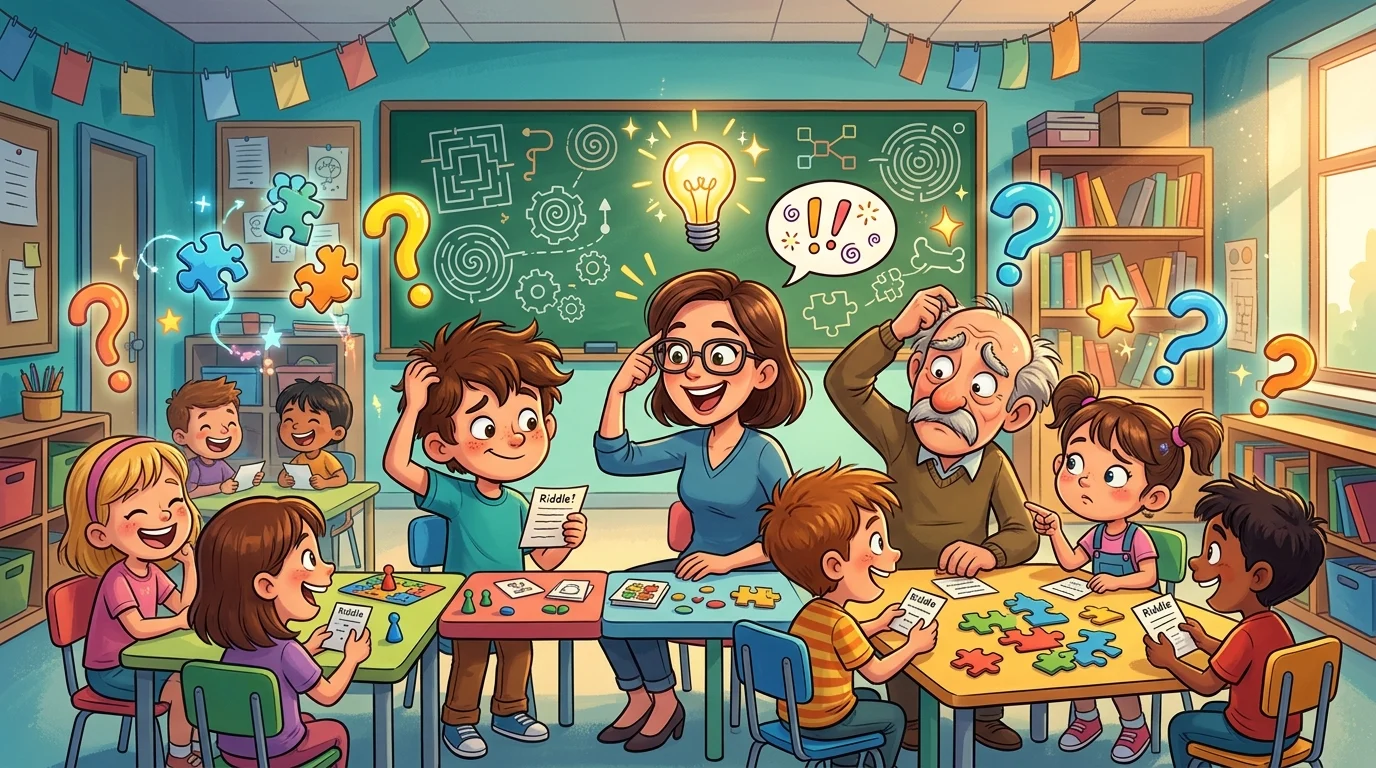
Classroom activities: Split students into teams and read riddles aloud. The first team to answer correctly earns a point. This builds listening and critical thinking skills.
Family game nights: Print the riddles and place them in a bowl. Each person picks one and reads it to the group. Laugh together when answers are silly.
Parties: Use the short riddles as icebreakers at parties. Write them on cards and hide them around the room for a riddle hunt.
Social media quizzes: Post one short confusing riddle each day on your story. Ask followers to reply with their guess before you reveal the answer.
Special occasion gatherings: Add a riddle corner at book club meetings or study sessions. Kids can solve riddles while waiting for food or prizes.
Celebrations: Use confusing riddles during Halloween, birthdays, or the first day of school. They fit any event that celebrates fun and brainpower.
For young children, choose the easy and funny sections and give gentle hints. For adults, use the hard and tricky sections and set a time limit to make the challenge more exciting.
FAQs
What are confusing riddles?
Confusing riddles are tricky brain teasers that twist logic and play with words to stump even sharp thinkers.
What are some easy confusing riddles for kids?
Easy confusing riddles use simple words and clear clues, such as “What gets wetter the more it dries?”
What is a good confusing riddle about words?
A good word riddle focuses on spelling tricks, silent letters, and palindromes.
How can I use confusing riddles at school?
Teachers can use confusing riddles as warm-up activities, reading corner games, or group challenges.
Are confusing riddles suitable for adults?
Yes, confusing riddles are great for adults too, especially the hard section with logic puzzles.
Can I share confusing riddles on Instagram?
Absolutely, the short confusing riddles in this article are made for social media stories and reels.
What makes confusing riddles good for the brain?
Confusing riddles are good for the brain because they build critical thinking, vocabulary, and problem-solving skills in a fun way.
Conclusion
Confusing riddles bring the thrill of puzzle-solving into a fun guessing game. They celebrate clever wordplay, tricky logic, surprising answers, and the joy of getting stumped and then laughing at the solution.
You can use these riddles in classrooms, at family game nights, during parties, or on social media. Every riddle has an answer, so no one gets left behind, whether you are a beginner or a riddle master.
Pick your favorite confusing riddle and share it with a friend today. Challenge someone to solve it, or write your own riddle about something that twists the mind. Think hard and happy guessing!