Quick Ans: The cadence meaning depends entirely on context, yet unlike many slang terms, this elegant noun carries centuries of musical, linguistic, and athletic weight. It can point to the rhythm of speech, the flow of music, the tempo of a runner’s stride, or the measured beat of a military march. This guide breaks down every major meaning so you can wield the word with precision.
Understanding layered vocabulary has become a daily necessity for anyone navigating modern communication. New slang appears every week; consequently, older words accumulate fresh meanings as they spread across platforms. Cadence is a perfect example of this evolution. It started as a Latin term for falling, then became a cornerstone of music theory, and now functions as a descriptor for everything from poetry to pedaling. Some usages are artistic. Some are athletic. One is purely conversational. Knowing which one applies can save you from an awkward misunderstanding.
The Core Cadence Meanings
In everyday conversation, cadence most often carries one of two meanings. The first is auditory and rhythmic. The second is physical and measured.
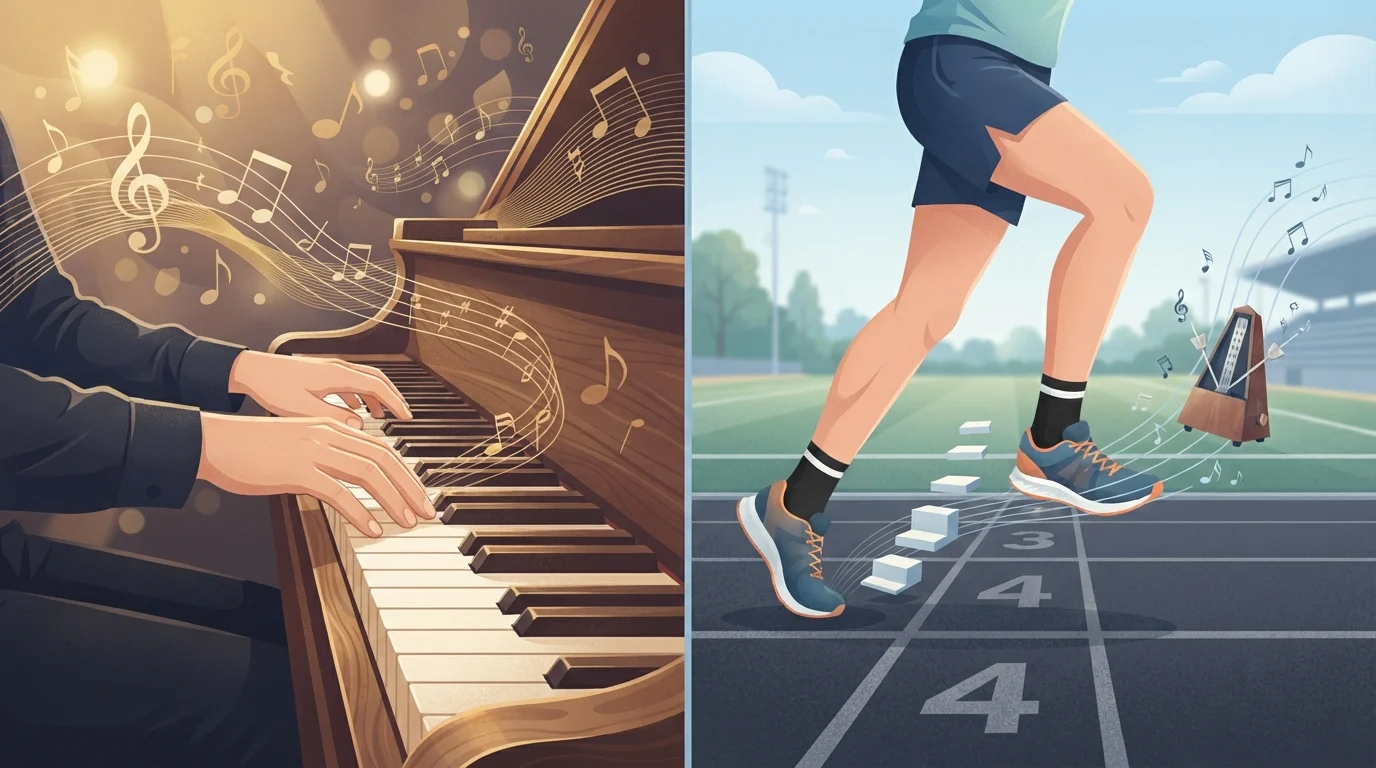
The most widespread definition is the rhythmic flow of a sequence of sounds or words. This phrase captures a state of musical or linguistic movement. You are not merely talking about beat. You are pointing to the rise and fall, the tension and release, the pattern that gives expression its shape. People use it to describe speech patterns, musical phrases, and poetic lines. The word says more than “rhythm” ever could.
A lighter athletic definition is the number of steps per minute while running or walking. This version expresses a measurable tempo, often with a practical tone. If someone wants to improve their running efficiency, coaches might tell them to increase their cadence. The word captures a feeling that feels too technical to explain simply.
Both usages share a common thread. They describe a measured flow. One is flow in sound. The other is flow in motion.
Cadence in Music and Language
Cadence takes on a technical life in music theory. There, it refers to the harmonic resolution that ends a phrase, section, or composition. A perfect cadence moves from the dominant chord to the tonic, creating a sense of finality. A plagal cadence, often called the “Amen” cadence, moves from subdominant to tonic. A deceptive cadence resolves unexpectedly, delaying closure. Each type shapes how listeners feel the music’s momentum.
In language, cadence describes the rhythmic rise and fall of speech. Great orators use cadence to hold attention, building toward climaxes and allowing pauses for reflection. Poets use cadence to create flow, varying line lengths and stresses to guide the reader’s breath. The cadence of a sentence can make the difference between forgettable prose and unforgettable rhetoric.
In both music and speech, cadence creates expectation. It signals when a phrase is ending, when a new one is beginning, and when the listener should feel resolution or suspense.
Cadence in Running and Cycling
Cadence takes on a practical life in athletics. There, it refers to the number of steps per minute while running or the number of pedal revolutions per minute while cycling.
For runners, cadence is typically measured in steps per minute (spm). Most recreational runners hover around 160-170 spm, while elite runners often exceed 180 spm. A higher cadence generally reduces impact forces and lowers injury risk. Coaches often use metronomes or music to help runners increase their cadence gradually.
For cyclists, cadence is measured in revolutions per minute (rpm). A typical recreational cyclist pedals around 60-80 rpm, while professional cyclists often maintain 90-100 rpm. Higher cadence reduces muscular fatigue and improves endurance. Track cyclists may sprint at 130 rpm or more.
In both sports, cadence is a measurable metric. It can be tracked with devices, analyzed with software, and trained with deliberate practice.
How to Tell Which Cadence Meaning Is Being Used
Context is everything with this word. The setting and surrounding words reveal the intended meaning before the term itself does.
If the discussion involves music, poetry, or speech, the rhythmic flow meaning is likely. Phrases like “the cadence of her voice” or “a perfect cadence” point to the auditory definition. These references often appear in literary analysis, music theory, or public speaking coaching. The tone is usually analytical or appreciative.
When cadence appears in running or cycling contexts, the steps-per-minute meaning usually applies. References to “cadence drills,” “cadence sensors,” or “target cadence” clearly point to the athletic definition. The word “running,” “cycling,” or “pace” distinguishes this usage.
In military contexts, cadence refers to the rhythmic chant or count used to coordinate marching. Drill sergeants call cadence to keep troops in step and boost morale. This usage appears in training manuals and military history.
If the message sounds poetic and appears in a literary discussion, the “rhythmic flow” meaning becomes possible. This usage often follows a quote or an excerpt. The tone is softer and more reflective than the technical definitions.
When Not to Use Cadence Casually
Cadence does not belong in every conversation. Its musical meaning carries technical weight and expresses precise harmonic movement. Using it casually in music theory discussions can come across as dismissive or inaccurate.
There is also a corporate meaning to consider. Cadence is sometimes used in business to describe the rhythm of meetings or product releases. If someone is discussing workplace operations, treating cadence as pure slang can seem dismissive of a real process.
Other professional contexts use cadence differently. In poetry, it refers to metrical patterns. In linguistics, it refers to intonation contours and in military science, it refers to marching chants. Each field has its own vocabulary, and the casual version rarely crosses into these spaces.
The safest approach is to match the register of the conversation. Technical words belong in technical discussions. When in doubt, clarity beats casualness.
Cadence vs Similar Words
Several other words overlap with cadence in meaning. Understanding the differences helps avoid confusion.
Rhythm means “a strong, regular, repeated pattern of movement or sound.” It is broader and more general. Cadence is more specific and more structured. Rhythm is what you feel. Cadence is what you measure.
Tempo means “the speed at which a passage of music is played.” It is more about pace than pattern. Cadence is about the shape of phrases. Tempo is how fast. Cadence is how the phrase breathes.
Meter means “the rhythmic structure of a verse.” It is more formal and more poetic. Cadence is more fluid and more natural. Meter is the blueprint. Cadence is the performance.
Beat means “a main accent or rhythmic unit.” It is more fundamental and more repetitive. Cadence is more complex and more expressive. Beat is the pulse. Cadence is the phrase.
Why Cadence Became Popular
The word cadence grew alongside a broader cultural love of descriptive language. Social media rewarded strong expression. A comment that said “nice voice” got ignored. A comment that said “amazing cadence” got likes. The word captured a quality that felt too big to explain simply.
Running culture and music production have made technical vocabulary more common on social platforms. People share their splits, their tracks, and their everyday rhythms in ways previous generations kept private. Cadence gave this generation a quick label for a specific kind of flow. It was not quite rhythm nor a simple speed. It was something in between, and the word fit perfectly.
The word also spread through literature and journalism. It appeared in novels, articles, and speeches. Two syllables did the job better than a paragraph of explanation. It also created an in-group signal. Those who understood the word felt a small connection with the person using it.
Regional and Platform Variations
Cadence does not mean the same thing everywhere. Platform culture shapes how the word is used.
On Instagram, the aesthetic meaning dominates. Users talk about the cadence of a reel, post about running cadence, and joke about the content they see there.
On Reddit, the technical meaning dominates. It appears in comments as a quick summary of a musical phrase or a running stride. Some users pair it with other expressive words like “rhythm” or “tempo.”
On Twitter and X, the literary meaning dominates. Tweets often fill with “cadence” under posts about speeches, poetry, or unforgettable writing.
In group chats among close friends, any of the meanings can appear. The shared context makes the intended definition obvious. Outsiders reading the conversation later might struggle, but the participants never pause to clarify.
FAQs
What does cadence mean?
Cadence means the rhythmic flow of sounds, words, or movements, or the measured steps per minute in running and cycling.
Is cadence a bad word?
No, cadence is not profane and works fine in most settings.
What does cadence mean in music?
In music, cadence refers to the harmonic resolution that ends a phrase or composition.
What does cadence mean in running?
In running, cadence refers to the number of steps per minute.
Can cadence mean something romantic?
Yes, cadence can describe the rhythmic flow of a loved one’s voice.
What is the difference between cadence and rhythm?
Cadence is more structured and phrase-based, while rhythm is broader and more repetitive.
Does cadence have a medical meaning?
No, cadence is not a medical term and describes rhythm or tempo.
Is cadence safe to use in professional settings?
Yes, cadence is appropriate in music, athletics, and business communication.
Why do people say cadence on TikTok?
On TikTok, cadence appears in running tips, music production videos, and poetry readings.
How do I know which cadence meaning is being used?
Look at the platform, the tone, and the surrounding words to determine whether the reference is musical, linguistic, athletic, or military.
Conclusion
The cadence meaning shifts with every context. In a music theory class, it means harmonic resolution. If it is a running app, it means steps per minute. In case of a poetry reading, it means rhythmic flow. In a military march, it means a coordinating chant. The only way to know which meaning applies is to read the setting, the tone, and the relationship between the people involved. When in doubt, a simple question clears up any confusion faster than guessing.
Language evolves quickly, and cadence may take on new shades of meaning in the coming years. For now, these definitions cover almost every situation you will encounter. Learn them once, and you will never be lost when this word appears in your feed.