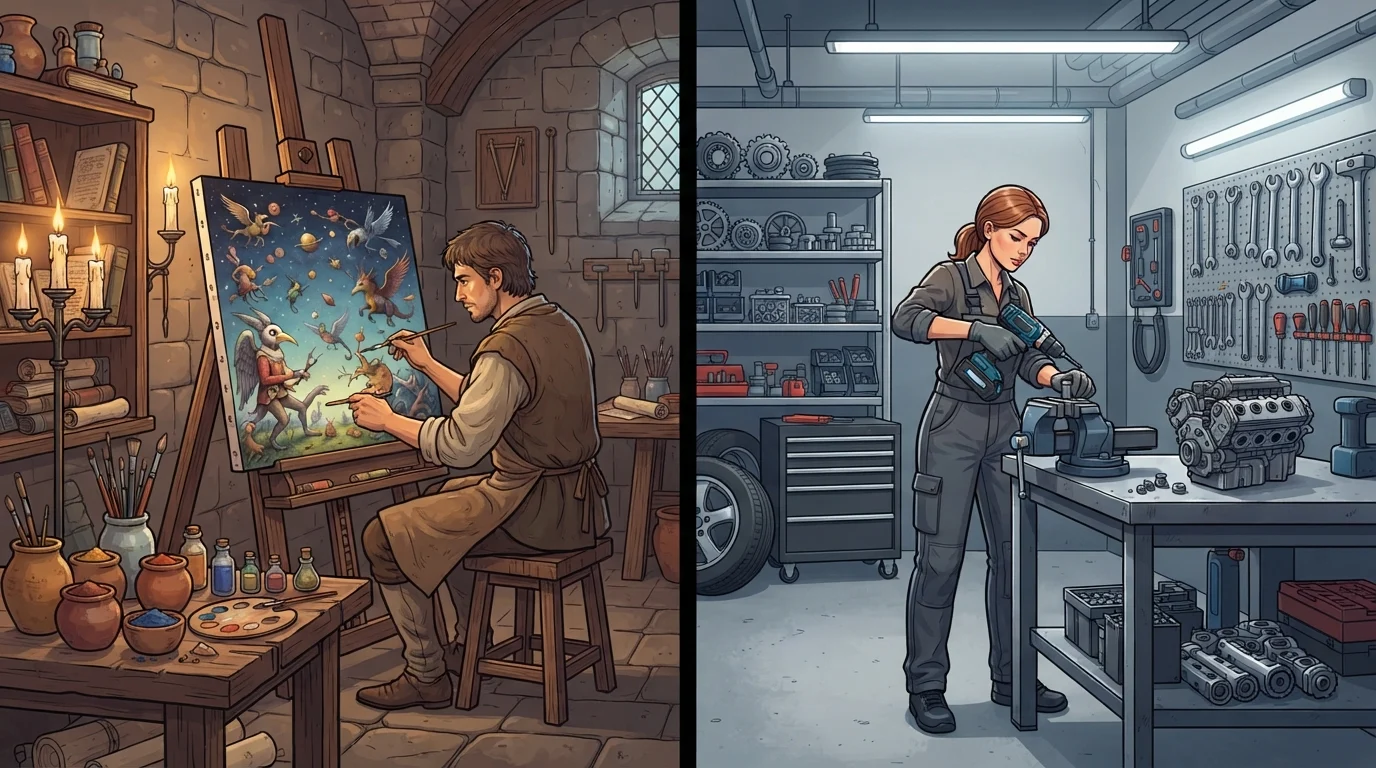
Quick Ans: The Bosch meaning depends entirely on context, yet unlike many slang acronyms, this term carries centuries of cultural and industrial history. It can point to a medieval painter, a global technology company, a wartime insult, or even a surname meaning “forest.” This guide breaks down every major meaning so you can decode the term no matter where you encounter it.
Understanding words with layered histories has become a daily necessity for anyone who wants to communicate accurately. New slang appears every week; consequently, older words carry meanings that shift across time and place. Bosch is a perfect example of this evolution. It started as a Dutch surname, then became attached to one of history’s most surreal painters, and later transformed into a global brand. Some meanings are artistic. Some are industrial. One is derogatory. Knowing which one applies can save you from an awkward misunderstanding.
The Core Bosch Meanings
In everyday conversation, Bosch most often carries one of two meanings. The first is artistic and historical. The second is commercial and modern.
The most widespread historical reference is Hieronymus Bosch. This name points to the Dutch painter born around 1450 and active until his death in 1516 . He is famous for surreal, nightmarish works filled with bizarre creatures, monstrous figures, and intricate allegories . His real name was Jerome van Aken, but he adopted “Bosch” from his birthplace, ‘s-Hertogenbosch, a city in the Dutch province of Brabant . The surname itself derives from the Dutch word for “forest” or “wood” .
A modern alternative in everyday conversation is Bosch the company. This usage refers to Robert Bosch GmbH, the German multinational engineering and technology company founded in 1886 by Robert Bosch . The company began as a “Workshop for Precision Mechanics and Electrical Engineering” in Stuttgart and grew into the world’s largest automotive parts supplier . Its corporate slogan, “Invented for life,” reflects a philosophy of innovation and social responsibility .
Both meanings share a common thread. They describe something of significance. One is significance in art history. The other is significance in global industry.
Bosch as a Wartime Insult
Bosch takes on a completely different meaning in historical military contexts. There, it served as a derogatory term for a German soldier, particularly during World War I .
The term originates from the French slang “alboche,” which combined “Allemand” (German) and “caboche” (head or pate) . British and Allied soldiers adopted it as a slur, using it in trench diaries, letters, and official photograph captions. The language was meant to stir feelings of national pride and comradeship among troops .
The insult has largely faded from use, yet it remains a historical artifact of wartime propaganda. Seeing it in old documents or photographs signals a specific era and attitude. Understanding this meaning helps historians and readers decode primary sources accurately.
Other Historical and Regional Meanings
Beyond the painter and the company, Bosch carries several lesser-known meanings. Each reflects a different corner of history or language.
In Dutch and Flemish naming traditions, Bosch remains a surname meaning “forest” or “wood” . It is a common family name in the Netherlands and Belgium, reflecting the geography of the region.
In older English and Dutch dialects, “bosh” or “bosch” could mean nonsense or rubbish. The Swedish dictionary records it as a term for “strunt, smörja, skräp” (nonsense, muck, trash), derived from a Turkish word meaning “empty” or “worthless” . This usage appeared in nineteenth-century literature but has since fallen out of common speech.
In historical commerce, “Bosch” also referred to a type of adulterated butter. The district around ‘s-Hertogenbosch sent inferior quality Dutch butter to the London market, and the name became associated with the product itself . This meaning is obsolete but illustrates how place names can become product labels.
How to Tell Which Bosch Meaning Is Being Used
Context is everything with this word. The setting and surrounding words reveal the intended meaning before the term itself does.
If the discussion involves art, painting, or surreal imagery, the Hieronymus Bosch meaning is likely. Phrases like “Bosch’s Garden of Earthly Delights” or “a Bosch-like nightmare” point to the medieval painter . These references often appear in art history, literature, or cultural criticism. The tone is usually analytical or appreciative.
When the context involves tools, automotive parts, or household appliances, the company meaning usually applies. Questions like “Is that a Bosch drill?” or “Bosch dishwasher reviews” clearly refer to the German manufacturer . The word “company,” “brand,” or a product category distinguishes this usage.
A historical document that mentions “the Bosch” in a military context likely uses the wartime slur. The placement within a trench diary, war photograph, or official dispatch is the giveaway . Look for other wartime signals like dates from 1914 to 1918 or references to enemy positions.
A surname reference or genealogical discussion points to the “forest” meaning. The placement within a family history or naming tradition is the giveaway. Look for Dutch or Flemish connections .
When Not to Use Bosch Casually
Bosch does not belong in every conversation. Its wartime meaning contains a derogatory slur and expresses hostility toward a nationality. Using it casually, even in jest, can come across as offensive or ignorant of history.
There is also a serious corporate meaning to consider. Bosch is a major employer and a brand with legal protections. Treating it as casual slang in professional or commercial contexts can seem dismissive of a real business entity .
Other professional contexts use Bosch differently. In art history, the name carries academic weight and demands respectful treatment. In engineering, it refers to specific products and standards. Each field has its own vocabulary, and the casual versions rarely cross into these spaces.
The safest approach is to match the register of the conversation. Historical terms belong in historical discussions. Brand names belong in commercial contexts. When in doubt, clarity beats casualness.
Bosch vs Similar Terms
Several other words overlap with Bosch in meaning. Understanding the differences helps avoid confusion.
Boche is the French variant of the same wartime slur. It carries the same derogatory meaning and the same origins . The spelling differs, but the intent does not.
Bosch is also sometimes confused with “bosh,” a British slang term for nonsense. The two are related in some dialects but carry different weights. Bosh is playful. Bosch as an insult is hostile.
The company Bosch shares its name with the painter, but they are unrelated. The painter predates the company by four centuries. The shared name reflects the founder’s surname, not an artistic tribute.
Why Bosch Endures as a Word
The word Bosch endures because it attaches to things that matter. Hieronymus Bosch’s art continues to fascinate viewers with its surreal imagination . The company he shares a name with continues to shape modern life through technology and manufacturing . The wartime slur survives in historical archives as a reminder of past conflicts .
Each meaning has its own trajectory. The painter’s reputation has grown over centuries. The company has expanded into a global powerhouse. The insult has faded into historical footnote. Together, they show how a single word can carry vastly different weights depending on time and place.
Regional and Platform Variations
Bosch does not mean the same thing everywhere. Context shapes how the word is understood.
In art circles, the painter meaning dominates. Discussions of surrealism, Northern Renaissance, or grotesque imagery inevitably reference Hieronymus Bosch .
In engineering and automotive communities, the company meaning dominates. The name appears in product reviews, repair forums, and industry news .
In historical research, the wartime slur appears in primary sources but is treated as a historical artifact rather than active language .
In Dutch and Flemish genealogy, the surname meaning persists. Family histories and naming records treat Bosch as a place-based name meaning “forest” .
FAQs
What does Bosch mean?
Bosch most commonly refers to the Dutch painter Hieronymus Bosch, the German technology company Robert Bosch GmbH, or a historical derogatory term for a German soldier.
Is Bosch a bad word?
Bosch is not inherently profane, but its wartime usage as a slur carries a derogatory and offensive meaning.
What does Bosch mean in art?
In art, Bosch refers to Hieronymus Bosch, a medieval Dutch painter famous for surreal and nightmarish imagery.
What does Bosch mean in business?
In business, Bosch refers to Robert Bosch GmbH, a global German engineering and technology company.
Can Bosch mean something historical?
Yes, Bosch served as a derogatory term for German soldiers during World War I.
What is the difference between Bosch and Boche?
Boche is the French variant of the same wartime slur, while Bosch is the English variant.
Does Bosch have a literal meaning?
Yes, as a surname, Bosch derives from the Dutch word for “forest” or “wood.”
Is Bosch safe to use in professional settings?
Yes, when referring to the company or the painter respectfully, but the wartime slur does not belong in professional communication.
Why do people say Bosch on TikTok?
On TikTok, Bosch most commonly appears in discussions of the company’s products or the painter’s surreal art.
How do I know which Bosch meaning is being used?
Look at the context, the surrounding words, and the setting to determine whether the reference is artistic, commercial, historical, or genealogical.
Conclusion
The Bosch meaning shifts with every context. In an art discussion, it points to a medieval painter of nightmares. The only way to know which meaning applies is to read the setting, the tone, and the relationship between the people involved. When in doubt, a simple question clears up any confusion faster than guessing.
Language evolves quickly, and Bosch may take on new shades of meaning in the coming years. For now, these definitions cover almost every situation you will encounter. Learn them once, and you will never be lost when this word appears in your feed.